How Long Does It Take To Cook Stuffing In The Oven
Cooking stuffing in the oven typically takes 30 to 45 minutes at 350°F, but the exact time depends on your recipe, dish size, and whether you are baking it inside a bird or in a standalone dish. This guide covers everything from prep to serving, so you can enjoy golden, savory stuffing with confidence. You will learn the right temperatures, timing tricks, and common mistakes to avoid for flawless results.
There is something truly special about a warm, golden tray of oven-baked stuffing sitting on the dinner table. Whether you are preparing it alongside a roast turkey or baking it as a standalone side dish, getting the timing right makes all the difference. Many home cooks wonder, “how long does it take to cook stuffing in the oven?” The answer is more nuanced than you might think.
Several factors influence the final bake time. The type of stuffing ingredients you use, the depth of your dish, and your oven’s performance all play a role. In this article, we will walk you through every detail so you can serve perfect savory stuffing every single time. Let us dive in.
Key Takeaways
- Standard Bake Time: Most oven stuffing recipes take 30 to 45 minutes at 350°F to reach a crispy, golden finish.
- Temperature Matters: Always preheat your oven and use 350°F as the baseline for even cooking.
- Dish Size Affects Timing: A shallow dish bakes faster than a deep one, so adjust your timing accordingly.
- Check Internal Temperature: Use a meat thermometer to confirm stuffing reaches 165°F for food safety.
- Cover vs. Uncover: Covering with foil for the first half keeps moisture in, while uncovering creates a crispy top.
- Make Ahead Tips: You can prep stuffing the night before and bake it fresh the next day for better flavor.
📑 Table of Contents
- Understanding Stuffing Bake Time
- Step-by-Step Guide to Baking Stuffing
- Stuffing Inside vs. Outside the Bird
- Factors That Affect Stuffing Cook Time
- Common Mistakes to Avoid
- Quick Tips for Perfect Stuffing Every Time
- How to Store and Reheat Leftover Stuffing
- Popular Stuffing Variations and Their Bake Times
- Expert Insights on Oven-Baked Stuffing
- Frequently Asked Questions
Understanding Stuffing Bake Time
When we talk about stuffing bake time, we are really talking about a range. On average, stuffing needs 30 to 45 minutes in a preheated oven set to 350°F. But that is just the starting point. Let us break down what affects the clock.
Why 350°F Is the Standard
Most stuffing recipes call for 350°F because this temperature allows the bread cubes to crisp up without burning the edges. At this heat, the butter and broth soak into the bread evenly, creating that perfect contrast between crunchy outside and soft inside. If you set your oven too low, the stuffing stays soggy. Too high, and the top burns before the center cooks through.
Some cooks prefer to start at a slightly higher temperature, around 375°F, for the first 10 minutes. This kickstarts the browning process. Then they drop it to 350°F for the remainder. This two-stage approach works beautifully for thicker stuffing dishes.
How Dish Size Changes Everything
The shape and depth of your baking dish matter more than you might expect. A wide, shallow pan exposes more surface area to heat. This means the top crisps faster, and the total bake time drops to around 25 to 35 minutes. A deep, narrow dish traps moisture and needs the full 40 to 45 minutes, sometimes longer.
Here is a quick rule of thumb. If you can spread your stuffing mixture into a layer that is about two inches deep, plan for 35 minutes. If it is deeper than three inches, give it 45 minutes or more and check with a thermometer.
Step-by-Step Guide to Baking Stuffing
Baking stuffing is straightforward, but small details make a big impact. Follow these steps for consistently great results.
Step 1: Prep Your Ingredients
Start with day-old bread cubes. Fresh bread contains too much moisture and will make your stuffing soggy. Toss the cubes with butter, herbs, celery, onion, and broth. The mixture should be moist but not dripping wet. Think of a damp sponge, not a swimming pool.
Step 2: Choose Your Baking Method
You have two main options. You can bake the stuffing in a standalone dish, which is the most common method. Alternatively, you can stuff it inside a cavity of a turkey or another protein. Each method has different timing, and we will cover both below.
If you are baking it inside a bird, you might also enjoy our guide on How To Cook Stuffed Rouladen In The Oven for more oven-stuffed inspiration.
Step 3: Preheat and Bake
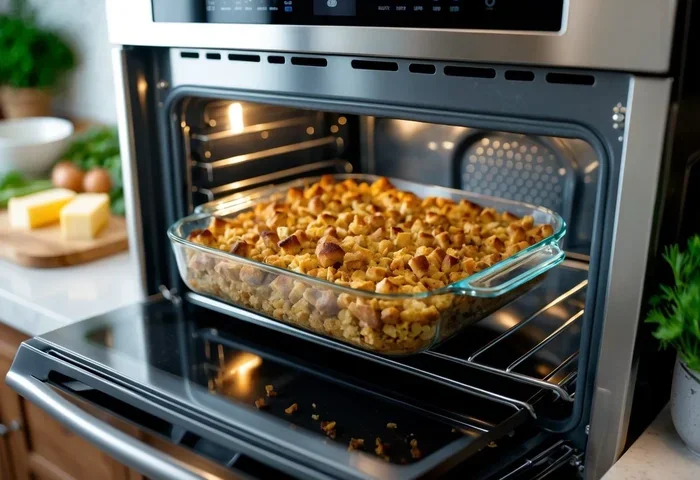
Always preheat your oven before the stuffing goes in. A cold oven throws off the entire cooking timeline. Set it to 350°F and let it reach temperature fully. Place your dish on the center rack for even heat distribution.
For the first 20 minutes, cover the dish with aluminum foil. This traps steam and lets the bread absorb the broth. Then remove the foil and bake for another 15 to 25 minutes until the top turns golden brown.
Step 4: Check Doneness
Do not rely on color alone. Insert a meat thermometer into the center of the stuffing. It should read 165°F. The top should look golden and feel firm to a light press. If it still looks wet in the middle, give it another 5 to 10 minutes.
Stuffing Inside vs. Outside the Bird
This is one of the most debated topics in stuffing cookery. Baking stuffing inside a turkey versus in a separate dish changes everything about timing, texture, and safety.
Stuffing Inside the Turkey
When you pack stuffing inside the turkey cavity, the bird’s juices flavor the mixture beautifully. However, the timing becomes tricky. The stuffing needs to reach 165°F internally, but the turkey itself might take several hours to cook. This means the stuffing sits in a warm, moist environment for a long time.
Many chefs recommend partially cooking the turkey first, then adding the stuffing for the last 45 minutes to one hour of roasting. This reduces the risk of undercooked stuffing and keeps the bird from drying out.
Stuffing in a Separate Dish
Baking stuffing in a separate dish gives you full control over timing and texture. You can crisp the top perfectly without worrying about the turkey’s schedule. The bake time is more predictable, usually landing right in the 30 to 45-minute window at 350°F.
For even better results, some cooks use a ceramic or glass baking dish. These materials hold heat well and promote even browning. Avoid metal pans that are too thin, as they can cause hot spots and uneven cooking.
Factors That Affect Stuffing Cook Time
Not all stuffing recipes are created equal. Several variables can stretch or shrink your bake time significantly.
Type of Bread
The bread you choose changes everything. Dense, crusty breads like sourdough take longer to absorb broth and bake through. Light, airy white bread cubes cook faster. Cornbread stuffing has its own unique moisture profile and may need a few extra minutes.
Amount of Liquid
If your mixture looks very wet when it goes in the oven, it needs more time. The excess liquid has to evaporate before the top can crisp. Conversely, a dry mixture will brown faster but may turn crumbly. Aim for a balanced moisture level for the best stuffing texture.
Oven Accuracy
Here is a secret many people overlook. Not all ovens heat accurately. Some run hot, and some run cool. If you have never checked your oven with an independent thermometer, now is the time. A 25-degree difference can add or subtract 10 minutes from your stuffing bake time.
For those using alternative oven setups, you might find our article on How To Make A Tandoori Oven interesting for understanding how different oven designs affect cooking times.
Altitude and Humidity
High altitude affects baking in general, and stuffing is no exception. At elevations above 3,000 feet, liquids evaporate faster, and baking times can change. Humid climates may add moisture to your mixture, extending the bake time slightly. Adjust with experience and observation.
Common Mistakes to Avoid
Even experienced cooks make errors when baking stuffing. Here are the most common pitfalls and how to dodge them.
- Skipping the preheat: Putting stuffing in a cold oven throws off the entire timeline. Always preheat to 350°F first.
- Overloading the dish: A stuffed dish that is overflowing will bake unevenly. Leave at least half an inch of space at the top.
- Opening the oven too often: Every time you open the door, heat escapes. This extends the bake time and can leave you with soggy stuffing.
- Using fresh bread: Fresh bread has too much moisture. Day-old or toasted cubes work much better for oven-baked stuffing.
- Ignoring the thermometer: Trusting color alone is risky. Always check that the center reaches 165°F for food safety.
It is also worth noting that you should never leave cooked stuffing sitting at room temperature for more than two hours. Bacteria can grow quickly, so refrigerate leftovers promptly.
Quick Tips for Perfect Stuffing Every Time
Here are some expert-backed tips that will elevate your stuffing game instantly.
- Toast your bread cubes before mixing them with the broth. This adds a nutty flavor and prevents sogginess.
- Use homemade broth instead of store-bought. The flavor difference is remarkable and makes your stuffing taste restaurant-quality.
- Add fresh herbs at the end. Parsley, sage, and thyme added just before baking keep their brightness and aroma.
- Let the stuffing rest for 10 minutes after removing it from the oven. This allows the center to set and makes serving easier.
- Make a test batch in a small dish before committing to a large one. This lets you dial in your timing and temperature perfectly.
If you are curious about what else can safely go in your oven, check out our guide on Is It Safe To Put Pizza Box In Oven for helpful safety tips about oven-safe materials.
How to Store and Reheat Leftover Stuffing
Leftover stuffing is a treasure, but only if you store and reheat it properly. Improper handling can ruin the texture and even pose food safety risks.
Store leftover oven-baked stuffing in an airtight container in the refrigerator within two hours of cooking. It keeps well for up to four days. To reheat, place it in the oven at 350°F for 10 to 15 minutes. This restores the crispy top and warms the center evenly. Avoid microwaving, which turns the top rubbery and the bottom soggy.
If you want to freeze stuffing, wrap it tightly in foil and then in a freezer bag. It stays good for up to three months. Thaw it overnight in the fridge and reheat in the oven for best results.
Popular Stuffing Variations and Their Bake Times
Not all stuffing is the same. Different recipes come with different timing needs. Here is a quick comparison.
| Stuffing Type | Bake Time | Temperature | Notes |
|---|---|---|---|
| Classic Bread Stuffing | 35-45 min | 350°F | Standard recipe, most common |
| Cornbread Stuffing | 30-40 min | 350°F | Sweeter, denser texture |
| Sourdough Stuffing | 40-50 min | 350°F | Takes longer due to dense crumb |
| Vegetarian Stuffing | 30-40 min | 350°F | Lighter, may need less time |
| Sausage Stuffing | 35-45 min | 350°F | Add 5 min for meat to cook through |
As you can see, the variations are not dramatic, but they matter. Always check the internal temperature of any stuffing that includes meat, and adjust your timing if the dish is deeper or wider than usual.
Expert Insights on Oven-Baked Stuffing
Professional chefs agree on a few principles when it comes to baking stuffing. First, they emphasize the importance of resting. Just like a roast turkey, stuffing benefits from a few minutes of rest after it comes out of the oven. This lets the flavors settle and the texture firm up.
Second, many chefs recommend preparing the stuffing mixture the night before and refrigerating it. This allows the bread to fully absorb the broth overnight, resulting in a more flavorful and cohesive dish. When you bake it the next day, the timing stays the same, but the flavor is noticeably better.
Finally, experienced cooks know their ovens. They adjust times based on their specific appliance. If your oven runs hot, reduce the temperature by 10 to 15 degrees. If it runs cool, add a few minutes to the expected stuffing bake time.
Frequently Asked Questions
Can I bake stuffing at a higher temperature to save time?
You can, but it comes with risks. Baking at 400°F will shorten the time to about 25 to 30 minutes, but the top can burn before the center cooks through. Stick to 350°F for the most reliable results. If you want to speed things up, spread the stuffing in a thinner layer rather than cranking up the heat.
How do I know if my stuffing is done?
The best way is to use a meat thermometer. Insert it into the center of the stuffing and look for 165°F. The top should be golden brown, and the edges should be slightly crisp. If you do not have a thermometer, press the center gently. It should feel set and not soggy.
Can I make stuffing ahead of time and bake it later?
Absolutely. In fact, many cooks prefer this method. Prepare the stuffing mixture the night before, cover it, and refrigerate. When you are ready to bake, spread it in a dish, add a splash of extra broth if needed, and bake as normal. The flavor improves overnight as the ingredients meld together.
Why is my stuffing soggy in the middle?
Soggy stuffing usually means one of three things. You used too much broth, the dish was too deep, or you did not bake it long enough. To fix this, try spreading the mixture thinner, reducing the liquid slightly, or baking for an additional 10 minutes uncovered. Always check that the center reaches 165°F.
Can I freeze uncooked stuffing?
Yes, you can. Assemble the stuffing but do not bake it. Wrap the dish tightly with plastic wrap and foil, label it with the date, and freeze for up to three months. When you are ready to bake, thaw it overnight in the fridge and add 5 to 10 minutes to the usual bake time.
What is the difference between stuffing and dressing?
People use these terms interchangeably, but technically, stuffing is baked inside a bird, while dressing is baked in a separate dish. The cooking time and ingredients are very similar. Both benefit from the same oven temperature and timing guidelines described in this article.