How Long To Cook 5 Lb Ribs In Oven For Tender Juicy Results
Cooking 5 lb ribs in the oven takes about 4 to 5 hours at 275°F for tender, fall-off-the-bone results. The key is low heat, patience, and a great rib rub. Whether you prefer baby back ribs or pork spare ribs, this guide covers everything you need to know about baking ribs to perfection.
Have you ever wondered how long it really takes to cook a 5 lb rack of ribs in the oven? Whether you are prepping for a weekend barbecue or just craving some tender, fall-off-the-bone ribs, nailing the cook time is the difference between mediocre and magnificent. This guide walks you through everything you need to know about cooking 5 lb ribs in the oven, from prep work to that perfect finishing glaze.
ribs are one of the most beloved cuts of meat, and for good reason. They are rich, flavorful, and incredibly satisfying when cooked just right. But ribs can be tricky. Cook them too fast and they turn tough and chewy. Cook them too long and they dry out. The sweet spot is a slow, steady cook that breaks down the connective tissue without sacrificing moisture.
For a 5 lb rack, the general rule of thumb is about 4 to 5 hours at a low temperature, typically around 275°F. But there is much more to it than just setting a timer. The type of ribs you choose, the wrapping method, and even the oven you use all play a role in the final result. Let us dive into the details so you can pull perfectly cooked ribs off your rack every single time.
## Understanding Rib Types and Their Cook Times
Not all ribs are created equal. Different cuts of pork ribs have different thicknesses, fat distributions, and cooking characteristics. Understanding these differences helps you plan your cook time more accurately.
### Baby Back Ribs
Baby back ribs come from the top of the ribcage, near the spine. They are smaller, leaner, and more tender than other cuts. Because of their lower fat content, they generally cook a bit faster. A 5 lb rack of baby back ribs will typically need about 3.5 to 4.5 hours at 275°F.
### Spare Ribs
Spare ribs come from the belly side of the ribcage. They are fattier, meatier, and more robust in flavor. The extra fat means they need a little more time to render and become tender. Expect a 5 lb rack of spare ribs to take closer to 4.5 to 5.5 hours at 275°F.
### St. Louis Style Ribs
St. Louis style ribs are essentially spare ribs that have been trimmed into a more uniform, rectangular shape. They cook similarly to spare ribs, usually landing in the 4 to 5 hour range for a 5 lb rack. The trimmed shape allows for more even heat distribution, which can be a nice bonus.
## Why Low and Slow Works Best for Ribs
The phrase low and slow is not just a catchy saying. It is the science behind great ribs. When you cook ribs at a low temperature, the collagen in the connective tissue breaks down gradually into gelatin. This process is what gives ribs that melt-in-your-mouth tenderness.
If you crank the oven up to 350°F or higher, the outside of the ribs will burn long before the inside has a chance to soften. The collagen needs time and gentle heat to transform. At 275°F, you give the meat enough time to cook through evenly while developing a beautiful crust on the outside.
Think of it like braising a pot roast. You would never throw a tough cut of beef into a scorching hot pan and expect it to be tender. Ribs work the same way. Patience is your best friend here.
## Step-by-Step Guide to Cooking 5 Lb Ribs in the Oven
Now that you understand the basics, let us get into the actual process. Following these steps will set you up for success.
### Step 1: Prep the Ribs
Start by removing the membrane from the back of the rib rack. This thin, papery layer can be tough and chewy, and it does not soften during cooking. Use a butter knife to loosen one corner, then grab it with a paper towel for a better grip. Pull it off in one piece if you can.
Next, pat the ribs dry with paper towels. Moisture is the enemy of a good bark. The drier the surface, the better the crust will form.
### Step 2: Apply the Rub
A good dry rub is the backbone of great ribs. You can use a store-bought rub or make your own. A simple blend of brown sugar, paprika, garlic powder, onion powder, salt, and black pepper works beautifully.
Apply the rub generously on all sides of the ribs. For the best flavor, wrap the ribs in plastic wrap and refrigerate them overnight. This gives the seasonings time to penetrate the meat. If you are short on time, at least let the rub sit for 30 to 60 minutes at room temperature.
### Step 3: Wrap in Foil
Place the ribs meat-side down on a large sheet of heavy-duty aluminum foil. Add a splash of liquid to the foil. Apple juice, apple cider vinegar, or even beer all work well. This liquid creates steam, which keeps the ribs moist during the long cook.
Fold the foil up around the ribs, sealing them in a loose packet. You want some air inside so the ribs do not steam to death. The goal is a gentle, humid environment.
### Step 4: Cook Low and Slow
Preheat your oven to 275°F. Place the foil-wrapped ribs on a baking sheet and put them in the oven. For a 5 lb rack, plan on about 3 hours of cooking time wrapped in foil.
Resist the urge to open the foil and check on them too often. Every time you open the foil, you release steam and drop the temperature. Trust the process and let the oven do the work.
### Step 5: Unwrap and Glaze
After 3 hours, remove the ribs from the oven and carefully open the foil. Be careful of the steam. At this point, the meat should be pulling back from the bones slightly and the bones should be becoming visible.
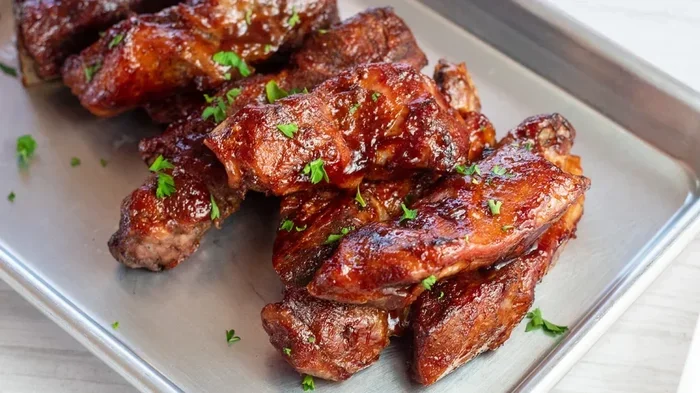
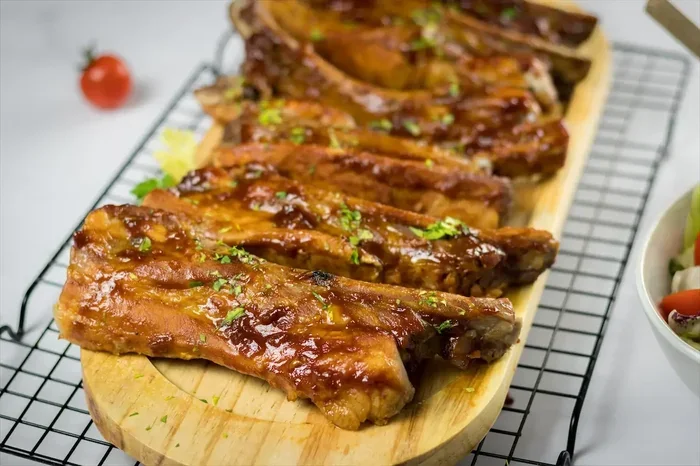
Brush your favorite barbecue sauce or glaze over both sides of the ribs. Increase the oven temperature to 350°F or 375°F. Return the ribs to the oven unwrapped for an additional 30 minutes to 1 hour. This step caramelizes the sauce and builds a sticky, flavorful bark.
### Step 6: Rest and Serve
Once the ribs are done, pull them out of the oven and let them rest for at least 15 to 30 minutes. This resting period allows the juices to redistribute throughout the meat. Cutting too early means losing precious moisture.
Wrap the ribs in foil or a clean kitchen towel and let them sit. After resting, slice between the bones and serve.
## How to Tell When Ribs Are Done
Timing is a good starting point, but it is not always accurate. Ovens vary, and the thickness of the meat can differ from rack to rack. Here are the best ways to check for doneness.
### The Bend Test
Pick up the rack of ribs from one end using a pair of tongs. If the ribs bend and cracks form on the surface, they are done. If they bend without cracking, they need more time. If they do not bend at all, they are undercooked.
### The Meat Thermometer
An instant-read thermometer is your most reliable tool. Insert it into the thickest part of the meat, avoiding the bone. The internal temperature should read between 195°F and 203°F. At this range, the collagen has fully broken down and the ribs will be tender.
### The Twist Test
Grab a bone and gently twist. If the meat has separated from the bone and slides right off, your ribs are ready. If the bone feels tightly anchored, give them more time.
## Common Mistakes to Avoid
Even experienced cooks can make mistakes when it comes to ribs. Here are some pitfalls to watch out for.
### Skipping the Membrane Removal
This is the number one mistake people make. The membrane on the back of the ribs is tough and does not soften during cooking. Leaving it on results in a chewy, unpleasant texture. Always remove it before seasoning.
### Cooking at Too High a Temperature
It is tempting to turn up the heat to speed things along. But high heat dries out ribs and prevents the collagen from breaking down properly. Stick to 275°F and be patient. The extra time is what creates the tenderness.
### Opening the Foil Too Often
Every time you open the foil, you lose steam and heat. This extends the cook time and can result in drier ribs. Check on them only at the halfway point, or not at all if you trust your oven.
### Underseasoning the Rub
Ribs need a generous amount of seasoning. The long cooking time can mute flavors, so do not be shy with the rub. Make sure every surface is well coated.
### Cutting Too Soon
The urge to slice into those beautiful ribs as soon as they come out of the oven is real. But cutting too early releases all the juices, leaving you with drier meat. Resting is a crucial final step.
## Tips for Perfect Oven Ribs Every Time
Here are some extra tips to elevate your rib game.
– Use a baking sheet lined with foil for easy cleanup.
– Place a drip tray underneath the ribs to catch any drippings.
– If your ribs have a fat cap, position it facing up so the fat renders and bastes the meat.
– Experiment with different liquids in the foil wrap. Cola, bourbon, and pineapple juice all add unique flavor dimensions.
– For a smokier flavor, add a small amount of liquid smoke to your rub or glaze.
– Let the ribs come to room temperature for about 30 minutes before cooking. This promotes more even cooking throughout the rack.
## Frequently Asked Questions
### Can I cook 5 lb ribs at 350°F instead of 275°F?
Yes, you can. Cooking at 350°F will reduce the total cook time to roughly 2.5 to 3 hours. However, the results may not be as tender as the low and slow method. The higher temperature can cause the outside to dry out before the inside has fully softened.
### How long do ribs take at 300°F?
At 300°F, a 5 lb rack of ribs will take approximately 3.5 to 4 hours. This is a good middle ground if you want slightly faster cook times without sacrificing too much tenderness.
### Do ribs get more tender the longer you cook them?
Yes, up to a point. Ribs benefit from longer cooking times because the collagen continues to break down into gelatin. However, there is a limit. Cooking beyond 6 hours at low temperatures can cause the meat to dry out and become stringy.
### Should I wrap ribs in foil or butcher paper?
Both work well. Foil creates a tighter seal and more steam, which speeds up cooking and keeps ribs very moist. Butcher paper is more breathable, which allows some of the steam to escape and helps develop a better bark on the outside.
### Can I use the same method for frozen ribs?
It is not recommended to cook frozen ribs directly in the oven. Thaw them in the refrigerator overnight first. Cooking frozen ribs can lead to uneven cooking and potential food safety issues.
### What is the best barbecue sauce for oven ribs?
There is no single best sauce. It comes down to personal preference. Sweet, tangy, smoky, or spicy sauces all work. Apply the sauce during the final 30 to 60 minutes of cooking so it caramelizes without burning.
## Final Thoughts
Cooking a 5 lb rack of ribs in the oven is a rewarding experience that fills your kitchen with incredible aromas and delivers a meal worth every minute. The process is simple, but it requires patience and attention to detail. Keep the temperature low, wrap the ribs at the right time, and resist the urge to rush things.
Once you master the technique for a 5 lb rack, you can scale up or adjust for different cuts with confidence. The next time you are craving ribs, skip the grill and let your oven do the heavy lifting. With the right approach, you will have tender, juicy, flavor-packed ribs that rival any barbecue joint. Happy cooking.
Key Takeaways
- Low and slow is the way to go: Cooking ribs at 275°F for 4 to 5 hours delivers the best texture and flavor.
- Wrapping in foil partway through helps lock in moisture and speeds up the cooking process.
- Use a meat thermometer: The internal temperature should reach 195°F to 203°F for tender ribs.
- A dry rub applied the night before adds deeper flavor and a better bark on the outside.
- Let the ribs rest for 15 to 30 minutes after cooking to allow juices to redistribute.
- Bone-in ribs cook more evenly and tend to stay juicier than boneless cuts.
- Apple juice or cider vinegar in the foil wrap adds a subtle sweetness and tang to the meat.
What is How Long To Cook 5 Lb Ribs In Oven?
How Long To Cook 5 Lb Ribs In Oven is an important topic with many practical applications.