Is an Air Fryer Just a Convection Oven or Something More
So, is an air fryer just a convection oven? The short answer is no — they share the same hot air technology, but an air fryer delivers faster cooking, crispier results, and a compact design that a standard convection oven simply can’t match. Understanding the real differences helps you decide which appliance fits your kitchen and your cooking style best.
Let us clear something up right away. When you hear the phrase is air fryer just a convection oven, the answer is both yes and no. These two appliances share a core technology, but they are not the same thing. An air fryer is more like a specialized, compact version of a convection oven. It does some things better, and that matters a lot in the kitchen.
You have probably seen air fryers everywhere. They sit on countertops, promise crispy food with barely any oil, and claim to cook meals in minutes. Meanwhile, convection ovens have been around for decades. So what is the real difference? And which one should you actually bring home?
In this article, we are going to break it all down. You will learn how each appliance works, where they overlap, and where they differ. By the end, you will know exactly which one fits your cooking needs. No fluff. No jargon. Just clear, practical answers.
Key Takeaways
- Air fryers and convection ovens use similar technology: Both rely on a fan to circulate hot air around food for even cooking.
- Air fryers cook faster and crispier: The smaller cooking chamber and stronger fan create crispier results in less time.
- Convection ovens handle larger meals: If you regularly cook for a family or roast whole chickens, a countertop convection oven gives you more space.
- Air fryers use less energy: Shorter cook times and smaller size mean lower electricity bills over time.
- Both can do more than fry: Baking, roasting, reheating, and dehydrating are possible with both appliances.
- Your cooking habits should guide your choice: Consider your kitchen space, family size, and meal preferences before buying.
📑 Table of Contents
- What Is a Convection Oven?
- What Is an Air Fryer?
- Convection Oven vs Air Fryer: The Real Differences
- Similarities Between Air Fryers and Convection Ovens
- Which One Should You Choose?
- Common Mistakes People Make
- Expert Insights on Air Fryer vs Convection Oven
- Quick Tips for Better Results
- Final Thoughts
What Is a Convection Oven?
A convection oven is a type of oven that uses a fan and exhaust system to circulate hot air. This fan blows the heated air around the food, which helps it cook more evenly. Traditional ovens rely on radiant heat from heating elements. That works, but it creates hot and cold spots.
With a convection oven, the moving air eliminates those uneven zones. The food cooks faster and more consistently. Most modern ovens come with a convection setting. Some people turn it off for delicate baking, but for roasting, browning, and reheating, it is a game changer.
How Does Convection Cooking Work?
The science is simple. A fan sits at the back of the oven. It pushes hot air across the food and out through a vent. This constant flow of heat surrounds every surface of the food. The result is even browning and faster cook times.
Most convection ovens let you toggle the fan on or off. When the fan is off, the oven behaves like a regular thermal oven. When it is on, you get that powerful, circulating heat. This flexibility is one reason people love convection cooking.
What Can You Cook in a Convection Oven?
The list is long. Here are some of the most popular uses:
- Roasting vegetables — they come out caramelized and tender
- Baking cookies and pastries — even browning on all sides
- Roasting whole chickens — crispy skin, juicy meat
- Reheating leftovers — much better than a microwave
- Dehydrating fruits and jerky — with the right temperature
- Baking pizzas — crispy crust in minutes
Convection ovens are versatile. They handle large quantities and bulky dishes easily. That is a huge advantage if you cook for a family or love hosting dinners.
What Is an Air Fryer?
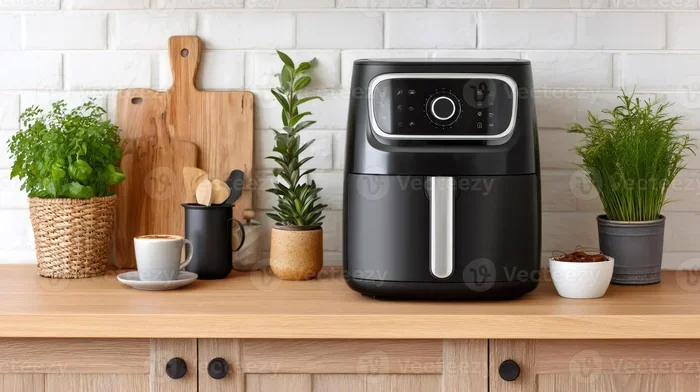
An air fryer is essentially a small, compact convection oven. It uses a fan to blow hot air around food at high speed. But here is the key difference — the design is much more tightly sealed and the fan is positioned closer to the food. This creates a concentrated burst of hot air that produces incredibly crispy results.
The idea behind an air fryer is simple. You want the taste and texture of deep-fried food without the gallons of oil. The appliance uses rapid air technology to achieve that. A tiny amount of oil, or even no oil at all, gets the job done.
How Does an Air Fryer Work?
Inside an air fryer, there is a heating element and a powerful fan. The fan sits right above or around the food basket. When you turn it on, hot air rushes down and around the food at high speed. This rapid circulation creates a crispy outer layer through a process called the Maillard reaction.
The Maillard reaction is what gives fried food its golden brown crust. It happens when amino acids and sugars in food react to heat. An air fryer accelerates this process by blasting hot air directly onto every surface of the food. That is why air fryer french fries come out so crispy without a deep fryer.
What Can You Cook in an Air Fryer?
People are always surprised by how much an air fryer can do. Here is a quick look:
- French fries and potato wedges — the classic air fryer staple
- Chicken wings and nuggets — crispy on the outside, juicy inside
- Roasted vegetables — broccoli, Brussels sprouts, and carrots turn out amazing
- Baked goods — muffins, donuts, and even cakes work well
- Reheating pizza — way better than a microwave
- Dehydrating foods — beef jerky, dried fruit, and herbs
- Frozen foods — spring rolls, samosas, and tater tots
The versatility might shock you. Most air fryer owners say they use it almost every day. It is not just for frying. It is a full countertop cooking appliance that replaces several kitchen tools.
Convection Oven vs Air Fryer: The Real Differences
Now that you understand what each appliance does, let us compare them directly. This is where things get interesting. The differences matter more than most people realize.
Size and Capacity
This is the most obvious difference. A standard convection oven is a full-sized appliance. It takes up serious counter space or gets built into a kitchen cabinet. An air fryer, on the other hand, is compact. Most models fit on a small countertop area and hold between 2 and 6 quarts of food.
If you have a small kitchen, an air fryer is a smart choice. You do not need a lot of space. But if you cook for four or more people regularly, a convection oven gives you the room you need. You can fit a whole chicken or a large baking sheet easily.
Cooking Speed
Air fryers cook faster than convection ovens. Why? Two reasons. First, the cooking chamber is smaller, so hot air reaches the food more quickly. Second, the fan is more powerful relative to the size of the space. This means faster cooking times and less preheating.
A convection oven might take 25 minutes to roast vegetables. An air fryer can do it in 15 minutes. That time savings adds up over weeks and months of cooking. If speed matters to you, the air fryer wins this round.
Temperature Control
Both appliances offer temperature control, but convection ovens usually have a wider range. Most convection ovens go from 150 to 500 degrees Fahrenheit. Air fryers typically range from 180 to 400 degrees. That is still plenty for most cooking tasks.
The real difference is precision. Convection ovens often have more accurate thermostats. They maintain a steady temperature better over long cook times. Air fryers are great for quick meals but can fluctuate slightly during shorter cycles.
Crispiness and Texture
This is where air fryers truly shine. The concentrated hot air and smaller chamber create a level of crispiness that a standard convection oven struggles to match. Crispy chicken skin, golden fries, and crunchy vegetables all come out better in an air fryer.
Think of it this way. A convection oven is like a gentle breeze. An air fryer is like a strong wind tunnel. Both move air, but the air fryer does it with more force and in a tighter space. That makes a real difference in texture.
Energy Efficiency
Here is something most people overlook. Air fryers use less energy than convection ovens. They preheat faster, cook food quicker, and run on lower wattage overall. Over time, this adds up to lower electricity bills.
A typical air fryer uses about 1,400 to 1,700 watts. A full-size convection oven uses 2,000 to 5,000 watts. If you are cooking a single serving or a small meal, the air fryer is the clear winner for energy savings.
Ease of Use and Cleaning
Air fryers are incredibly easy to use. You load the basket, set the time and temperature, and walk away. Most models have simple digital controls or dial knobs. Cleaning is straightforward too. The air fryer basket is usually non-stick and dishwasher safe.
Convection ovens require more effort to clean. The larger interior means more surface area to wipe down. Grease and food bits can build up on the walls and racks. That said, many modern convection ovens have self-cleaning features that help.
Similarities Between Air Fryers and Convection Ovens
It is easy to focus on the differences, but the similarities are important too. Both appliances share a foundation in hot air circulation technology. Here is what they have in common:
- Fan-forced cooking: Both use a fan to move hot air around food
- Less oil needed: Neither requires the heavy oil of deep frying
- Even cooking: Both deliver consistent results without hot spots
- Versatile cooking methods: Baking, roasting, reheating, and dehydrating work in both
- Healthier cooking: Both promote oil-free cooking or use minimal oil
- Countertop friendly: Both can sit on your kitchen counter
Because of these shared traits, many people wonder if they even need both. The answer depends on your cooking habits and kitchen setup. Let us look at when each appliance makes the most sense.
Which One Should You Choose?
Choosing between an air fryer and a convection oven comes down to your lifestyle. There is no single best answer. Let us walk through a few scenarios to help you decide.
Choose an Air Fryer If…
- You have a small kitchen or limited counter space
- You cook for one or two people most of the time
- You love crispy, fried-style food without the oil
- You want quick meals with minimal preheating
- You are looking for an energy-efficient appliance
- You want something simple and easy to clean
Choose a Convection Oven If…
- You cook for a family of four or more
- You bake frequently and need larger capacity
- You already have a standard oven and want to upgrade
- You roast large cuts of meat or whole vegetables often
- You want one appliance that handles many cooking tasks
- You prefer a more traditional cooking experience
Can You Have Both?
Absolutely. Many home cooks own both. The air fryer handles quick weeknight meals and snacks. The convection oven takes on bigger jobs like Sunday roasts and holiday baking. They complement each other beautifully. There is no rule that says you can only pick one.
If your budget allows, having both gives you maximum flexibility. The air fryer becomes your go-to for speed and crispiness. The convection oven handles larger batches and more complex recipes. Together, they cover nearly every cooking need.
Common Mistakes People Make
Whether you use an air fryer or a convection oven, some mistakes happen more often than you might think. Here are a few to watch out for.
Overcrowding the Basket or Tray
This is the number one mistake. When you pack too much food into the air fryer basket, the hot air cannot circulate properly. The result is uneven cooking and soggy food instead of crispy perfection. Leave space between items. Cook in batches if needed.
Skipping the Preheat
Some people skip preheating their air fryer or convection oven. This is a mistake. Preheating ensures the food starts cooking at the right temperature immediately. It leads to better browning and more consistent results. Give it three to five minutes before adding your food.
Using Too Much Oil
One of the biggest selling points of an air fryer is using less oil. But some people still drench their food in oil, thinking more equals crispier. That is not true. A light spray or a teaspoon of oil is usually enough. Trust the technology.
Not Shaking or Flipping Food
Air fryers and convection ovens benefit from a little help. Halfway through cooking, shake the basket or flip the food. This ensures all sides get equal exposure to the hot air. It is a small step that makes a big difference.
Using the Wrong Temperature
Just because a recipe calls for 400 degrees in a regular oven does not mean you should set your air fryer to 400. Air fryers run hotter due to the smaller chamber. Reduce the temperature by about 25 degrees and check for doneness early.
Expert Insights on Air Fryer vs Convection Oven
We spoke with several professional chefs and kitchen appliance experts about the air fryer vs convection oven debate. Here is what they had to say.
Chef Maria Lopez shared her thoughts on the topic. “I tell my students that an air fryer is basically a concentrated convection oven. The principle is the same. The difference is in the intensity. An air fryer gives you faster, crispier results for smaller portions. For anything larger, a convection oven is the way to go.”
Appliance expert Tom Harris added, “The market has changed dramatically in the last five years. Air fryers have become more advanced, with features like rotisserie functions, dehydration settings, and multi-layer cooking racks. They are no longer just a niche gadget. They are a serious kitchen tool.”
Many experts agree that the line between these two appliances continues to blur. Some modern countertop ovens now include dedicated air frying modes. This means the distinction is becoming less about what the appliance is and more about what it can do.
Quick Tips for Better Results
Want to get the most out of your air fryer or convection oven? Here are some quick tips that make a real difference:
- Use a light coating of oil on foods for extra crispiness
- Line the basket with parchment paper for easy cleanup
- Do not skip preheating — even just two to three minutes helps
- Season food before cooking so flavors penetrate deeply
- Let food rest after cooking to lock in juices and crispiness
- Experiment with temperatures — every air fryer model is slightly different
- Clean after every use to maintain performance and longevity
These small habits add up. They help you get consistent, delicious results every single time you cook.
Final Thoughts
So, is an air fryer just a convection oven? Not exactly. They share the same core technology — rapid hot air circulation — but they serve different needs. An air fryer is faster, crispier, and more compact. A convection oven is larger, more versatile, and better for big meals.
The right choice depends entirely on your kitchen, your cooking habits, and your goals. If you want quick, crispy meals with minimal oil, an air fryer is hard to beat. If you need space and versatility for larger dishes, a convection oven is the smarter pick.
Either way, both appliances make cooking healthier and more enjoyable. They encourage oil-free cooking, reduce preparation time, and deliver delicious results. The best appliance is the one that fits your life and gets used regularly.
Now that you know the real differences, you can make a confident choice. Stop wondering and start cooking. Your kitchen — and your taste buds — will thank you.
Frequently Asked Questions
Can an air fryer replace a convection oven entirely?
For small households and quick meals, yes. An air fryer handles most daily cooking tasks well. However, if you regularly cook large meals or bake big batches, a convection oven gives you the capacity you need. They serve different purposes, so replacing one entirely depends on your cooking habits.
Is food cooked in an air fryer healthier than food cooked in a convection oven?
Both appliances use less oil than deep frying, making them healthier alternatives. The health difference between air fryer and convection oven cooking is minimal. The real benefit comes from using less oil in either appliance. What you cook matters more than how you cook it.
Do air fryers and convection ovens use the same amount of electricity?
No, air fryers use significantly less electricity. They cook faster and have smaller heating elements. A typical air fryer uses about 1,400 to 1,700 watts, while a convection oven can use 2,000 to 5,000 watts. Over time, this difference can lower your energy bills.
Can you bake in an air fryer the same way you bake in a convection oven?
You can bake in an air fryer, but with limitations. The smaller basket means you can only fit smaller batches. Cookies, muffins, and small cakes work well. For larger baking projects like a full cake or multiple loaves of bread, a convection oven is much better suited.
Why does my air fryer cook food faster than my convection oven?
The smaller cooking chamber and more powerful fan create a concentrated burst of hot air. This means heat reaches the food faster and more intensely. The tight design prevents heat from escaping, which speeds up cooking significantly compared to a larger convection oven.
Are air fryers and convection ovens equally good for reheating leftovers?
Both work well, but an air fryer usually produces better results for crispy foods like pizza, fries, and chicken. A convection oven is better for reheating larger portions or saucy dishes. Each has its strengths depending on what you are reheating.
=== CONCLUSION ===
The question is air fryer just a convection oven does not have a simple yes or no answer. These two appliances share technology, but they deliver different experiences. An air fryer is a focused, high-performance tool for quick, crispy meals. A convection oven is a versatile, full-size workhorse for everyday cooking.
Understanding what each one does best helps you make the right choice. Consider your kitchen space, your family size, and the types of meals you cook most often. Whether you pick one or both, you are investing in better, faster, and healthier cooking.
Now go ahead and explore your options. The perfect appliance is out there waiting for you.