How Long To Cook Spaghetti Squash In Oven At 400 Degrees
Looking for how long to cook spaghetti squash in oven at 400? Here’s the definitive guide with exact timing, temperature, and easy steps to get perfect, tender strands. You’ll also discover prep tips, the fork test, and how to avoid common mistakes.
If you’ve ever wondered how long to cook spaghetti squash in oven at 400, you’re in the right place. This humble winter squash turns into light, noodle-like strands when roasted, and it’s one of the easiest spaghetti squash recipes to master. Whether you’re meal prepping or making a quick weeknight dinner, knowing the exact cooking time and temperature makes all the difference.
Roasting spaghetti squash at 400 degrees creates a perfect balance of caramelized edges and tender interior. The high heat helps the strands separate naturally, giving you a texture that closely mimics pasta. In this guide, I’ll walk you through every step, from picking the right squash at the store to serving it with your favorite sauce.
You’ll learn the exact minutes, the best pan choices, and how to tell when it’s done. I’ll also share common mistakes so you never end up with a mushy or undercooked result. By the end, you’ll feel confident enough to make oven-roasted spaghetti squash a regular part of your dinner rotation.
Key Takeaways
- Exact timing: A medium spaghetti squash bakes in 40–50 minutes at 400°F, giving you a clear window for perfect doneness.
- Simple prep: Halve, scoop, season, and roast. Only three tools are needed.
- Temperature matters: 400°F delivers the best balance of caramelization and tender strands without drying out.
- Fork test is foolproof: The strands should slide off easily when the squash is ready.
- Versatile serving: Use it as a low-carb pasta swap, a side dish, or a base for endless recipes.
- Avoid common mistakes: Cutting too thick, skipping the oil, and not letting it rest can ruin the texture.
- Storage is easy: Leftover strands keep for 5 days in the fridge and freeze well.
📑 Table of Contents
Why Cook Spaghetti Squash at 400°F?
Temperature is the secret to great spaghetti squash. A 400°F oven provides enough heat to caramelize the natural sugars without overcooking the interior. This creates a subtle sweetness and a firm yet tender strand texture that lower temperatures simply can’t match.
The Magic of 400 Degrees
At 400°F, the outer edges brown quickly while the center steams gently inside its own shell. This dual action is what gives roasted spaghetti squash its signature flavor. The high heat also drives off excess moisture, preventing a watery result. You get a concentrated, rich taste in every bite.
What Happens at Lower or Higher Temps?
Cooking at 350°F takes longer and can leave the squash slightly pale. The strands may not separate as cleanly. On the other hand, 425°F speeds things up but risks drying out the edges before the center is done. 400°F hits the sweet spot for even cooking and great texture.
How to Prep Your Spaghetti Squash
Good prep sets you up for success. The whole process takes just 10 minutes, and it’s much simpler than you might think.
Gathering Your Tools
You only need a few items:
- A large cutting board
- A sharp chef’s knife
- A sturdy spoon or ice cream scoop
- A rimmed baking sheet
- Olive oil, salt, and pepper
Make sure your knife is sharp. A dull blade can slip when you cut through the tough skin, which is a safety risk and makes prep harder.
Cutting and Scooping Seeds
Wash the squash and pat it dry. Place it lengthwise on the cutting board. Hold it steady with a kitchen towel and slice right through the middle, from stem to end. This gives you two even halves that will roast uniformly.
Now grab your spoon and scrape out the seeds and stringy pulp. You can save the seeds for roasting as a snack, but for spaghetti squash you only need the clean, hollow shells. The scraping motion is similar to carving a pumpkin, so take your time.
Seasoning for Flavor
Drizzle a thin stream of olive oil over the cut surface of each half. Use about a teaspoon per half. Sprinkle with salt and a pinch of black pepper. You can also add garlic powder or Italian herbs if you like. The oil helps the heat transfer evenly and promotes browning. Don’t skip this step, because bare squash can turn out dry and bland.
Step-by-Step Baking Guide
Once your squash is prepped, the actual baking is hands-off. Here’s the exact sequence to follow.
Placing the Squash in the Oven
Preheat your oven to 400°F. While it heats, line a baking sheet with parchment paper or foil for easy cleanup. Place the squash halves cut-side down on the sheet. The cut side faces the pan, which allows the strands to steam and soften while the skin protects the flesh from burning.
The Exact Cooking Time at 400°F
A medium spaghetti squash, about 2 to 3 pounds, bakes in 40 to 50 minutes at 400°F. Smaller squashes may be done in 35 minutes, while very large ones can take up to 60 minutes. Start checking at the 40-minute mark. The exact cooking time depends on the thickness of the walls and the size of the squash.
Rack Position and Pan Choice
Place the baking sheet on the middle oven rack. This ensures hot air circulates evenly around the squash. If you use a dark, non-stick pan, it may brown the bottom faster, so keep an eye on it. A light-colored, rimmed sheet pan works best for consistent results.
Quick Tips for Better Results
- Let the squash come to room temperature for 10 minutes before baking. This reduces the overall cook time slightly.
- Do not stack the halves. Each needs full exposure to the heat.
- If you’re cooking more than one squash, use two pans or bake in batches.
- A tiny drizzle of honey or maple syrup on the cut surface adds a lovely caramel note, but it’s entirely optional.
How Long to Cook Spaghetti Squash in the Oven
The most common question I get is about timing. Here’s a detailed breakdown so you can plan your meal with confidence.
Time Chart for Different Sizes
| Squash Size | Weight | Time at 400°F | Result |
|---|---|---|---|
| Small | 1–1.5 lbs | 30–35 minutes | Thin strands, very tender |
| Medium | 2–3 lbs | 40–50 minutes | Perfect noodle texture |
| Large | 4+ lbs | 55–65 minutes | Thick strands, slightly denser |
These times assume the squash is halved and placed cut-side down. Whole spaghetti squash takes significantly longer, often 1 hour 15 minutes or more. Halving is the best method for even cooking and shorter oven time.
Whole vs. Halved Cooking Time
Some people prefer to roast the squash whole to avoid cutting. While this works, it adds 20 to 30 minutes to the cooking time. The skin protects the inside, so you need more heat and patience. After roasting, you’ll carefully slice it open and scrape out the strands. For most home cooks, halving is faster and more convenient.
Factors That Affect Cook Time
A few variables can shift your timing:
- Oven accuracy: Many home ovens run 10–15 degrees cool or hot. Use an oven thermometer if you want precision.
- Squash shape: Longer, narrower squashes may cook faster than short, wide ones.
- Rack height: Upper racks expose the squash to more direct heat, which can speed up browning but also risk drying.
- Starting temperature: A fridge-cold squash takes longer to heat through than one left on the counter.
Common Mistakes That Ruin the Texture
Even experienced cooks make these errors. Avoid them and your spaghetti squash will turn out perfectly every time.
- Cutting the squash too thick: Thick walls take much longer to cook through, and the outer strands can become mushy while the center stays hard.
- Skipping the oil: Oil conducts heat and helps the strands separate. Without it, the squash can be dry and stringy.
- Overcrowding the pan: Two large halves need space. If they touch, the steam gets trapped and the texture suffers.
- Opening the oven too often: Every peek drops the temperature. Trust the timer and check only once or twice.
- Not letting it rest: The squash continues to soften as it cools for a few minutes. Cutting too soon can release excess moisture.
Expert Insights from a Home Cook
I’ve roasted dozens of spaghetti squash over the years, and the one thing that changed everything was using a rimmed sheet pan with a wire rack. The air circulates underneath the squash, so the bottom stays crisp instead of soggy. It’s a small change that makes a big difference in texture. Also, always use a sharp serrated knife for the initial cut. It grips the tough skin and glides through with less effort.
Checking for Doneness and the Fork Test
Knowing when spaghetti squash is done is a skill that takes just one try. The fork test is the most reliable method.
Visual Cues and Texture
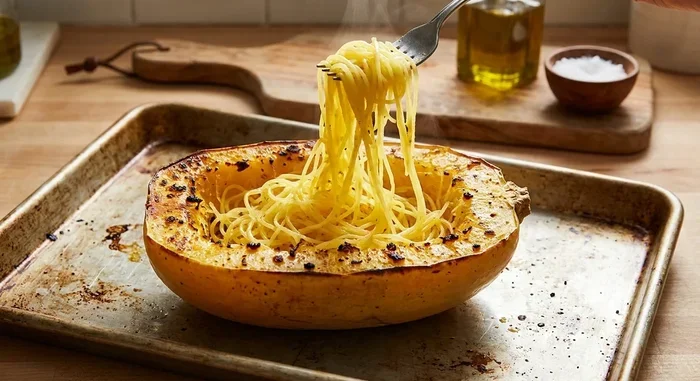
When the squash is ready, the skin will look slightly wrinkled and the edges may have a golden-brown tinge. The whole half should feel slightly soft when you press it gently with a oven mitt. The most telling sign is the strands themselves. Grab a fork and scrape the inside of one half.
The Fork Test in Detail
Push the tines of a fork into the flesh near the edge. Pull the fork toward you. If the squash is done, the strands will separate easily and look like thin, wet noodles. They should be tender but still have a slight bite. If the fork meets resistance and the strands look watery or underdone, the squash needs more time. Return it to the oven for 5 to 10 minutes and check again.
What If It’s Not Done Yet?
Don’t panic. If your spaghetti squash is still hard after the suggested time, just put it back in the oven. Check every 5 minutes. The difference between undercooked and perfectly tender can be just a few minutes. Remember that the squash will continue to soften slightly as it cools, so pulling it out a touch early is better than overcooking.
Serving Ideas and Delicious Recipes
Spaghetti squash is incredibly versatile. It works as a stand-in for pasta, a side dish, or even a breakfast base. Here are some of my favorite ways to enjoy it.
Classic Marinara and Meat Sauce
This is the most popular pairing. Warm your favorite marinara or meat sauce and spoon it generously over the hot strands. Top with freshly grated Parmesan and a sprinkle of fresh basil. The acidity of the tomato sauce balances the natural sweetness of the squash perfectly. This is a complete, satisfying spaghetti squash dinner in under 20 minutes.
Lighter Options: Pesto and Lemon Butter
For a fresher taste, toss the warm strands with a homemade or store-bought pesto. A squeeze of lemon juice and a drizzle of olive oil brighten the flavor. You can also melt a tablespoon of butter with a pinch of salt and pepper and toss it with the strands for a rich, simple side. These lighter sauces let the flavor of the roasted spaghetti squash shine.
Meal Prep and Storage Tips
Spaghetti squash makes an excellent meal prep ingredient. Once cooked, let the strands cool completely. Store them in an airtight container in the refrigerator for up to 5 days. Reheat gently in a skillet with a little oil or microwave in 30-second bursts to avoid mushiness. You can also freeze the cooked strands for up to 3 months. Spread them on a baking sheet to freeze individually, then transfer to a freezer bag. This prevents clumping and makes it easy to portion out meals later.
Easy Spaghetti Squash Bowl Ideas
Build a bowl with your favorite toppings. Start with a base of warm strands, add grilled chicken or shrimp, roasted vegetables, avocado, and a drizzle of tahini or hot sauce. The possibilities are endless. Kids love it too, because the noodle-like strands feel fun and familiar without the heaviness of traditional pasta.
Final Thoughts
Cooking spaghetti squash in oven at 400 is one of the simplest and most rewarding things you can do in the kitchen. With the right timing, a little oil, and a sharp knife, you’ll have a healthy, delicious pasta alternative ready in less than an hour. The key is to trust the process, use the fork test, and avoid the common pitfalls that can lead to a disappointing texture.
Once you master this method, you’ll find yourself making spaghetti squash several times a week. It pairs beautifully with almost any sauce, and it’s a fantastic way to add more vegetables to your diet without sacrificing comfort. So preheat that oven to 400°F, grab a spaghetti squash from the grocery store, and give it a try. You’ll be amazed at how easy it is to turn a humble winter squash into a meal that feels indulgent and nourishing at the same time.
Frequently Asked Questions
Can I cook spaghetti squash whole in the oven?
Yes, but it takes much longer. A whole squash can take 1 hour 15 minutes to 1 hour 30 minutes at 400°F. Halving the squash cuts the time in half and gives you more even cooking. If you do roast it whole, pierce the skin a few times with a fork to allow steam to escape.
What if my spaghetti squash is still hard after 40 minutes?
It may be a larger squash or your oven runs cool. Simply return it to the oven for another 5 to 10 minutes. Check with the fork test every few minutes until the strands separate easily. The cooking time can vary based on the size and shape of the squash.
How do I store leftover cooked spaghetti squash?
Let the strands cool completely, then place them in an airtight container in the refrigerator. They will keep for up to 5 days. Reheat gently in a skillet with a little oil or butter to maintain the texture. Avoid microwaving for too long, as it can make the strands mushy.
Can I freeze cooked spaghetti squash?
Absolutely. Spread the cooled strands on a lined baking sheet and freeze them individually for about an hour. Then transfer them to a freezer-safe bag or container. They will keep for up to 3 months. Thaw overnight in the fridge and reheat in a skillet for the best results.
Is spaghetti squash healthy?
Yes, it’s a nutrient-dense, low-carb alternative to pasta. One cup of cooked strands has about 42 calories and 10 grams of carbohydrates, compared to over 200 calories and 43 grams of carbs in a cup of regular pasta. It’s also a good source of fiber, vitamin C, and potassium.
Can I cook spaghetti squash in an air fryer?
You can, and it’s a great option for faster cooking. Halve the squash and air fry at 400°F for about 25 to 30 minutes, depending on the size. The air fryer produces similar caramelization and tender strands, but you may need to shake the basket halfway through for even cooking.