What Do You Preheat The Oven To For Cookies Made Simple
Preheating your oven to the right temperature is the single most important step for baking great cookies. Most cookie recipes call for 350°F (175°C), but the ideal heat varies depending on the type of cookie you are making. This guide breaks down every temperature, tip, and trick you need to know for perfectly baked cookies with golden edges and chewy centers.
This is a comprehensive guide about What Do You Preheat The Oven To For Cookies.
Key Takeaways
- Standard Cookie Temperature: Most cookies bake best at 350°F (175°C), which is the go-to setting for even heat distribution.
- Adjust for Cookie Type: Thin crispy cookies need higher heat around 375°F, while soft and cakey cookies do well at 325°F.
- Always Preheat: Giving your oven 10–15 minutes to reach the target temperature ensures consistent baking results.
- Use an Oven Thermometer: Built-in oven dials can be inaccurate, so a standalone thermometer helps you bake with confidence.
- Placement Matters: Center rack positioning promotes even browning and prevents burnt bottoms.
- Convection vs. Conventional: Convection ovens bake cookies faster and more evenly, but you may need to lower the temperature by 25°F.
- Rest Your Dough: Chilling cookie dough before baking improves flavor and prevents cookies from spreading too much.
[FEATURED_IMAGE_PLACEHOLDER]
What Do You Preheat The Oven To For Cookies
Baking cookies is one of the most enjoyable things you can do in the kitchen. Whether you are a beginner or a seasoned baker, getting the oven temperature right makes all the difference. The answer to what do you preheat the oven to for cookies is not always a single number. It depends on the type of cookie, the recipe, and even your oven.
Most classic cookie recipes call for a 350°F (175°C) preheat. This temperature has become the gold standard in baking. It strikes a perfect balance between crisp edges and soft centers. But there is so much more to know about oven preheating for cookies than just picking a number off the dial.
In this guide, we will walk you through everything you need to know. From understanding why preheating matters to troubleshooting common baking problems, you will find practical tips that work every time. We will also explore how different cookie styles need different temperatures, and share expert insights that will level up your baking game.
So whether you are baking chocolate chip, sugar cookies, or something more adventurous, this article has you covered. Let us dive in and make sure your next batch of cookies comes out absolutely perfect.
Why Preheating Your Oven Matters
Many people skip the preheating step. They shove the cookies in while the oven is still warming up. This might seem harmless, but it can completely change the outcome of your bake. Preheating ensures that your cookies start cooking at the right temperature from the very first second they hit the pan.
When you place cookie dough into a cold oven, several things go wrong. The butter in the dough melts slowly instead of immediately setting. The cookies spread out too much before the structure has a chance to form. You end up with flat, thin, unevenly baked cookies that lack the classic texture you are looking for.
The Science Behind Preheating
Here is what happens when you preheat properly. The oven air reaches a stable, even temperature throughout the cavity. When your cookie dough enters that environment, the heat hits all surfaces at once. The butter begins to melt and then sets quickly, creating pockets of air. Leavening agents like baking soda or baking powder activate immediately, giving the cookie its lift.
This rapid reaction is what creates that beautiful dome shape and slightly crispy edge. Without proper preheating, the reaction is slow and uneven. Your cookies bake for a longer time overall, which dries them out or leaves them underdone in the middle.
How Long Should You Preheat?
A good rule of thumb is to preheat your oven for at least 10 to 15 minutes before baking. Many ovens signal when they have reached the target temperature with a beep or light. But here is a pro tip: give it an extra five minutes after the signal goes off. Ovens can fluctuate, and that extra time lets the heat stabilize fully.
Think of it like warming up before exercise. Your oven needs time to reach its full potential. Just as an athlete performs better after a proper warm-up, your cookies bake better in a fully preheated oven.
Standard Temperatures for Different Cookie Types
Not all cookies are created equal. A thin and crispy lace cookie needs a different temperature than a thick, chewy chocolate chip cookie. Understanding these differences is key to mastering cookie baking temperature settings. Let us break down the most common cookie types and their ideal oven settings.
Classic Chocolate Chip Cookies
The beloved chocolate chip cookie bakes best at 350°F (175°C). This is the standard that most recipes reference. At this temperature, the edges turn golden and slightly crispy while the center stays soft and chewy. The chocolate chips melt slowly, creating those beautiful pockets of gooey chocolate throughout the cookie.
If you prefer thinner, crispier cookies, try bumping the temperature up to 375°F (190°C). The higher heat sets the edges faster before the butter has a chance to spread the dough too much. For soft and cakey cookies, drop the temperature to 325°F (160°C) and bake for a few extra minutes.
Sugar Cookies and Snickerdoodles
Sugar cookies generally bake well at 350°F (175°C) as well. These cookies rely on a firm structure, so the standard temperature works perfectly. Snickerdoodles, with their cinnamon-sugar coating, also do great at 350°F. The slightly higher sugar content can cause more spreading, so keeping the temperature steady helps maintain shape.
For rolled sugar cookies that you cut into shapes, 325°F (160°C) is a gentler option. The lower heat prevents the edges from browning too quickly while the center bakes through evenly. This gives you more control over the final look of each cookie.
Thin and Crispy Cookies
If you love those paper-thin, crispy cookies that shatter when you bite into them, you need a higher temperature. Try 375°F to 390°F (190°C to 200°C) for these delicate treats. The intense heat dries out the dough quickly, creating that signature crisp texture throughout.
These cookies also benefit from being rolled very thin. The higher temperature compensates for the reduced thickness and ensures they bake through without burning. A great example of oven versatility comes from understanding how different dishes use different temperatures. For instance, cauliflower steaks roast beautifully at high oven temperatures, showing how adjusting heat levels serves different cooking goals.
Soft and Chewy Cookies
For cookies with a thick, chewy center, 325°F (160°C) is your best friend. The lower temperature allows the center to stay soft and underbaked while the edges set gently. This creates that perfect contrast between the crispy rim and the fudgy middle that everyone loves.
Many professional bakers swear by the 325°F method for soft cookies. The slower bake gives the butter more time to incorporate fully, resulting in a richer flavor and denser texture. Just be patient and resist the urge to overbake. Pull them out when the edges look set but the center still feels slightly underdone.
Oven Settings and Features That Affect Cookie Baking
Your oven has several settings and features that can change how your cookies turn out. Understanding these options helps you take control of your baking results. Let us explore the most important settings you should know about.
Convection vs. Conventional Bake
Most modern ovens offer both convection and conventional baking modes. Conventional baking uses static heat that rises from the bottom element. Convection baking uses a fan to circulate hot air throughout the oven cavity.
Convection ovens bake cookies more evenly and often faster. The moving air prevents hot spots and promotes consistent browning on all sides. However, the fan can also cause cookies to set too quickly, which affects texture. A good rule is to reduce the temperature by 25°F when using convection mode. So if your recipe calls for 350°F conventional, set your convection oven to 325°F.
Conventional ovens work great for cookies too. The slower, gentler heat allows cookies to spread naturally and develop a more rustic texture. If you are unsure which mode to use, conventional is a safe starting point for most recipes.
Oven Rack Position
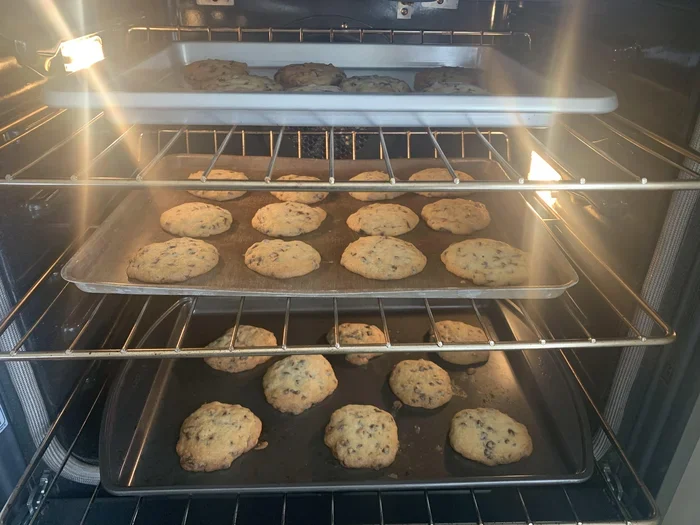
Where you place your cookie sheet in the oven matters more than you might think. The center rack is almost always the best position for baking cookies. It allows heat to circulate evenly around the cookies from all sides.
Avoid placing your cookie sheet on the top rack. The top element can be much hotter, which causes the tops of your cookies to brown too quickly while the bottoms stay underdone. The bottom rack can cause burnt bottoms and undercooked tops. For best results, always use the middle position.
Also, avoid opening the oven door frequently while baking. Each time you open the door, heat escapes and the temperature drops. This can cause cookies to sink or bake unevenly. Trust the oven light and window to check on your cookies instead.
Using an Oven Thermometer
Here is a secret that many home bakers do not know. The temperature dial on your oven can be off by 25°F or more. This means your oven might be running hotter or cooler than what the dial says. An inexpensive oven thermometer takes the guesswork out of baking.
Simply place the thermometer inside your oven and check it against the dial setting. If there is a discrepancy, adjust your dial accordingly. This small investment can dramatically improve your baking results. It is one of the easiest ways to ensure your cookie baking temperature is actually accurate.
Common Mistakes When Preheating for Cookies
Even experienced bakers make mistakes when it comes to oven preheating. These small errors can add up to big differences in your final product. Let us look at the most common pitfalls and how to avoid them.
Skipping the Preheat Entirely
This is the number one mistake. Putting cookies into a cold oven leads to uneven baking, excessive spreading, and poor texture. Always wait for your oven to reach the target temperature before sliding the cookie sheet inside. Set a timer for 10–15 minutes and use that time to prepare your dough and baking sheets.
Not Accounting for Oven Hot Spots
Most ovens have hot spots, which are areas that run hotter than others. These uneven heat zones can cause some cookies to burn while others stay pale. To combat this, rotate your cookie sheet halfway through baking. Simply turn it 180 degrees for even exposure to the heat.
If you notice that your cookies consistently bake unevenly, it might be worth investing in an oven with better heat distribution. Some ovens, like tandoori-style ovens, use different heat circulation methods that can create unique baking environments.
Overbaking Cookies
Overbaking is the enemy of great cookies. The difference between perfectly baked and dry, crumbly cookies is often just one to two minutes. Pull your cookies out of the oven when the edges look golden but the centers still look slightly underdone. They will continue to set as they cool on the baking sheet.
This carryover cooking is real and important. The residual heat from the cookie sheet and the pan continues to bake the cookies even after you remove them from the oven. Accounting for this will help you achieve that perfect chewy texture every single time.
Using the Wrong Baking Sheet
The type of baking sheet you use affects how your cookies bake. Dark, non-stick sheets absorb more heat and can cause bottoms to burn. Light-colored aluminum sheets reflect heat and promote more even browning. Parchment paper or silicone baking mats also help prevent over-browning on the bottom.
For best results, use a light-colored aluminum baking sheet lined with parchment paper. This combination gives you the most control over your cookie baking process. It is a simple change that makes a noticeable difference.
How to Tell When Your Cookies Are Done
Knowing when to pull your cookies out of the oven is a skill that comes with practice. But there are clear visual and tactile cues you can look for. Learning these signs helps you bake with confidence and avoid the frustration of overbaked or underbaked cookies.
First, look at the edges. When the edges turn golden brown, that is a strong signal that the cookies are nearly done. The center should still look slightly soft and underbaked. Do not worry about this. As mentioned earlier, the cookies will continue to set as they cool.
Second, gently press the top of a cookie with your finger. If it springs back, it is done. If it leaves an indent, it needs more time. Third, use a timer. Even experienced bakers rely on timers because it is easy to lose track of time when you are busy with other kitchen tasks.
Remember that every oven is different. Your neighbor’s oven might bake cookies faster than yours. That is why the first batch is always your test batch. Adjust the time and temperature based on how that first tray turns out.
Quick Tips for Perfect Cookies Every Time
- Always preheat for at least 10–15 minutes before placing cookies in the oven.
- Use an oven thermometer to verify your oven’s actual temperature.
- Chill your cookie dough for at least 30 minutes before baking to prevent excessive spreading.
- Line your baking sheets with parchment paper or silicone mats for even browning.
- Rotate your cookie sheet halfway through baking to account for hot spots.
- Cool cookies on the baking sheet for 5 minutes before transferring to a wire rack.
- Store baked cookies in an airtight container to maintain freshness and texture.
Conclusion
Now you know exactly what do you preheat the oven to for cookies and why it matters so much. The standard 350°F (175°C) works for most recipes, but adjusting for cookie type gives you even better results. Thin crispy cookies love higher heat, while soft chewy cookies benefit from a lower temperature.
Preheating properly, using the right oven settings, and avoiding common mistakes will transform your cookie baking. These small changes add up to cookies that look professional and taste incredible. The next time you bake, pay attention to your preheating routine and watch the difference in your results.
Baking cookies should be fun and rewarding. With the right temperature and a little patience, you will pull perfect batches out of your oven every single time. Happy baking, and enjoy every warm, gooey bite!
FAQs
Can I bake cookies at 375°F instead of 350°F?
Yes, you can. Baking at 375°F creates thinner, crispier cookies because the higher heat sets the edges faster before the dough spreads too much. Just keep a close eye on them, as they may bake faster than at 350°F. This higher temperature works especially well for butter cookies and thin, crunchy styles.
How long should I preheat my oven before baking cookies?
You should preheat your oven for at least 10 to 15 minutes before placing cookies inside. Most ovens signal when they have reached the target temperature, but waiting an extra few minutes helps the heat stabilize. This ensures your cookies start baking at a consistent temperature from the moment they go in.
Do I need to use parchment paper when baking cookies?
Parchment paper is not strictly necessary, but it makes a big difference. It promotes even browning, prevents sticking, and protects the bottom of your cookies from burning. Silicone baking mats work as a great alternative. Both options are simple upgrades that improve your baking results significantly.
Can I reuse baking sheets without cooling them between batches?
It is best to let your baking sheets cool between batches. A hot sheet causes cookie dough to melt and spread immediately upon contact, leading to flat, thin cookies. If you need to bake multiple batches quickly, swap in a cool sheet while the first batch finishes baking.
Why do my cookies always come out too flat?
Flat cookies usually result from one of several causes. The oven might not be fully preheated, the butter might be too warm, or the dough might need chilling before baking. Also, using a dark non-stick baking sheet can cause excessive spreading. Try chilling your dough for 30 minutes and using a light-colored aluminum sheet.
Is it safe to put cardboard or paper in the oven while baking cookies?
No, you should never put cardboard or paper packaging in the oven. It can catch fire at high temperatures. Always use proper baking sheets, parchment paper, or silicone mats. This is an important oven safety rule that applies to all oven use, not just cookie baking.
Frequently Asked Questions
What is What Do You Preheat The Oven To For Cookies?
What Do You Preheat The Oven To For Cookies is an important topic with many practical applications.