Is Tramontina Oven Safe Here Is What You Need to Know
Yes, many Tramontina products are oven safe, but it depends on the specific line, materials, and temperature limits. Understanding which Tramontina cookware can go in the oven and which cannot will save you from damage and potential safety hazards. This guide covers every Tramontina product line, temperature guidelines, and expert care tips to keep your cookware in top shape.
You just pulled out your favorite Tramontina pan and are ready to start a new recipe. But then you pause. Can you put it in the oven? This question comes up more often than you might think, especially with home cooks who love the versatility of a single pan that works on the stovetop and inside the oven.
The short answer is yes, many Tramontina products are oven safe. But the longer answer involves understanding which specific lines, materials, and components can handle oven heat. Not every Tramontina pot or pan is created equal when it comes to high temperatures. Some are built to withstand extreme heat, while others have parts that simply cannot handle the oven.
In this guide, we break down everything you need to know about Tramontina oven safety. We will cover different product lines, temperature limits, common mistakes, and care tips. By the end, you will feel confident putting your Tramontina cookware in the oven without worry.
Let us dive into the details so you can cook with total confidence.
Key Takeaways
- Many Tramontina products are oven safe: Stainless steel, cast iron, and tri-ply lines handle oven heat well.
- Temperature limits vary by product: Most Tramontina cookware handles up to 500°F, but lids and handles may have lower limits.
- Non-stick lines need caution: Some Tramontina non-stick coatings are not designed for high oven temperatures.
- Always check the manual: Tramontina provides specific oven-safe guidelines for each product.
- Avoid thermal shock: Never move Tramontina cookware from a cold fridge directly into a hot oven.
- Proper care extends lifespan: Hand washing and gradual temperature changes keep your Tramontina cookware performing for years.
- Lids may not be oven safe: Many Tramontina lids contain rubber or phenolic handles that limit oven use.
📑 Table of Contents
What Makes Cookware Oven Safe?
Before we look at specific Tramontina products, it helps to understand what makes any cookware oven safe in the first place. Not all pots and pans can handle the dry, intense heat of an oven. Several factors determine whether a piece of cookware can go from stovetop to oven safely.
Material Matters Most
The material your cookware is made from is the biggest factor. Stainless steel handles high oven temperatures beautifully. Cast iron is nearly indestructible in the oven. Aluminum and copper also perform well but may have limitations depending on handles and coatings.
On the other hand, cookware with plastic handles, wooden parts, or certain non-stick coatings may not be safe above a certain temperature. The material determines the heat resistance and overall durability of the piece.
Handle Construction
Even if the pot or pan body is oven safe, the handles might not be. Many cookware brands use phenolic or rubber handles that can melt or become unsafe at high temperatures. Always check whether the handles are rated for oven use before placing the cookware inside.
Lid Compatibility
Lids are often overlooked when people think about oven safety. Some lids have metal knobs that handle oven heat fine. Others use plastic or silicone knobs that cannot withstand high temperatures. Always verify lid safety separately from the pan itself.
Coating and Finish
Non-stick coatings add another layer of complexity. Some non-stick surfaces are designed for stovetop use only and can release harmful fumes or degrade at high oven temperatures. Understanding the coating type is essential for safe oven use.
Tramontina Product Lines and Oven Safety
Tramontina offers a wide range of cookware products. Each line has different oven-safe capabilities. Let us walk through the most popular Tramontina product lines and what you need to know about their oven performance.
Tramontina Stainless Steel Cookware
Tramontina stainless steel cookware is generally oven safe up to 500°F. This line is one of the most versatile options for home cooks. The stainless steel construction provides even heat distribution and handles high oven temperatures without any issues.
Most Tramontina stainless steel pots and pans feature stainless steel handles that remain cool or at least safe to touch at oven temperatures. These pieces are perfect for recipes that start on the stovetop and finish in the oven, like searing a steak and then finishing it in the oven.
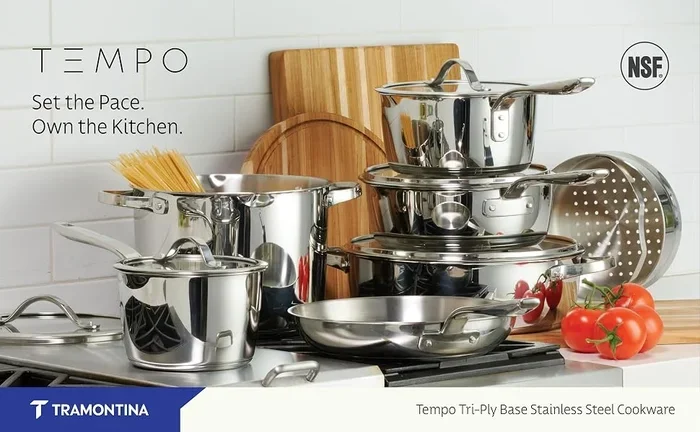
The Tramontina tri-ply stainless steel line is especially popular. The three-layer construction bonds stainless steel with aluminum for excellent heat retention. This line handles oven temperatures with ease and is a favorite among home chefs.
Tramontina Cast Iron Cookware
Tramontina cast iron cookware is built for extreme heat. Cast iron can handle oven temperatures well above 500°F, making it one of the most oven-safe materials available. Dutch ovens, skillets, and braisers from Tramontina’s cast iron line are perfect for oven use.
Cast iron retains heat incredibly well, which makes it ideal for baking, roasting, and slow cooking. The only thing to watch for with cast iron is sudden temperature changes, which can cause thermal shock and cracking.
Tramontina Non-Stick Cookware
Tramontina non-stick cookware requires more caution in the oven. Many Tramontina non-stick pans are rated for oven use up to 350°F or 400°F. Going beyond these limits can damage the non-stick coating and release harmful fumes.
Always check the specific product manual before using a non-stick Tramontina pan in the oven. Some higher-end non-stick lines may handle slightly higher temperatures, but it is always better to be safe than sorry.
Tramontina Bakeware
Tramontina bakeware is designed specifically for oven use. Baking sheets, cake pans, and muffin tins from Tramontina are built to withstand oven temperatures up to 500°F. These pieces are perfect for cookies, bread, casseroles, and more.
The bakeware line typically features sturdy construction that distributes heat evenly. This ensures your baked goods cook consistently and come out perfectly every time.
Tramontina Cookware with Glass Lids
Tramontina tempered glass lids are generally oven safe up to 450°F. These lids allow you to monitor your cooking without lifting the lid and losing heat. The tempered glass construction handles oven temperatures well and resists thermal shock.
However, always check the lid knob material. Some glass lids come with metal knobs that are fully oven safe, while others may have components that limit the temperature rating.
Temperature Limits and Guidelines
Knowing the exact temperature limits for your Tramontina cookware is crucial for safety and longevity. Here is a breakdown of the general temperature guidelines for different Tramontina product lines.
General Temperature Ratings
Most Tramontina cookware follows these general temperature guidelines:
- Stainless steel: Safe up to 500°F
- Cast iron: Safe up to 500°F or higher
- Non-stick: Safe up to 350°F to 400°F
- Bakeware: Safe up to 500°F
- Tempered glass lids: Safe up to 450°F
- Phenolic handles: Safe up to 350°F to 375°F
How to Find Your Specific Product Rating
Every Tramontina product comes with a user manual or product guide that lists the exact oven-safe temperature. You can also find this information on the Tramontina website by searching for your specific product model. The manual will clearly state whether the piece is oven safe and up to what temperature.
If you no longer have the manual, check the bottom of the cookware for stamped information. Many Tramontina pieces include temperature ratings or symbols indicating oven safety directly on the product.
Why Exceeding Temperature Limits Is Dangerous
Exceeding the recommended oven temperature can cause serious problems. Non-stick coatings can release toxic fumes when overheated. Plastic handles can melt and ruin the cookware. Glass lids can shatter if exposed to temperatures beyond their rating. Following the guidelines keeps you safe and protects your investment.
Common Mistakes to Avoid
Even experienced cooks make mistakes when it comes to oven-safe cookware. Here are the most common errors people make with Tramontina products and how to avoid them.
Assuming All Pieces Are Oven Safe
The biggest mistake is assuming every Tramontina pot or pan goes in the oven. Just because the pan body is oven safe does not mean the lid or handles are. Always check each component separately before placing cookware in the oven.
Ignoring Thermal Shock
Thermal shock happens when you expose cookware to sudden temperature changes. For example, taking a cold Tramontina pan from the refrigerator and placing it directly in a hot oven can cause warping or cracking. Always let cookware come to room temperature before exposing it to high heat.
Using the Broiler Without Checking
Many people assume that if a pan is oven safe, it is also broiler safe. This is not always true. The direct, intense heat from the broiler can damage certain materials and handles. Always verify broiler safety separately from general oven safety.
Overheating Non-Stick Surfaces
Overheating non-stick Tramontina cookware is a common mistake. When non-stick surfaces exceed their temperature limit, the coating breaks down. This not only ruins the pan but can release harmful chemicals into your food. Keep non-stick pans within their rated oven temperature at all times.
Neglecting Lid Safety
As mentioned earlier, lids are often the weak point in oven-safe cookware. A pan might be fully oven safe, but if the lid has a plastic knob, it cannot go in the oven. Always remove lids with non-oven-safe components before placing the cookware inside.
How to Care for Tramontina Oven-Safe Cookware
Proper care keeps your Tramontina cookware performing at its best and extends its lifespan significantly. Oven-safe cookware still needs attention after every use to maintain its quality and safety.
Cleaning Tips
Always let Tramontina cookware cool down before washing. Sudden temperature changes, even during cleaning, can cause damage. Hand washing is recommended for most Tramontina products, especially non-stick lines. While many pieces are dishwasher safe, hand washing helps preserve the finish and coating longer.
Use mild dish soap and a soft sponge for cleaning. Avoid abrasive scrubbers or steel wool, which can scratch surfaces and damage non-stick coatings. For stubborn residue, soak the pan in warm soapy water before cleaning.
Storage Best Practices
Store Tramontina cookware carefully to prevent scratches and damage. Stack pans with a soft cloth or paper towel between them to avoid surface scratches. Hang pots and pans if possible to keep them in good condition.
Never store cookware with lids trapped underneath for extended periods, as this can trap moisture and lead to odor or discoloration over time.
Handling and Usage Tips
Use oven mitts or pot holders when handling Tramontina cookware that has been in the oven. Even oven-safe handles can become hot during extended cooking. Always place cookware on a heat-safe surface when removing it from the oven.
Avoid using metal utensils on non-stick surfaces, as they can scratch and damage the coating. Use wooden, silicone, or nylon utensils instead to protect the non-stick finish.
When to Replace Tramontina Cookware
Even with the best care, cookware eventually wears out. Replace Tramontina non-stick pans when the coating starts to peel, scratch, or flake. Warped pans that no longer sit flat on the stovetop should also be replaced. For cast iron, deep rust that cannot be removed is a sign it is time for a new piece.
Final Verdict: Is Tramontina Oven Safe?
Yes, Tramontina is generally oven safe across most product lines, but with important caveats. Stainless steel and cast iron Tramontina cookware handle oven heat exceptionally well and can go up to 500°F or higher. Non-stick lines require more caution and typically stay within the 350°F to 400°F range. Bakeware and tempered glass lids are also designed for oven use.
The key to safe oven use with Tramontina is simple: always check the specific product guidelines. Every piece of cookware has its own temperature rating and component limitations. Read the manual, check the product markings, and follow the care instructions to get the best performance and longest life from your Tramontina cookware.
With the right knowledge and a little care, your Tramontina cookware will serve you well in the oven for years to come. Cook with confidence knowing you have the facts to keep your kitchen safe and your meals delicious.
Remember, oven safety is not one-size-fits-all. Take the time to understand your specific Tramontina products, and you will enjoy many successful oven-cooked meals for a long time.
Frequently Asked Questions
Can I put a Tramontina non-stick pan in the oven?
Most Tramontina non-stick pans are oven safe up to 350°F or 400°F. However, you should always check the specific product manual for the exact temperature rating. Exceeding the limit can damage the non-stick coating and release harmful fumes.
What is the maximum oven temperature for Tramontina stainless steel cookware?
Tramontina stainless steel cookware is generally safe up to 500°F. This includes the tri-ply stainless steel line and most standard stainless steel pots and pans. Always verify the specific rating for your product model.
Are Tramontina cast iron Dutch ovens oven safe?
Yes, Tramontina cast iron Dutch ovens are fully oven safe and can handle temperatures well above 500°F. Cast iron is one of the most oven-safe materials available. Just avoid sudden temperature changes to prevent thermal shock.
Can Tramontina glass lids go in the oven?
Tramontina tempered glass lids are generally oven safe up to 450°F. However, you should also check the lid knob material, as some knobs may have lower temperature limits than the glass itself.
What should I do if my Tramontina pan is warped after oven use?
Warping usually happens when cookware is exposed to sudden temperature changes or exceeds its temperature limit. A warped pan will not sit flat on the stovetop and should be replaced. To prevent warping, avoid thermal shock and stay within the recommended temperature range.
Is Tramontina cookware covered by a warranty for oven damage?
Tramontina offers a limited lifetime warranty on many of its cookware products. However, oven damage caused by misuse, such as exceeding temperature limits or thermal shock, may not be covered. Always review the warranty terms for your specific product and use cookware as directed.