Why Was The Microwave Oven Invented And What Happened Next
The microwave oven was invented by accident when engineer Percy Spencer noticed a chocolate bar melting near a magnetron. This discovery led to the first microwave oven, which revolutionized how we heat and cook food at home. Today, the microwave oven is one of the most essential kitchen appliances in households worldwide.
The story of the microwave oven is one of the most fascinating tales in the history of kitchen appliances. It all started with a melted chocolate bar and a curious engineer. What began as an accident in a laboratory grew into one of the most popular household items on the planet.
Today, nearly every kitchen has a microwave oven sitting on the counter or built into a cabinet. We use it to reheat leftovers, defrost frozen meals, and even cook full dinners. But have you ever wondered why was the microwave oven invented in the first place? And what happened after that first moment of discovery?
This article dives deep into the full story. You will learn about the inventor, the technology behind it, and how the microwave oven evolved from a giant industrial machine into a compact cooking appliance that saves time in kitchens around the world.
Key Takeaways
- Accidental Invention: The microwave oven was discovered by chance when Percy Spencer observed radar technology melting a candy bar.
- Radar Technology Origins: The magnetron used in early radar systems was the core component that made microwave cooking possible.
- From Industrial to Home Use: The first microwave oven was massive and expensive, but it evolved into the compact countertop appliance we know today.
- How It Works: Microwave ovens use electromagnetic waves to vibrate water molecules in food, creating rapid and even heating.
- Modern Innovations: Today’s microwave ovens include smart features, inverter technology, and combination models for advanced food preparation.
- Safety and Efficiency: Modern microwave cooking is safe, energy-efficient, and faster than traditional oven methods.
📑 Table of Contents
- The Accidental Discovery That Changed Cooking Forever
- How Percy Spencer Invented The Microwave Oven
- From Radarange To Kitchen Counter: The Evolution
- How Microwaves Actually Heat Your Food
- Common Myths About Microwave Cooking
- What The Future Holds For Microwave Technology
- How To Get The Most Out Of Your Microwave Oven
- Common Mistakes People Make With Microwave Ovens
- Frequently Asked Questions
- Conclusion
The Accidental Discovery That Changed Cooking Forever
A Sweet Accident During World War II
The invention of the microwave oven was not planned. It happened completely by accident during World War II. Engineers were working on radar technology for the military. They were trying to improve how radar signals could detect enemy aircraft and ships.
One of the key components in radar systems was the magnetron. This is a vacuum tube that generates microwaves. It was essential for radar communication and detection. Engineers at Raytheon, a defense contractor, were focused on making magnetrons more powerful and reliable.
In 1945, a scientist named Percy Spencer was working on a magnetron at Raytheon’s lab. He was an expert in electromagnetic technology and had extensive experience with radar systems. One day, while standing near an active magnetron, he noticed something strange.
A chocolate bar in his pocket had melted. This was unusual. The microwave radiation from the magnetron was heating the chocolate without any direct contact. Spencer was curious. He wanted to understand what was happening.
He started experimenting. He placed popcorn kernels near the magnetron. The popcorn popped almost instantly. Then he tried an egg. It exploded. These experiments showed him that microwave energy could heat food quickly and effectively.
Why This Discovery Was So Important
Before Spencer’s discovery, heating food required a stove, an oven, or a fire. It took time and constant attention. The idea that electromagnetic waves could heat food from the inside out was completely new.
This was a major breakthrough in food preparation technology. It opened the door to a new way of cooking. Spencer immediately recognized the potential. He filed a patent for the first microwave oven concept.
Raytheon supported his work. They invested in developing the idea further. What started as a simple observation in a lab became a project that would change how the world cooks and eats.
How Percy Spencer Invented The Microwave Oven
Who Was Percy Spencer?
Percy Spencer was born in 1914 in Portland, Maine. He did not have a formal college education. He was largely self-taught. His interest in electronics started at a young age. He worked in factories and taught himself about electrical engineering.
During World War II, Spencer joined Raytheon. His knowledge of radar technology and electromagnetic systems made him a valuable engineer. He had over 300 patents by the end of his career. But the microwave oven was his most famous invention.
Spencer was a practical thinker. He did not just notice the melted chocolate. He followed through with experiments. He tested different foods. He studied how microwave energy interacted with different materials. This hands-on approach was key to his success.
The First Microwave Oven: The Radarange
The first microwave oven was called the Radarange. It was patented by Raytheon in 1945. The Radarange was not a countertop appliance. It was a massive unit that stood over six feet tall.
It weighed over 750 pounds. It used water-cooled magnetrons to generate microwaves. The Radarange was intended for commercial and industrial use. It was first installed in restaurants, ships, and military facilities.
The first commercial sale of the Radarange happened in 1947. A restaurant in Boston installed one. The cost was around $5,000 at the time. That is over $60,000 in today’s money. Clearly, this was not something the average household could afford.
Despite the size and cost, the Radarange proved the concept. Microwave cooking worked. Food could be heated in seconds instead of minutes. This was a game-changer for food preparation in commercial settings.
Challenges in Early Development
The early microwave oven faced several challenges. The size was a major issue. The magnetron technology was large and expensive. Cooling systems were needed because the tubes generated a lot of heat.
Safety was another concern. Early models did not have the shielding that modern microwave ovens have. There were worries about radiation exposure. Engineers had to develop better containment and safety features.
Cost was the biggest barrier. For the microwave oven to become a household item, it needed to be smaller, safer, and cheaper. It took decades of development to reach that point.
From Radarange To Kitchen Counter: The Evolution
How the Microwave Oven Became Affordable
The first home-use microwave oven was introduced in 1967. It was made by Amana, a division of Raytheon. This model was called the Amana Radarange. It was much smaller than the original commercial units.
It cost around $495. That is still expensive by 1960s standards, but it was a fraction of the earlier models. Sales grew slowly at first. Many people were skeptical about microwave cooking. They did not fully understand how it worked.
By the 1970s, prices dropped significantly. More manufacturers entered the market. Competition drove costs down. The microwave oven became more accessible to everyday families.
By the late 1970s and early 1980s, microwave ovens were a common sight in American kitchens. The household appliance market embraced the technology. Manufacturers added new features like timers, power levels, and preset cooking modes.
The Rise of the Countertop Microwave
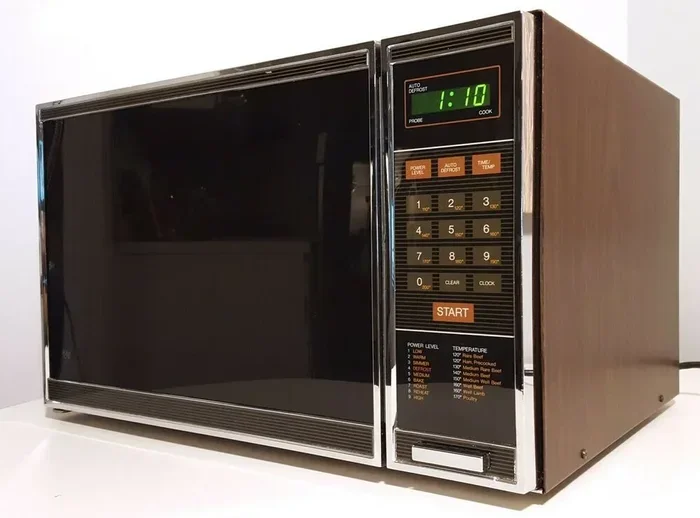
The countertop microwave oven changed everything. It was compact. It fit on any kitchen counter. It did not require special installation or plumbing.
Families loved the convenience. They could heat a meal in minutes instead of waiting for a traditional oven to preheat. The rapid heating capability was a huge selling point.
By the 1990s, over 90% of American households had a microwave oven. The kitchen appliance had become essential. It was no longer a luxury or a novelty. It was a daily tool for food preparation.
Today, microwave ovens come in many styles. There are countertop models, over-the-range units, and built-in drawer microwaves. Some combine microwave cooking with convection baking. The options are endless.
How Microwaves Actually Heat Your Food
The Science Behind Microwave Cooking
Understanding how a microwave oven works helps you use it better. The process is simpler than most people think.
Inside every microwave oven is a magnetron. This is the same type of tube used in radar systems. The magnetron converts electrical energy into microwave radiation.
These microwaves are a form of electromagnetic energy. They have a specific frequency, usually around 2.45 GHz. This frequency is absorbed by water, fat, and sugar molecules in food.
When microwaves hit these molecules, they cause them to vibrate rapidly. This vibration creates friction. The friction produces heat. That is how food gets warm.
Unlike a traditional oven, which heats food from the outside in, a microwave oven heats food from the inside out. This is why microwave cooking is so fast. The heat is generated throughout the food at the same time.
Why Some Foods Heat Faster Than Others
Not all foods heat at the same rate in a microwave oven. Foods with high water content heat the fastest. Think of soups, vegetables, and beverages.
Foods with less water take longer. Bread, pastries, and dry foods heat more slowly. This is because there is less water for the microwaves to interact with.
Stirring and rotating food helps. It ensures even exposure to microwave energy. Many modern microwave ovens have turntables for this purpose.
Understanding this science helps you cook better. You can make smarter choices about how to use your microwave oven for different types of food preparation.
Common Myths About Microwave Cooking
Myth: Microwaves Make Food Less Nutritious
This is one of the most common myths about microwave ovens. Many people believe that microwave cooking destroys nutrients in food.
The truth is the opposite. Microwave cooking actually preserves more nutrients than many other methods. Because cooking time is shorter, vitamins and minerals have less time to break down.
Boiling vegetables, for example, can leach nutrients into the water. Microwave heating uses little to no water. The nutrients stay in the food.
Studies from the Journal of Food Science support this. Microwave ovens are one of the best methods for retaining nutrients. So you can feel good about using your microwave oven for healthy meals.
Myth: Microwaves Cause Cancer
Another widespread myth is that microwave ovens cause cancer. This is not true. Microwaves are a form of non-ionizing radiation.
Non-ionizing radiation does not damage DNA. It is very different from ionizing radiation like X-rays. The microwaves in your oven are completely safe when used properly.
Modern microwave ovens have strict safety standards. The door seals and shielding prevent any leakage. The FDA regulates microwave oven manufacturing to ensure safety.
As long as your microwave oven is in good condition, there is no health risk. Using a damaged door or seal is the one situation to avoid.
What The Future Holds For Microwave Technology
Smart Microwaves and IoT Integration
The microwave oven continues to evolve. Smart technology is now being integrated into kitchen appliances. Many new models connect to Wi-Fi and work with voice assistants.
You can control your microwave oven with your phone. Some models have sensors that detect food type and adjust power levels automatically. This is called inverter technology.
Smart microwave ovens can suggest cooking times and power settings. They make food preparation even easier. The future of microwave cooking is intelligent and automated.
Combination Ovens and Multi-Function Models
Modern microwave ovens do much more than reheat. Combination models offer microwave cooking, convection baking, and grilling all in one unit.
These countertop ovens save space in the kitchen. They replace multiple appliances. A single combination microwave oven can bake, roast, and reheat.
Energy efficiency is another trend. Newer models use less electricity than older ones. They heat food faster, which reduces overall energy consumption.
The microwave oven is far from a static invention. It continues to adapt to modern needs. Innovation in kitchen appliance technology ensures the microwave oven will remain essential for decades to come.
How To Get The Most Out Of Your Microwave Oven
Quick Tips for Better Results
- Stir food halfway through cooking. This helps distribute heat evenly.
- Use microwave-safe containers. Glass and ceramic work best. Avoid metal.
- Cover food with a microwave-safe lid. This traps steam and speeds up cooking.
- Let food rest after heating. Heat continues to distribute for a minute or two.
- Defrost on the lowest power setting. This prevents edges from cooking while the center stays frozen.
Quick Tips for Maintenance
- Clean the interior regularly. Food splatters can affect performance.
- Check the door seal. A damaged seal can cause microwave leakage.
- Never run an empty microwave oven. It can damage the magnetron.
- Use a surge protector. This protects the electronics from power spikes.
Common Mistakes People Make With Microwave Ovens
Using the Wrong Containers
One of the most common mistakes is using the wrong type of container. Metal containers and aluminum foil should never go in a microwave oven. They reflect microwaves and can cause sparks.
Plastic containers that are not labeled microwave-safe can melt. This releases harmful chemicals into food. Always check for the microwave-safe symbol before heating.
Overheating Liquids
Heating water or other liquids in a microwave oven can be dangerous. Liquids can become superheated. This means they heat past the boiling point without actually boiling.
When you disturb a superheated liquid, it can erupt violently. This is called a superheating event. To prevent this, place a wooden stick or microwave-safe spoon in the container.
Ignoring Turntable Maintenance
The turntable in your microwave oven helps food cook evenly. If it is dirty or not spinning properly, food may heat unevenly.
Clean the turntable and the rollers regularly. Make sure nothing is blocking the rotation. This small maintenance step makes a big difference in microwave cooking results.
Frequently Asked Questions
Who invented the microwave oven?
Percy Spencer, an engineer at Raytheon, invented the microwave oven in 1945. He discovered that microwave energy from a magnetron could heat food quickly. His accidental observation with a melted chocolate bar led to the first microwave oven patent.
When was the first home microwave oven sold?
The first home-use microwave oven was sold in 1967 by Amana. It was called the Amana Radarange. It cost around $495 at the time. By the 1980s, microwave ovens had become affordable for most households.
Is microwave cooking safe?
Yes, microwave cooking is completely safe. Microwave ovens use non-ionizing radiation, which does not damage cells or DNA. Modern microwave ovens are regulated by the FDA and have multiple safety features. As long as your unit is in good condition, there is no health risk.
Do microwave ovens destroy nutrients in food?
No, this is a common myth. Microwave ovens actually preserve more nutrients than many other cooking methods. Because cooking time is shorter, vitamins and minerals have less time to break down. Using little or no water in microwave cooking also helps retain nutrients.
Can you put metal in a microwave oven?
No, you should never put metal in a microwave oven. Metal reflects microwaves and can cause sparks or fires. Always use microwave-safe containers made of glass, ceramic, or approved plastics. Check the bottom of containers for the microwave-safe symbol.
How long does a microwave oven typically last?
A well-maintained microwave oven typically lasts 7 to 10 years. Regular cleaning and proper use extend its lifespan. Avoid running it empty and keep the interior clean. If your microwave oven starts making unusual noises or heating unevenly, it may be time for a replacement.
Conclusion
The story of the microwave oven is a reminder that great inventions often come from unexpected places. Percy Spencer’s simple observation about a melting chocolate bar led to a revolution in kitchen appliances and food preparation.
From the massive Radarange of the 1940s to the smart countertop ovens of today, the microwave oven has come a long way. It has made microwave cooking faster, safer, and more efficient with every generation.
Today, the microwave oven is indispensable. It saves time, energy, and effort in kitchens around the world. Understanding its history helps us appreciate the technology we use every day.
The next time you heat up a meal in your microwave oven, remember the accidental discovery that started it all. Percy Spencer’s curiosity changed the way we live, eat, and cook. And the microwave oven continues to evolve, proving that even the most familiar household appliance still has room for innovation.