How Long To Cook Chicken In A Convection Oven Perfectly
Cooking chicken in a convection oven is faster and more even than a regular oven. This guide covers exact times for whole chicken, breasts, thighs, and more. You will learn the right temperatures, pro tips, and common mistakes so your chicken turns out perfectly every time.
Cooking chicken in a convection oven is one of the best ways to get juicy meat and crispy skin. Whether you are roasting a whole bird or baking chicken breasts, a convection oven makes the process faster and easier. Many home cooks love this method because it delivers consistent results every single time.
If you have ever wondered how long to cook chicken in a convection oven, you are in the right place. This guide covers everything you need to know. From whole chicken to chicken thighs, we break down the times and temperatures so you never have to guess again.
Convection ovens use a fan to move hot air around the food. This means heat reaches every part of the chicken evenly. The result? Beautifully browned chicken that is cooked through from edge to center. Let us dive into the details.
Key Takeaways
- Faster Cooking: A convection oven cooks chicken about 25% faster than a conventional oven.
- Even Heat: The fan circulates hot air for uniform browning and cooking.
- Right Temp Matters: Always cook chicken to an internal temp of 165°F for safety.
- Crispy Skin: Convection ovens excel at making chicken skin golden and crunchy.
- Cut Matters: Different chicken cuts need different times and temperatures.
- Rest Your Chicken: Letting chicken rest after cooking keeps it juicy.
📑 Table of Contents
- Why a Convection Oven Is Great for Cooking Chicken
- How Long to Cook Different Chicken Cuts in a Convection Oven
- The Right Temperature for Chicken in a Convection Oven
- Tips for Perfectly Juicy and Crispy Chicken
- Common Mistakes to Avoid When Cooking Chicken in a Convection Oven
- Quick Reference: Chicken Cooking Times at a Glance
- Expert Insights on Convection Oven Chicken
- Convection vs Regular Oven for Cooking Chicken
- How to Store and Reheat Leftover Chicken
- Final Thoughts on Cooking Chicken in a Convection Oven
Why a Convection Oven Is Great for Cooking Chicken
A convection oven is a game changer when it comes to roasting chicken. The built-in fan pushes hot air all around the food. This creates a much more even cooking environment than a standard oven.
How Convection Cooking Works
In a regular oven, heat rises from the bottom element. The top of the oven is hotter than the bottom. This can cause uneven cooking. Some parts of the chicken may dry out while others stay undercooked.
A convection oven fixes this problem. The fan blows hot air steadily over and around the chicken. Every surface gets the same amount of heat. This leads to faster cooking and better browning. Your chicken skin turns crispy without needing extra effort.
Benefits of Using a Convection Oven for Chicken
- Faster cook times: Chicken cooks about 25% faster in a convection oven.
- Even browning: The fan eliminates hot spots for uniform color.
- Crispy skin: Moving air removes moisture from the skin quickly.
- Juicy results: Faster cooking means less time for juices to escape.
- Energy savings: Shorter cook times use less electricity or gas.
These benefits make convection ovens a top choice for roasting chicken. Once you try it, you may never go back to a regular oven again.
How Long to Cook Different Chicken Cuts in a Convection Oven
Not all chicken cuts are the same. A whole chicken takes longer than a bunch of chicken drumsticks. Understanding the right time for each cut is key to great results. Below, we break down the cooking times for the most popular chicken parts.
Whole Chicken Cooking Time
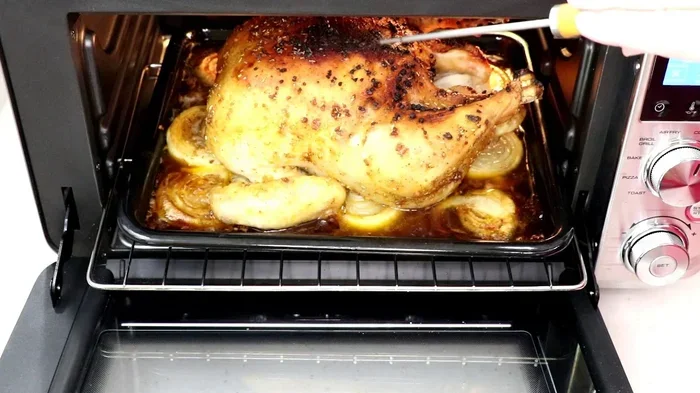
Roasting a whole chicken is one of the most satisfying things you can make in a convection oven. A typical whole chicken weighs between 4 and 6 pounds. Here is what you need to know about whole chicken convection oven timing.
- 4-pound chicken: About 60 to 70 minutes at 375°F.
- 5-pound chicken: About 70 to 80 minutes at 375°F.
- 6-pound chicken: About 80 to 90 minutes at 375°F.
Always use a meat thermometer. Insert it into the thickest part of the thigh. The internal temperature should reach 165°F. This is the safest temperature for eating chicken.
Chicken Breast Cooking Time
Chicken breasts are one of the most popular cuts. They cook quickly in a convection oven. Boneless, skinless chicken breasts are even faster.
- Boneless breasts: 20 to 25 minutes at 375°F.
- Bone-in breasts: 30 to 35 minutes at 375°F.
- Thick-cut breasts: May need an extra 5 to 10 minutes.
Chicken breast can dry out fast. Do not overcook it. Pull it off the heat as soon as it hits 165°F internally. Let it rest for 5 minutes before cutting. This helps the juices redistribute.
Chicken Thighs and Drumsticks
Dark meat chicken is more forgiving than white meat. It has more fat and connective tissue. This makes it harder to overcook.
- Bone-in thighs: 35 to 40 minutes at 375°F.
- Drumsticks: 30 to 35 minutes at 375°F.
- Boneless thighs: 25 to 30 minutes at 375°F.
Dark meat stays juicy even if you cook it a few minutes longer. This makes chicken thighs a great choice for beginners. They are hard to mess up in a convection oven.
Chicken Wings
Chicken wings are a crowd favorite. They cook fast in a convection oven and get wonderfully crispy. Convection oven chicken wings are crispy on the outside and tender on the inside.
- Wings at 400°F: About 25 to 30 minutes.
- Flip halfway: This ensures even browning on both sides.
For extra crispy skin, pat the wings dry before seasoning. Moisture is the enemy of crispiness. The convection fan helps remove that moisture quickly.
The Right Temperature for Chicken in a Convection Oven
Temperature is just as important as cook time. Getting the right oven temperature makes a huge difference in your results. Most chicken recipes work best at 375°F in a convection oven.
Recommended Temperatures for Different Cuts
| Chicken Cut | Oven Temp | Cook Time |
|---|---|---|
| Whole chicken (4-6 lbs) | 375°F | 60-90 min |
| Boneless breasts | 375°F | 20-25 min |
| Bone-in breasts | 375°F | 30-35 min |
| Bone-in thighs | 375°F | 35-40 min |
| Drumsticks | 375°F | 30-35 min |
| Wings | 400°F | 25-30 min |
Some recipes call for a slightly lower temperature like 350°F. This works well for larger whole chickens. A lower temp gives the heat more time to reach the center. Other recipes use 400°F for smaller cuts like wings and thighs.
Why Internal Temperature Matters Most
The oven temperature is a guideline. The real measure of doneness is the internal temperature of the chicken. Always use a digital meat thermometer. Place it in the thickest part without touching bone.
Chicken breast internal temp should read 165°F. The same goes for thighs, drumsticks, and wings. This temperature ensures the chicken is safe to eat. It also keeps the meat moist and tender.
Do not rely on color alone. Chicken can look done before it reaches 165°F. And sometimes it may still look slightly pink at the right temperature. A thermometer removes all guesswork.
Tips for Perfectly Juicy and Crispy Chicken
Getting the best results from your convection oven takes a little know-how. These tips will help you achieve restaurant-quality chicken at home. Follow these steps and you will notice a big difference.
Brine or Dry Brine Your Chicken
Brining is one of the best ways to make juicy chicken. A simple saltwater brine adds moisture and flavor. If you do not have time to brine, try a dry brine. Just sprinkle salt on the chicken and let it sit in the fridge for a few hours.
Dry brining works great in a convection oven. The salt draws out moisture at first. Then it gets reabsorbed into the meat. This seasons the chicken deeply and helps the skin crisp up.
Do Not Overcrowd the Pan
Convection ovens work best when air can flow freely. If you crowd too much chicken on one pan, the air cannot circulate properly. This leads to uneven cooking and soggy spots.
Use a wire rack over a baking sheet. This lets hot air reach the bottom of the chicken too. It also lifts the chicken above any rendered fat. The result is crispier skin all around.
Let the Chicken Come to Room Temperature
Take the chicken out of the fridge 20 to 30 minutes before cooking. Cold chicken placed in a hot oven cooks unevenly. The outside may burn before the inside is done.
Room temperature chicken cooks more evenly. This small step makes a big difference in your chicken cooking time and quality. It is one of the easiest pro tips to follow.
Rest the Chicken After Cooking
Once your chicken is done, resist the urge to cut into it right away. Let it rest for 5 to 10 minutes. This allows the juices to settle back into the meat.
Cutting too early lets all those juices run out. The chicken ends up drier than it should be. A good rest makes a noticeable difference in every bite.
Use a Light Coat of Oil or Butter
A thin layer of oil or melted butter helps the skin brown. It also adds flavor. Do not use too much. A light coating is all you need.
Brush it on evenly before seasoning. The convection fan will help this coating crisp up beautifully. You will get golden, flavorful skin with minimal effort.
Common Mistakes to Avoid When Cooking Chicken in a Convection Oven
Even experienced cooks make mistakes. Knowing what to avoid saves time and prevents disappointing meals. Here are the most common errors people make when using a convection oven for chicken.
Skipping the Temperature Adjustment
Many people forget to reduce the temperature when using a convection oven. Convection ovens cook hotter and faster than conventional ovens. Most experts recommend lowering the temperature by 25°F.
If a recipe says 400°F for a regular oven, use 375°F in a convection oven. This small adjustment prevents the chicken from drying out. It also avoids burning the outside before the inside is done.
Not Using a Meat Thermometer
guessing the doneness of chicken is risky. The only reliable way to know is with a meat thermometer. Ovens vary in temperature accuracy. Chicken size and thickness also affect cook time.
A good instant-read thermometer takes the guesswork out completely. It is a small investment that pays off every time you cook chicken. Get one if you do not have one already.
Opening the Oven Door Too Often
Every time you open the oven door, heat escapes. In a convection oven, this disrupts the airflow. The fan has to work harder to recover the temperature.
Try not to open the door more than necessary. Use the oven light to check on your chicken. Trust the timer and the thermometer instead of peeking constantly.
Cooking Frozen Chicken Without Adjusting Time
You can cook frozen chicken in a convection oven. But you need to add significant time. Frozen chicken takes roughly 50% longer than thawed chicken.
Always check the internal temperature. Frozen chicken is more prone to uneven cooking. The outside may be done while the center is still frozen. Plan ahead and thaw when possible for best results.
Using the Wrong Pan
Dark pans absorb more heat and can cause over-browning. Light-colored or aluminum pans work best for convection cooking. Glass pans also work but may require a slight temperature reduction.
A rimmed baking sheet with a wire rack is ideal. It promotes airflow and prevents steaming. This is the best setup for crispy oven roasted chicken in a convection oven.
Quick Reference: Chicken Cooking Times at a Glance
Here is a quick cheat sheet for how long to cook chicken in a convection oven. Print it out or save it for your next cooking session.
- Whole chicken (4-6 lbs): 375°F for 60 to 90 minutes
- Boneless chicken breasts: 375°F for 20 to 25 minutes
- Bone-in chicken breasts: 375°F for 30 to 35 minutes
- Bone-in thighs: 375°F for 35 to 40 minutes
- Drumsticks: 375°F for 30 to 35 minutes
- Chicken wings: 400°F for 25 to 30 minutes
- Chicken tenders: 375°F for 15 to 20 minutes
These times are starting points. Always check the internal temperature with a thermometer. Factors like chicken thickness and starting temperature affect the actual time needed.
Expert Insights on Convection Oven Chicken
Professional chefs love convection ovens for roasting chicken. The even heat distribution creates restaurant-quality results at home. Here is what the experts have to say.
Chef Michael Smith often recommends convection roasting for chicken. He says the fan helps achieve crispy skin without constant monitoring. The even heat means less attention is needed during cooking.
Food scientists also support convection cooking. Moving air removes the moisture layer on the chicken surface faster. This is what creates the crispy, golden exterior. The same airflow also helps render fat more efficiently in dark meat cuts.
The key takeaway from experts is simple. A convection oven makes chicken cooking easier and more reliable. You get better results with less effort. It is one of the best tools for any home cook.
Convection vs Regular Oven for Cooking Chicken
Some people wonder if a convection oven is really worth it for chicken. Let us compare the two methods side by side.
A regular oven heats from a stationary element. The heat rises naturally but does not circulate well. Hot spots develop. Chicken may brown unevenly as a result.
A convection oven uses a fan to move the hot air. This eliminates hot spots and promotes even cooking. Chicken cooks faster and more uniformly. The skin gets crispier too.
The main trade-off is that convection can dry out delicate foods if you are not careful. But chicken is forgiving enough to handle the faster cook time. With the right temperature and timing, convection chicken comes out perfectly juicy every time.
If you have both options, try the convection setting for chicken. You will likely notice a difference in texture and color right away.
How to Store and Reheat Leftover Chicken
Leftover chicken is a bonus when you roast a big batch. Proper storage keeps it safe and tasty for days.
Let the chicken cool completely before storing. Place it in an airtight container in the fridge. Cooked chicken stays good for 3 to 4 days in the refrigerator.
To reheat, use the convection oven again. Set it to 350°F and warm for 10 to 15 minutes. This keeps the skin crispy and the meat moist. Avoid microwaving if you want to maintain good texture.
Final Thoughts on Cooking Chicken in a Convection Oven
Now you know exactly how long to cook chicken in a convection oven for every cut. From whole chicken to wings, the times and temperatures are clear. The convection method gives you faster cooking, even browning, and crispy skin.
Remember to always use a meat thermometer. Cook to 165°F internally for safety. Let your chicken rest after cooking to keep it juicy. Avoid common mistakes like skipping the temperature adjustment or overcrowding the pan.
With these tips in your toolkit, you are ready to make amazing chicken every time. Your convection oven is a powerful tool. Use it well and you will never serve dry, boring chicken again. Get in the kitchen and give it a try today.
Frequently Asked Questions
Can I cook frozen chicken in a convection oven?
Yes, you can cook frozen chicken in a convection oven. It will take about 50% longer than thawed chicken. Always check the internal temperature to make sure it reaches 165°F in the thickest part.
What temperature should I set my convection oven for chicken?
Most chicken cuts cook best at 375°F in a convection oven. Wings do well at 400°F. Remember to reduce the temperature by 25°F from what a regular oven recipe calls for.
How do I know if the chicken is done without a thermometer?
The safest way is to use a meat thermometer. If you do not have one, cut into the thickest part. The juices should run clear, not pink. The meat should be white throughout with no translucent areas.
Does convection cooking make chicken drier than a regular oven?
Not necessarily. Convection ovens cook faster, which can actually keep chicken juicier. The key is not to overcook it. Use a thermometer and pull the chicken at 165°F internal temp.
How long does it take to roast a whole chicken in a convection oven?
A 4 to 6 pound whole chicken takes about 60 to 90 minutes at 375°F. The exact time depends on the size of the bird and whether it is stuffed. Always verify with a meat thermometer.
Should I cover chicken with foil when using a convection oven?
Generally, no. Leaving the chicken uncovered allows the skin to crisp up. If the chicken is browning too fast, you can loosely tent it with foil for the last 10 to 15 minutes of cooking.
=== CONCLUSION ===
Cooking chicken in a convection oven is simple, fast, and rewarding. You now have all the times, temperatures, and tips you need for perfect results. Whether you are roasting a whole bird or baking chicken breasts, the convection setting delivers crispy skin and juicy meat every time.
Follow the guidelines in this article and you will see a real difference in your chicken dishes. Use a meat thermometer, let the chicken rest, and avoid the common mistakes we covered. With a little practice, convection oven chicken will become your go-to method for weeknight dinners and weekend roasts alike.