How Long To Cook Ham With Bone In Oven For Best Results
Cooking a bone-in ham in the oven is simpler than most people think. This guide covers everything you need to know about how long to cook ham with bone in oven, including exact times, temperatures, and pro tips for a perfectly glazed result every single time. You will learn how to pick the right ham, prepare a delicious glaze, and avoid common mistakes.
There is something special about pulling a perfectly cooked ham out of the oven. The kitchen fills with a warm, smoky aroma. The meat is juicy. The glaze is golden. And everyone at the table is happy.
If you have been wondering how long to cook ham with bone in oven, you are in the right place. This guide gives you everything you need. We cover times, temperatures, glazes, and common mistakes. By the end, you will feel confident cooking a bone-in ham like a pro.
A bone-in ham is a showstopper for holidays and family dinners. It looks impressive. It tastes incredible. And it feeds a crowd. But cooking it right takes a little know-how. The good news is that it is not as hard as it seems.
How long to cook ham with bone in oven depends on a few key factors. The weight of the ham matters most. The oven temperature plays a big role too. And the glaze you choose can add extra flavor and texture. Let us walk through it all step by step.
Key Takeaways
- Plan for 18 to 20 minutes per pound at 325 degrees Fahrenheit for the best bone-in ham cooking time.
- Always use a meat thermometer and aim for an internal temperature of 140 degrees Fahrenheit for a fully cooked ham.
- Apply your glaze during the last 30 to 45 minutes of cooking to prevent burning and achieve a beautiful caramelized crust.
- Let the ham rest for 15 to 20 minutes before slicing to allow juices to redistribute for maximum moisture.
- Avoid common mistakes like cooking at too high a temperature, skipping the meat thermometer, or using non-oven-safe containers.
- Experiment with different glazes like maple mustard, honey pineapple, or fruit compote for unique flavor variations.
- A bone-in ham is the best choice for oven roasting because the bone adds flavor and keeps the meat juicy throughout cooking.
📑 Table of Contents
- Why Cooking Bone-In Ham in the Oven Is the Best Choice
- Choosing the Right Bone-In Ham for Your Oven
- How Long To Cook Ham With Bone In Oven: The Complete Guide
- Preparing and Glazing Your Ham Like a Pro
- Resting and Serving Your Ham
- Common Mistakes to Avoid When Cooking Ham
- Frequently Asked Questions
- Final Thoughts on Cooking Bone-In Ham in the Oven
Why Cooking Bone-In Ham in the Oven Is the Best Choice
Many people ask, “Why not just use the microwave or a slow cooker?” The oven gives you something those methods simply cannot. It creates a beautiful crispy outer layer while keeping the inside moist and tender. The even heat distribution of an oven makes it ideal for cooking a large piece of meat like a bone-in ham.
When you cook ham in the oven, you also get better flavor development. The dry heat caramelizes the sugars in your glaze. It creates that sticky, sweet, slightly crispy exterior everyone loves. A slow cooker can make the meat tender, but it does not give you that same roasted finish.
Using an oven also gives you more control. You can adjust the temperature at any point. You can baste the ham whenever you want. And you can monitor the bone in ham cooking time closely. This level of control matters when you are cooking for a special occasion.
Some cooks like to try different cooking methods for variety. For instance, if you enjoy exploring other oven-based recipes, you might also enjoy learning how to cook stuffed rouladen in the oven for another delicious oven-roasted meat dish. The techniques share some similarities, and both result in wonderfully flavorful meals.
Oven vs Other Cooking Methods
Let us compare the oven to other popular methods. A microwave heats the ham quickly but often leaves it rubbery. The edges dry out while the center stays cold. A slow cooker is convenient, but it does not create any browning or crispiness.
The oven strikes the perfect balance. It cooks evenly. It browns beautifully. And it fills your home with that irresistible roasted meat smell. For a bone-in ham, the oven is simply the best choice.
Some people wonder if they need a special type of oven for this job. A standard home oven works perfectly fine. However, if you are curious about alternative oven setups, you can explore how to make a tandoori oven for a different cooking experience. A tandoori-style oven can add unique smoky flavors, though it requires more setup than a standard oven.
Choosing the Right Bone-In Ham for Your Oven
Not all hams are the same. Before you start cooking, you need to pick the right cut. The type of ham you choose affects the cooking time and the final result.
Understanding Different Ham Cuts
A whole ham includes both the shank end and the butt end. It is large and impressive. A half ham, also called a shank half or butt half, is smaller and easier to manage. A spiral ham is already sliced and often comes pre-glazed. But for this guide, we focus on a traditional bone-in ham that you prepare yourself.
The bone-in ham has a few advantages. The bone adds flavor during cooking. It helps keep the meat moist. And it gives you a beautiful presentation when you serve it. Many people prefer bone-in ham over boneless ham for special occasions because it tastes richer and more natural.
When shopping, look for a ham that is well-marbled with fat. The fat keeps the meat juicy during the long cooking process. Avoid hams that look dry or have discolored spots. Freshness matters a lot for the best results in your oven roasted ham.
How Much Ham Do You Need Per Person?
A good rule of thumb is about half a pound of bone-in ham per person. If you are serving a crowd, go for a whole ham. For a smaller family dinner, a half ham works perfectly.
Keep in mind that the bone takes up space. The actual meat weight is less than the total weight. So if your ham weighs 10 pounds, expect about 7 pounds of edible meat after you remove the bone. Planning portions correctly helps you avoid running short or having too many leftovers.
How Long To Cook Ham With Bone In Oven: The Complete Guide
This is the section you have been waiting for. How long to cook ham with bone in oven depends mainly on the weight of your ham and the oven temperature you choose. Let us break it down clearly.
Cooking Time by Ham Weight
The general rule for bone in ham cooking time is about 18 to 20 minutes per pound at 325 degrees Fahrenheit. Here is a simple breakdown to help you plan:
- 5-pound ham: About 1 hour 30 minutes to 1 hour 40 minutes
- 7-pound ham: About 2 hours 6 minutes to 2 hours 20 minutes
- 10-pound ham: About 3 hours to 3 hours 20 minutes
- 12-pound ham: About 3 hours 36 minutes to 3 hours 50 minutes
- 15-pound ham: About 4 hours 30 minutes to 5 hours
These times are for a fully cooked ham that you are simply reheating and glazing. If you are cooking a raw or uncooked ham, you will need to add extra time. Always check the packaging for specific instructions from the manufacturer.
It is also important to note that these times assume you are cooking the ham uncovered. Covering the ham with foil slows things down and can affect the glaze. If you need to cover it partway through to prevent over-browning, remove the foil for the last 30 minutes of cooking.
Temperature Settings That Work Every Time
The best oven temperature for cooking a bone-in ham is 325 degrees Fahrenheit. This low and slow approach ensures the meat stays moist and cooks evenly. Higher temperatures can dry out the outside before the inside is fully heated.
Some recipes call for starting at a higher temperature, like 400 degrees, for the first 15 minutes. This can help kick-start the glazing process. But the bulk of the cooking should happen at 325 degrees. This is the sweet spot for a juicy, flavorful result.
Make sure your oven is fully preheated before you put the ham in. An oven thermometer can help you verify the actual temperature inside. Many home ovens run a little hot or cold, and this can affect your ham cooking time more than you might think.
Internal Temperature Targets
The most important tool for checking your ham is a meat thermometer. You want the ham internal temperature to reach 140 degrees Fahrenheit for a fully cooked ham. For a raw ham, you need to reach 160 degrees Fahrenheit at the center.
Insert the thermometer into the thickest part of the meat. Avoid touching the bone, as it can give you a false reading. The bone conducts heat differently than the meat, so it can make the reading inaccurate.
Check the temperature in at least two spots. The ham can cook unevenly, especially in larger cuts. If one area is not yet at the target temperature, keep cooking and check again in 15 minutes. This simple step ensures food safety and perfect doneness every time.
Preparing and Glazing Your Ham Like a Pro
A great glaze makes a good ham great. It adds sweetness, depth, and that beautiful glossy finish. The good news is that making a glaze is simple. You probably already have most of the ingredients in your pantry.
A Simple Brown Sugar Glaze Recipe
Here is a classic brown sugar glaze that works beautifully on any bone-in ham:
- 1 cup brown sugar, packed
- 1/4 cup honey
- 2 tablespoons Dijon mustard
- 1 tablespoon apple cider vinegar
- 1 teaspoon ground cinnamon
- 1/2 teaspoon ground cloves
Mix all the ingredients in a small bowl until smooth. The glaze should be thick but spreadable. If it is too thick, add a tiny bit more honey. If it is too thin, add a little more brown sugar.
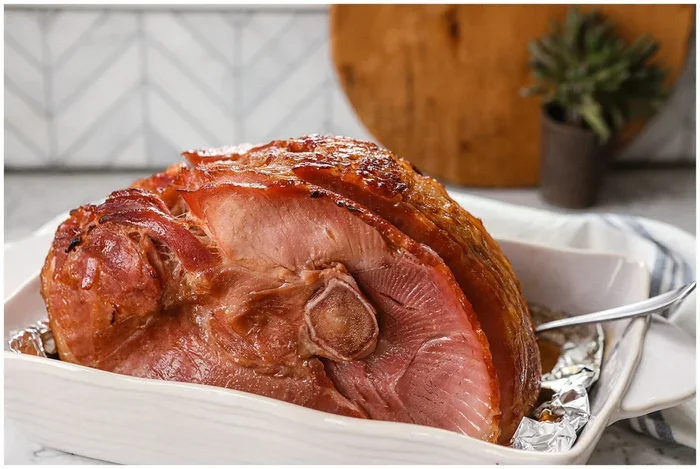
This glaze bakes on beautifully and creates a caramelized crust. The combination of brown sugar and honey gives it a rich, deep sweetness. The mustard adds a subtle kick that balances the sweetness perfectly. This is a classic brown sugar ham recipe that never fails to impress.
When to Apply the Glaze
Timing the glaze is important. You do not want to put it on too early, or it can burn. The best approach is to apply the glaze during the last 30 to 45 minutes of cooking. This gives the sugar time to caramelize without scorching.
Some cooks like to apply the glaze in two rounds. Apply half the glaze at the 30-minute mark and the rest at the 15-minute mark. This creates a thicker, more layered glaze with a beautiful texture. The double application method gives you a more intense caramelized flavor and a gorgeous appearance.
Before you apply the glaze, use a sharp knife to score the ham. Make shallow diagonal cuts across the surface in a diamond pattern. This helps the glaze soak into the meat. It also gives the ham a professional, restaurant-quality look when served. Scoring is a small step that makes a big difference.
Alternative Glaze Ideas
Not a fan of brown sugar? No problem. Here are some alternative glaze ideas that pair wonderfully with bone-in ham:
- Maple Mustard Glaze: Pure maple syrup, Dijon mustard, and a splash of apple juice. It is sweet, tangy, and slightly smoky.
- Honey Pineapple Glaze: Pineapple juice, honey, and a touch of soy sauce. This gives the ham a tropical twist.
- Cloves and Brown Sugar: The simplest option. Just brown sugar and ground cloves pressed into the scored ham. Classic and delicious.
- Fruit Compote Glaze: Blend apricots or cherries with a bit of honey and vinegar. It adds a fruity, tangy flavor.
Feel free to experiment with different flavors. The glaze is your chance to get creative. Just make sure the sugar content is high enough to caramelize properly in the oven. A well-made glaze turns an ordinary ham into a show-stopping centerpiece.
Resting and Serving Your Ham
Once your ham is done, resist the urge to cut into it right away. Resting the ham is just as important as cooking it properly. It allows the juices to redistribute throughout the meat. This makes every slice more moist and flavorful.
Let the ham rest for at least 15 to 20 minutes before slicing. Tent it loosely with aluminum foil to keep it warm. The internal temperature will rise a few more degrees during this resting period. This is called carryover cooking, and it is a natural part of the process that many home cooks overlook.
When you are ready to serve, use a sharp carving knife. Cut along the bone to release each slice. The bone makes carving easy and gives you beautiful, even slices. Serve the ham on a platter with the glaze spooned over the top. A garnish of fresh herbs or pineapple rings adds a festive touch.
Leftover ham keeps well in the refrigerator for up to 5 days. You can use it in sandwiches, soups, omelets, and casseroles. Bone-in ham is one of those versatile meats that tastes great in many different dishes. Proper storage ensures you get the most value from your cooking effort.
Common Mistakes to Avoid When Cooking Ham
Even experienced cooks can make mistakes when preparing a bone-in ham. Here are the most common errors and how to avoid them.
Mistake 1: Cooking the ham at too high a temperature. High heat dries out the meat quickly. The outside burns while the inside stays undercooked. Stick to 325 degrees Fahrenheit for the best results. Low and slow is the way to go for a juicy bone in ham.
Mistake 2: Forgetting to use a meat thermometer. Guessing the doneness of a ham is a risky game. A meat thermometer takes the guesswork out of it. It ensures your ham is safe to eat and perfectly cooked every time. This is the single most important tool for perfect results.
Mistake 3: Wrapping the ham in foil the entire time. Foil traps steam and prevents the glaze from caramelizing. If you need to cover the ham to prevent over-browning, remove the foil for the final 30 minutes. This lets the glaze set and develop that beautiful crust.
Mistake 4: Not scoring the ham before glazing. Scoring helps the glaze penetrate the meat. Without it, the glaze just sits on the surface and does not flavor the ham as deeply. Take the extra five minutes to score the ham properly. It is a simple step with a big payoff.
Mistake 5: Using the wrong pan or container. You should always use an oven-safe pan or roasting dish. Never place packaging materials in the oven. For example, you might wonder if it is safe to put a pizza box in the oven, but the answer is no. Always transfer your ham to a proper roasting pan before it goes in the oven. Using non-oven-safe containers can release harmful chemicals and create a fire hazard.
Frequently Asked Questions
Can I Cook a Frozen Bone-In Ham in the Oven?
Yes, you can cook a frozen bone-in ham in the oven, but it will take significantly longer. Plan for about 50 percent more cooking time than a thawed ham. The safest method is to thaw the ham in the refrigerator overnight before cooking. This ensures more even cooking and better flavor development throughout the meat.
What Is the Best Way to Store Leftover Cooked Ham?
Wrap leftover ham tightly in plastic wrap or aluminum foil and store it in the refrigerator. It will stay fresh for up to 5 days. For longer storage, you can freeze cooked ham for up to 3 months. Make sure to wrap it well to prevent freezer burn and preserve the flavor and texture of the meat.
Do I Need to Glaze a Bone-In Ham?
A glaze is not strictly necessary, but it does make a big difference in flavor and appearance. The glaze adds a sweet, caramelized exterior that complements the savory meat. Even a simple mixture of brown sugar and honey creates a beautiful finish. If you prefer a simpler approach, you can season the ham with just salt, pepper, and a little olive oil.
How Do I Know if My Ham Is Fully Cooked?
The most reliable way is to use a meat thermometer. For a fully cooked ham, the internal temperature should reach 140 degrees Fahrenheit. For a raw or uncooked ham, it needs to reach 160 degrees Fahrenheit. Always insert the thermometer into the thickest part of the meat, avoiding the bone for an accurate reading.
Can I Cook a Bone-In Ham at 350 Degrees Instead of 325?
You can, but 325 degrees is the recommended temperature for the best results. Cooking at 350 degrees will reduce the cooking time slightly, but it also increases the risk of the outer layer drying out. If you choose to cook at 350 degrees, check the ham more frequently and consider covering it with foil partway through to retain moisture.
What Goes Well with Bone-In Ham for a Complete Meal?
Bone-in ham pairs wonderfully with many side dishes. Classic options include scalloped potatoes, green bean casserole, roasted sweet potatoes, and dinner rolls. A fresh salad or roasted vegetables also complement the richness of the ham. For a holiday spread, consider adding cranberry sauce and a cheese board to round out the meal.
Final Thoughts on Cooking Bone-In Ham in the Oven
How long to cook ham with bone in oven really comes down to the weight of your ham and the temperature you choose. With the right time, temperature, and a good glaze, you can create a show-stopping centerpiece for any meal. The process is straightforward once you understand the basics.
Remember to use a meat thermometer. Do not rush the resting period. And most importantly, enjoy the process. Cooking a bone-in ham is one of those rewarding kitchen tasks that brings the whole family together. The aroma alone is worth the effort.
Now that you have all the information you need, it is time to put it into practice. Pick up a beautiful bone-in ham, fire up your oven, and get ready to impress your guests. A perfectly cooked ham is one of the simplest ways to make a meal feel special. Happy cooking!