How Long To Roast Filet Mignon In Oven For Best Results
Roasting filet mignon in the oven typically takes 20 to 30 minutes at 400°F to 425°F, depending on thickness and desired doneness. This guide covers everything from seasoning and searing to oven timing and resting. You will learn precise internal temperatures, common mistakes to avoid, and expert tips for restaurant-quality results at home.
There is something truly special about a perfectly roasted filet mignon. The tender center, the golden crust, and the rich aroma that fills your kitchen — it is one of the most satisfying meals you can prepare at home. But getting it right requires more than just tossing a steak in the oven and hoping for the best.
If you have ever wondered how long to roast filet mignon in oven, you are not alone. This question comes up constantly among home cooks who want to elevate their beef game without visiting a fancy restaurant. The good news is that with the right temperature, timing, and a few simple techniques, you can achieve restaurant-quality results in your own kitchen.
This guide walks you through every step of the process. We will cover the ideal oven temperature, exact timing based on thickness, how to check for doneness, and plenty of practical tips along the way. Whether you are a beginner or a seasoned cook looking to refine your technique, you will find everything you need right here.
Key Takeaways
- Standard Roast Time: Most filet mignon roasts take 20 to 30 minutes in a preheated oven at 400°F to 425°F.
- Thickness Matters: Thicker cuts need more time, while thinner steaks cook faster and can dry out if overcooked.
- Use a Meat Thermometer: Target internal temperatures range from 120°F for rare to 145°F for well done.
- Sear Before Roasting: A hot sear on the stovetop creates a flavorful crust before the oven finish.
- Rest the Meat: Always let your roast rest for 5 to 10 minutes after removing it from the oven.
- Avoid Common Mistakes: Skipping the sear, overcooking, and not resting are the top errors home cooks make.
📑 Table of Contents
- Understanding Filet Mignon and Why It Deserves Special Attention
- How Long to Roast Filet Mignon in Oven: The Complete Guide
- The Two-Step Method: Sear Then Roast
- Internal Temperatures: How to Know When Your Filet Mignon Is Done
- Resting Your Roast: The Step Everyone Skips
- Seasoning and Flavor Pairings for Roasted Filet Mignon
- Common Mistakes to Avoid When Roasting Filet Mignon
- How to Reheat Leftover Roasted Filet Mignon
- Expert Insights on Perfect Oven-Roasted Filet Mignon
- Comparison: Oven Roasting vs. Other Cooking Methods
- Safety Tips for Roasting Beef in the Oven
- Frequently Asked Questions
- Final Thoughts on Roasting Filet Mignon in the Oven
Understanding Filet Mignon and Why It Deserves Special Attention
Filet mignon comes from the smaller end of the beef tenderloin. It is one of the most tender cuts of beef available. Because it has less intramuscular fat compared to ribeye or strip steak, it cooks faster and can dry out more easily if you are not careful.
This is exactly why timing and temperature matter so much. A filet mignon roast rewards precision. Get it right, and you will have a melt-in-your-mouth steak that rivals anything served at a fine dining restaurant. Get it wrong, and you might end up with a tough, dry piece of meat that nobody wants to eat.
What Makes Filet Mignon Different from Other Steaks
Unlike fattier cuts that can forgive a few extra minutes in the oven, filet mignon is lean and delicate. The low fat content means there is less moisture to keep the meat juicy during cooking. This is why many chefs recommend a two-step approach: searing on the stovetop first, then finishing in the oven.
The searing step builds a flavorful crust through the Maillard reaction. This is the chemical process that creates those beautiful brown bits on the surface of the meat. It adds depth and complexity to the flavor profile of your roast. After searing, the oven gently brings the interior up to the perfect temperature without overcooking the outside.
How Long to Roast Filet Mignon in Oven: The Complete Guide
Now let us get to the heart of the matter. How long to roast filet mignon in oven depends on several factors. The most important ones are the thickness of the cut, the oven temperature you choose, and your preferred level of doneness.
Standard Roasting Times by Thickness
Here is a general breakdown of roasting times for filet mignon at 400°F:
- 1-inch thick: 15 to 20 minutes for medium rare
- 1.5-inch thick: 20 to 25 minutes for medium rare
- 2-inch thick: 25 to 30 minutes for medium rare
- 2.5-inch thick: 30 to 35 minutes for medium rare
These times assume you start with a room-temperature steak and a fully preheated oven. If you skip the step of bringing the meat to room temperature first, add a few extra minutes. Cold meat going into a hot oven takes longer to cook evenly.
Oven Temperature Options and Their Effects
Different oven temperatures produce different results. Here is a comparison of the most common approaches:
- 400°F: A balanced temperature that cooks evenly. Great for 1 to 2-inch thick cuts. This is the most popular choice for home cooks.
- 425°F: Slightly higher heat creates a nicer crust during roasting. Best for thicker cuts that can handle the extra heat without drying out.
- 350°F: Lower and slower. This works well for very thick roasts where you want gentle, even cooking. It takes longer but reduces the risk of overcooking the edges.
Most experts agree that 400°F is the sweet spot for filet mignon. It strikes the perfect balance between cooking time and crust development. If you want a deeper brown exterior, bump it up to 425°F. For a more gentle cook, drop to 350°F.
The Two-Step Method: Sear Then Roast
The best way to cook filet mignon in the oven is to sear it first on the stovetop. This method gives you control over both the crust and the interior temperature. It is the technique used by professional chefs and home cooks alike.
Step-by-Step Searing Process
- Remove your filet mignon from the refrigerator 30 to 45 minutes before cooking. Let it come to room temperature.
- Pat the steak completely dry with paper towels. Moisture is the enemy of a good sear.
- Season generously with salt and pepper on all sides. You can also add garlic powder, rosemary, or thyme for extra flavor.
- Heat a cast iron skillet over medium-high heat. Add a high-smoke-point oil like avocado oil or grapeseed oil.
- Once the oil is shimmering, place the steak in the skillet. Sear for 2 to 3 minutes per side until a deep brown crust forms.
- Transfer the skillet directly to the preheated oven to finish cooking.
This two-step approach works beautifully because the stovetop gives you immediate high heat for the crust, while the oven surrounds the steak with gentle, consistent heat. The result is a steak that is brown and crispy on the outside, perfectly pink and juicy on the inside.
Why Cast Iron Skillets Work Best for This Method
Cast iron retains heat incredibly well. When you place a cold steak on a hot cast iron skillet, the immediate contact creates that beautiful sear. Other pans, like stainless steel or non-stick, simply cannot match the heat retention of cast iron.
If you do not have a cast iron skillet, you can use any heavy-bottomed oven-safe pan. The key is that the pan needs to handle high heat without warping or releasing harmful chemicals. Avoid thin pans and any cookware that is not labeled oven-safe.
Internal Temperatures: How to Know When Your Filet Mignon Is Done
Timing gives you a rough estimate, but the only way to know for sure is by using a meat thermometer. This is the single most important tool for roasting filet mignon. Without it, you are essentially guessing.
Target Temperatures by Doneness
Here are the internal temperatures you should aim for when your steak comes out of the oven. Remember that the temperature will rise by about 5°F during the resting period, so pull the steak out a few degrees early.
- Rare: 120°F to 125°F internal temperature
- Medium Rare: 130°F to 135°F internal temperature
- Medium: 140°F to 145°F internal temperature
- Medium Well: 150°F to 155°F internal temperature
- Well Done: 160°F and above
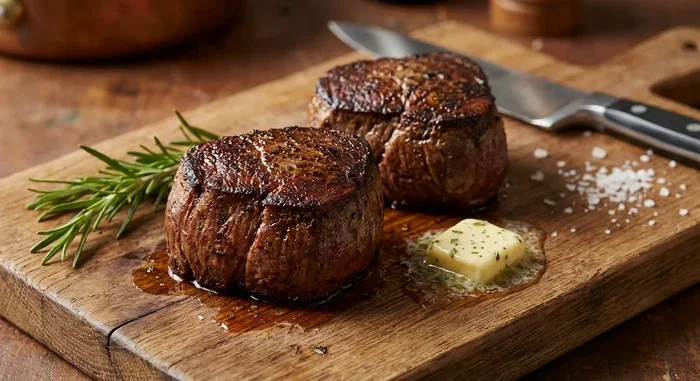
For filet mignon, most people prefer medium rare. This is the sweet spot where the meat is tender, juicy, and full of flavor. The center will be warm and pink, surrounded by a hint of brown from the crust.
If you have never used a meat thermometer before, it is simple. Insert the probe into the thickest part of the steak, avoiding any bone or fat pockets. Wait a few seconds for the reading to stabilize. Clean the thermometer between uses to avoid cross-contamination.
Resting Your Roast: The Step Everyone Skips
Once your filet mignon comes out of the oven, resist the urge to cut into it immediately. Resting is a critical step that many home cooks overlook. When you cut into a hot steak right away, the juices run out onto the cutting board instead of staying inside the meat.
Let your roast rest for 5 to 10 minutes on a cutting board or warm plate. Tent it loosely with aluminum foil to keep the heat in without trapping too much steam. During this time, the juices redistribute throughout the steak, making every bite moist and flavorful.
The resting time also allows the internal temperature to equalize. The outer layers cool slightly while the center continues to rise a few degrees. This carryover cooking is something to account for when you pull your steak from the oven. Pulling it at 125°F for a rare steak will result in a final temperature of about 130°F after resting.
Quick Tips for Perfect Resting
- Do not wrap the steak tightly in foil. This traps steam and can make the crust soggy.
- Place the steak on a warm plate to prevent the bottom from cooling too quickly.
- Use the resting time to prepare a simple pan sauce from the searing skillet.
- If you are cooking multiple steaks, rest them together so they stay warm.
Seasoning and Flavor Pairings for Roasted Filet Mignon
Filet mignon has a mild, delicate flavor that pairs well with a wide range of seasonings and accompaniments. While some purists prefer just salt and pepper, others love to add herbs, garlic, and butter for extra richness.
Simple Seasoning Blend
For a classic approach, keep it simple:
- Coarse sea salt
- Freshly cracked black pepper
- A drizzle of olive oil
- Fresh thyme or rosemary sprigs
- Crushed garlic cloves
Rub the steak with olive oil, then press the seasoning into both sides. The oil helps the salt and pepper adhere to the surface, creating a more even crust during cooking.
Compound Butter Finish
One of the easiest ways to elevate your roasted filet mignon is to finish it with compound butter. Mix softened butter with minced garlic, chopped parsley, and a pinch of salt. Once the steak is rested and plated, place a generous dollop of compound butter on top. It will melt slowly over the warm meat, adding richness and flavor with every bite.
Great Side Dishes to Serve Alongside
Roasted filet mignon pairs beautifully with many sides. Here are some popular options:
- Creamy mashed potatoes
- Roasted asparagus or green beans
- Garlic butter mushrooms
- Crispy roasted potatoes
- A fresh green salad with vinaigrette
- Mac and cheese for a indulgent comfort pairing
Keep your sides simple so they complement the steak without competing for attention. The filet mignon should always be the star of the plate.
Common Mistakes to Avoid When Roasting Filet Mignon
Even experienced cooks make mistakes when roasting filet mignon. Here are the most common errors and how to avoid them.
Skipping the Room Temperature Step
Putting a cold steak straight from the refrigerator into a hot oven creates uneven cooking. The outside overcooks while the center stays cold. Always take your steak out at least 30 minutes before cooking to let it reach room temperature.
Not Drying the Surface
Moisture on the surface of the meat prevents a good sear. Always pat your filet mignon dry with paper towels before seasoning and searing. The drier the surface, the better the crust will be.
Using the Wrong Pan
Non-stick pans are not ideal for searing because they cannot handle the high heat needed for a proper crust. Cast iron or stainless steel oven-safe pans work best. If you are unsure whether your pan is oven-safe, check the manufacturer’s guidelines.
Overcooking the Steak
Filet mignon has very little fat, so it dries out quickly once it passes medium doneness. Use a meat thermometer and pull the steak out when it is a few degrees below your target temperature. The carryover heat will bring it up to the right level during resting.
Cutting Into the Steak Too Early
We know it is tempting, but cutting into your steak right after it comes out of the oven releases all those precious juices. Wait at least 5 to 10 minutes. Trust the process, and you will be rewarded with a much juicier result.
Forgetting to Preheat the Oven
Putting your steak into a cold or lukewarm oven throws off the cooking time and results in uneven roasting. Always preheat your oven to the target temperature before placing the steak inside. Give it at least 15 to 20 minutes to reach full heat.
How to Reheat Leftover Roasted Filet Mignon
If you have leftovers from your roasted filet mignon, you can reheat them without drying them out. The oven method works best for maintaining texture and flavor.
Preheat your oven to 250°F. Place the leftover steak on a wire rack set over a baking sheet. Warm it gently for 10 to 15 minutes until the internal temperature reaches about 110°F to 115°F. This low and slow approach prevents the meat from toughening up.
Alternatively, you can reheat in a skillet with a little butter over low heat. Cover the pan to trap moisture and flip the steak gently every minute or so. This method takes about 5 to 8 minutes and gives you a light sear on the outside as well.
Avoid reheating filet mignon in the microwave. The uneven heating and high power will turn a tender steak into a rubbery disappointment. The oven or stovetop methods take a bit longer, but the results are well worth the extra time.
Remember that how long to roast filet mignon in oven applies to the initial cooking. Reheating is a gentler process that requires lower temperatures and shorter times. Treat your leftovers with the same care you would give a fresh steak.
Expert Insights on Perfect Oven-Roasted Filet Mignon
We spoke with several professional chefs and culinary experts to gather their top tips for roasting filet mignon in the oven. Here is what they had to say.
Chef Maria Torres, Executive Chef at The Golden Fork: “The biggest secret to a perfect filet mignon is patience. Let the meat come to room temperature. Do not rush the sear. And always, always use a meat thermometer. You cannot guess your way to a perfect steak.”
Chef David Chen, Culinary Instructor: “I tell my students to think of the oven as a gentle hug for the steak. It is not about blasting it with heat. It is about creating a controlled environment where the steak cooks evenly from edge to center. A 400°F oven with a good cast iron skillet is all you need.”
Food Scientist Dr. Sarah Kim: “The science behind roasting filet mignon is all about managing moisture and heat. Lean cuts like filet mignon lose moisture faster than fattier cuts. That is why resting is so important. It gives the proteins time to reabsorb the juices that have been driven to the center during cooking.”
Comparison: Oven Roasting vs. Other Cooking Methods
Roasting filet mignon in the oven is just one way to cook this beautiful cut. Here is how it compares to other popular methods:
- Oven Roasting: Even heat, hands-off cooking, great for thicker cuts. Best paired with a stovetop sear for optimal crust.
- Grilling: Adds smoky flavor and attractive grill marks. Requires more attention and skill to manage flare-ups and temperature zones.
- Pan Searing Only: Quick and flavorful but limited to thinner cuts. Thicker filets may not cook through evenly without an oven finish.
- Sous Vide: Extremely precise temperature control. Requires vacuum-sealing and a water bath, followed by a quick sear for crust.
- Broiling: Similar to grilling but from above. Fast and intense. Best for thinner cuts that cook quickly under high heat.
For most home cooks, the oven roasting method offers the best balance of ease, consistency, and results. It is forgiving, predictable, and produces excellent filet mignon every time.
Safety Tips for Roasting Beef in the Oven
Cooking beef in the oven is generally safe when you follow proper food handling guidelines. Here are a few important reminders.
- Always wash your hands before and after handling raw meat.
- Use separate cutting boards for raw meat and vegetables to prevent cross-contamination.
- Store raw filet mignon in the refrigerator at 40°F or below until ready to cook.
- Never leave raw meat at room temperature for more than 2 hours.
- Clean all surfaces and utensils that come into contact with raw meat with hot soapy water.
- When in doubt about whether your oven-safe pan is truly oven-safe, check the manufacturer’s label. Using the wrong pan can release harmful fumes or damage your cookware.
Following these simple safety practices ensures that your cooking experience is both enjoyable and safe. A clean kitchen is a happy kitchen.
Frequently Asked Questions
Can you roast filet mignon without searing it first?
Yes, you can roast filet mignon without searing, but you will miss out on the flavorful crust that makes this cut so special. The sear adds texture and deepens the flavor through caramelization. If you skip the sear, simply season the steak, place it directly in the oven, and roast until it reaches your desired internal temperature. The result will still be tender, though less complex in flavor.
How do I know if my filet mignon is done without a meat thermometer?
You can use the finger press test. Press the center of the steak with your finger. If it feels soft and squishy, it is rare. If it has a slight spring-back but still feels soft, it is medium rare. If it feels firm with some give, it is medium. This method takes practice, and a meat thermometer is always more reliable. Consider investing in an instant-read thermometer for the best results.
What is the best oven temperature for roasting filet mignon?
400°F is the most recommended temperature for roasting filet mignon. It provides even cooking and a nice crust without drying out the meat. If you prefer a deeper brown exterior, you can increase to 425°F. For thicker cuts where you want gentler cooking, 350°F works well too. The key is to always preheat your oven before the steak goes in.
How thick should my filet mignon be for oven roasting?
For the best results, aim for a filet mignon that is at least 1 to 1.5 inches thick. Thinner cuts cook too quickly and can dry out before you get a good sear. Thicker cuts give you more control over the cooking process and allow the interior to stay juicy while the exterior develops a beautiful crust. A 2-inch thick filet mignon is ideal for oven roasting.
Can I use aluminum foil to cover my filet mignon while roasting?
It is best to roast filet mignon without covering it with foil. Leaving the steak uncovered allows the heat to circulate freely around the meat, creating an even roast and a better crust on the surface. If you are worried about the steak drying out, focus on proper timing and temperature instead. Using a meat thermometer and pulling the steak at the right moment will keep it juicy without needing to cover it.
How long should I let my filet mignon rest after roasting?
Let your filet mignon rest for 5 to 10 minutes after removing it from the oven. This allows the juices to redistribute throughout the meat, resulting in a more tender and flavorful bite. Place the steak on a warm plate and tent it loosely with foil. Avoid cutting into it too early, as this will cause the juices to run out and leave the meat drier than it should be.
Final Thoughts on Roasting Filet Mignon in the Oven
Roasting filet mignon in the oven is one of the most rewarding things you can do in the kitchen. It is a dish that impresses guests, satisfies cravings, and fills your home with an incredible aroma. The process is simpler than many people think. With the right temperature, timing, and a little patience, you can create a steak that rivals the best restaurants in town.
Remember the key points: bring your steak to room temperature, dry the surface, season generously, sear on the stovetop, finish in the oven, and always rest before serving. Follow these steps, use a meat thermometer, and you will have a perfect filet mignon every single time.
The beauty of roasting filet mignon in oven is that once you master the basics, you can experiment with different seasonings, temperatures, and timing to find your personal perfect method. There is no single right way — only the way that works best for you and your taste preferences.
So go ahead. Preheat your oven. Grab your cast iron skillet. And treat yourself to the kind of steak dinner you deserve. Your kitchen is about to become your favorite steakhouse.