Here Is How To Cook Raw Bacon In The Oven The Right Way
Cooking raw bacon in the oven is the easiest and most consistent way to get perfectly crispy strips every single time. This method uses a simple baking sheet, parchment paper, and your standard home oven. You will learn the right temperature, timing, and pro tips to avoid splatter and uneven cooking. Whether you prefer chewy or extra crispy, this guide covers it all.
There is something deeply satisfying about pulling a tray of golden, crispy raw bacon out of the oven. No standing over a hot stovetop, no popping grease, and no flipping strips every few seconds. Cooking raw bacon in the oven is hands-down the easiest method for busy mornings, weekend brunches, or meal prep sessions.
If you have ever wondered why your stovetop bacon always ends up uneven or splattery, the answer is simple. The oven provides consistent, surround heat that cooks every strip at the same rate. In this guide, we will walk you through everything you need to know about baking bacon in the oven. From choosing the right temperature to timing your cook perfectly, you will find all the details here.
This method works with any type of bacon. Whether you prefer thin-sliced, thick-cut, smoked, or maple-flavored, the oven handles it all beautifully. Let us dive in and get your bacon game to the next level.
Key Takeaways
- Oven-baked bacon is hands-free and mess-free: You lay strips on a lined baking sheet and let the oven do all the work.
- The ideal temperature is 400°F: This setting renders fat evenly and delivers consistent crispiness across every strip.
- Cooking time ranges from 15 to 25 minutes: Thinner slices cook faster, while thick-cut bacon needs more time.
- Use parchment paper or a wire rack: These tools prevent sticking and help grease drip away for crunchier results.
- Save your bacon grease: It is a flavorful cooking fat you can reuse in many recipes.
- Avoid common mistakes like overlapping strips: Overlapping leads to uneven cooking and soggy spots.
- You can add the oven method to almost any oven recipe: It works alongside dishes like How To Cook Stuffed Rouladen In The Oven for a full oven-cooked meal.
📑 Table of Contents
- Why Cooking Bacon In The Oven Is A Game Changer
- What You Need To Get Started
- Step-by-Step Guide To Cooking Raw Bacon In The Oven
- Temperature And Time Guide For Perfect Bacon
- Tips For Crispy, Evenly Cooked Bacon
- Common Mistakes To Avoid When Baking Bacon
- What To Do With Bacon Grease
- Frequently Asked Questions
- Conclusion
Why Cooking Bacon In The Oven Is A Game Changer
You might be thinking, “I already know how to cook bacon on the stove.” And that is great. But oven-baked bacon offers some serious advantages that make it worth trying at least once.
First, it is completely hands-free. Once you slide the tray into the oven, you can go do other things. No need to stand over the stove flipping strips every minute. This alone saves time and effort, especially when you are cooking for a crowd.
Second, oven bacon cooking produces far less mess. Stovetop splatter can cover your stovetop, backsplash, and even your clothes. The oven keeps all that grease contained on the baking sheet. Cleanup becomes a breeze.
Third, you get consistent results every time. Every strip cooks at the same temperature and for the same duration. No more guessing whether one side is done while the other is still flabby. Oven-baked bacon comes out evenly cooked from edge to edge.
Finally, this method scales easily. You can cook two strips for yourself or twenty strips for a family breakfast. The process does not change. That makes cooking bacon in oven one of the most efficient kitchen techniques you can learn.
What You Need To Get Started
One of the best things about baking raw bacon is how few tools you need. You probably already have everything in your kitchen right now.
The Baking Sheet
A standard rimmed baking sheet works perfectly. The rim keeps the bacon grease from dripping into the bottom of your oven. If you do not have a rimmed sheet, line a flat tray with aluminum foil for easy cleanup.
Parchment Paper Or A Silicone Mat
Lining your baking sheet with parchment paper is a small step that makes a huge difference. The bacon will not stick, and the paper absorbs excess grease. A silicone baking mat works just as well and is reusable.
A Wire Rack (Optional But Recommended)
Placing a wire rack on top of your baking sheet elevates the bacon above the pooled grease. This promotes airflow and helps the strips become extra crispy. If you do not have a wire rack, placing strips directly on parchment paper still works great.
Tongs And Paper Towels
You will need tongs to flip and remove the hot bacon strips safely. Paper towels are essential for draining excess grease after cooking. A plate lined with paper towels makes the perfect resting spot.
Your Oven
Any standard home oven will work. You do not need a convection oven or any special appliance. The simplicity of this method is part of what makes it so appealing. If you are curious about other oven techniques, check out How To Make A Tandoori Oven for creative oven builds.
Step-by-Step Guide To Cooking Raw Bacon In The Oven
Now that you have your tools ready, let us get into the process. Follow these simple steps for perfect oven-baked bacon every time.
Step 1: Preheat Your Oven
Set your oven to 400°F (200°C). This is the sweet spot for bacon oven temperature. It is hot enough to render the fat quickly but not so hot that the edges burn before the center cooks through. Let the oven fully preheat before placing your bacon inside.
Step 2: Line Your Baking Sheet
Cut a piece of parchment paper to fit your baking sheet. Lay it down flat. This prevents sticking and makes cleanup effortless. If you are using a wire rack, place it on top of the lined sheet now.
Step 3: Arrange The Bacon Strips
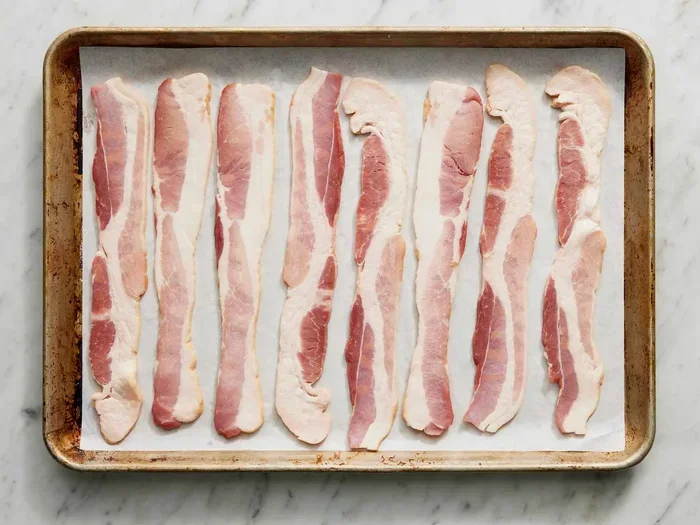
Lay the raw bacon strips flat on the parchment paper or wire rack. Leave a small gap between each strip. Overlapping the bacon traps steam and creates soggy spots. You want each strip to have its own space for hot air to circulate freely.
Step 4: Place The Sheet In The Oven
Slide the baking sheet onto the middle oven rack. The middle position ensures even heat distribution around the bacon. Avoid placing it on the top or bottom rack, as those zones run hotter or cooler.
Step 5: Cook And Monitor
Set a timer for 15 minutes. At the 15-minute mark, check the bacon. Thin slices may already be done. Thick-cut strips will need more time. Continue checking every 2 to 3 minutes until you reach your desired level of crispiness.
Step 6: Remove And Drain
Use tongs to lift the bacon strips off the sheet. Place them on a plate lined with paper towels. The paper towels absorb residual grease and help the bacon cool into that perfect crispy texture. Let it rest for a minute or two before serving.
Temperature And Time Guide For Perfect Bacon
Getting the right bacon cooking time and temperature is the key to nailing this dish. Here is a detailed breakdown to help you find your ideal settings.
Standard Temperature: 400°F
400°F is the recommended temperature for most bacon. It strikes the perfect balance between rendering fat and building crunch. At this heat, a standard strip of thin bacon typically finishes in about 15 to 20 minutes.
Lower Temperature Option: 350°F
If you prefer chewier bacon, try 350°F. The lower heat cooks the bacon more slowly, resulting in a softer, more pliable texture. Expect the cook time to increase to about 20 to 25 minutes at this temperature.
Higher Temperature Option: 425°F
For extra crispy, almost cracker-like bacon, bump the heat up to 425°F. This works well for thick-cut varieties. Watch carefully, as bacon can go from perfectly crispy to burnt very quickly at this temperature. Cook time drops to around 12 to 18 minutes.
Time Guide By Bacon Thickness
Here is a quick reference table to guide your oven-baked bacon timing:
| Bacon Type | Temperature | Approximate Time | Texture |
|---|---|---|---|
| Thin-Cut | 400°F | 12 to 18 minutes | Crispy and light |
| Standard | 400°F | 15 to 20 minutes | Balanced crisp and chewy |
| Thick-Cut | 400°F | 20 to 25 minutes | Hearty and crispy edges |
| Extra Thick | 425°F | 18 to 22 minutes | Very crispy, chewy center |
These times are approximate. Every oven runs slightly differently. Start checking a few minutes early and adjust based on your results. The beauty of cooking raw bacon in the oven is that you can always pop it back in for another minute or two.
Tips For Crispy, Evenly Cooked Bacon
Want to take your oven-baked bacon from good to great? These practical tips make a real difference.
- Do not overlap the strips. Overlapping traps steam and creates limp, unevenly cooked spots. Give each strip room to breathe.
- Use a wire rack whenever possible. Elevating the bacon above the grease promotes even crisping on both sides. The bottom stays just as crunchy as the top.
- Pat the bacon dry before cooking. Excess moisture on the surface slows down the rendering process. A quick pat with paper towels before laying strips on the pan helps.
- Salt after cooking, not before. Salt draws moisture out of the meat. Adding it before baking can make your bacon slightly soggy. Season after the bacon comes out of the oven.
- Let the bacon rest on paper towels. This absorbs leftover grease and helps the strips cool into maximum crispiness.
- Flip halfway through for extra evenness. While many people skip this step, a quick flip at the halfway mark ensures both sides cook uniformly.
- Experiment with flavors. Try sprinkling brown sugar, black pepper, or a drizzle of maple syrup on the bacon before baking for a sweet and savory twist.
Common Mistakes To Avoid When Baking Bacon
Even a simple task like baking bacon in oven has some common pitfalls. Avoiding these mistakes will save you from disappointing results.
Using Too High A Temperature
Cranking the oven to 450°F or higher might seem like a shortcut. But it often causes the edges to burn while the center remains undercooked. Stick to the recommended 400°F range for the best balance of speed and evenness.
Overcrowding The Pan
Packing too many strips onto one sheet pan blocks airflow. The result is steamed, unevenly cooked bacon. If you need to cook a large batch, use two baking sheets and rotate them halfway through.
Skipping The Lining
Cooking bacon directly on an unlined baking sheet creates a greasy mess that is difficult to clean. Parchment paper or a silicone mat prevents this entirely. It is a small step with a big payoff.
Walking Away Completely
While oven-baked bacon is largely hands-free, it still needs monitoring. Ovens vary, and bacon can go from perfectly done to burnt in just a couple of minutes. Set a timer and check regularly.
Not Draining Properly
Skipping the paper towel draining step leaves your bacon sitting in its own grease. This makes it soggy rather than crispy. Always transfer strips to a paper towel-lined plate right after removing them from the oven.
What To Do With Bacon Grease
One of the best parts of cooking raw bacon in the oven is the generous amount of bacon grease you end up with. Do not throw it away! Bacon grease is a flavorful cooking fat that adds depth to all sorts of dishes.
Strain the cooled grease through a fine mesh sieve into a glass jar. Store it in the refrigerator for up to three months. Use it to fry eggs, sauté vegetables, or season roasted potatoes. The smoky, savory flavor of bacon grease elevates simple dishes into something extraordinary.
If you have a lot of grease, you can also use it to season a cast iron skillet. Rub a small amount onto the pan and bake it in the oven at low heat. This builds a natural nonstick layer over time.
Just be mindful of disposal. Never pour hot grease down the drain, as it can clog your pipes. Let it cool completely, solidify, and then toss it in the trash or save it for cooking.
For more oven-based cooking inspiration, you might enjoy learning about Is It Safe To Put Pizza Box In Oven for safe oven practices with cardboard and other materials.
Frequently Asked Questions
Can You Put Raw Bacon Directly In The Oven?
Absolutely. Cooking raw bacon in the oven is one of the simplest and safest methods available. There is no need to pre-cook or thaw the bacon beforehand. Simply lay the strips on a lined baking sheet and place them in a preheated oven. The heat renders the fat and cooks the meat through evenly. Just make sure your oven is at the right temperature and keep an eye on the cook time.
How Long Does It Take To Cook Bacon At 400°F?
At 400°F, most bacon strips take between 15 and 20 minutes. Thin-cut bacon may be done in as little as 12 minutes, while thick-cut varieties can need up to 25 minutes. The best approach is to start checking at the 15-minute mark and continue until you reach your preferred level of crispiness. Every oven is slightly different, so a few trial runs will help you dial in your perfect timing.
Is It Better To Cook Bacon In The Oven Or On The Stove?
Both methods have their merits, but oven-baked bacon wins for convenience and consistency. The oven cooks every strip at the same temperature without requiring flipping or monitoring. Stovetop cooking gives you more control over individual strips but creates splatter and demands constant attention. For everyday cooking, especially when preparing bacon for a family, the oven method is hard to beat.
Do You Need To Flip Bacon When Baking It In The Oven?
Flipping is optional but recommended for the most even results. If you are using a wire rack, flipping halfway through ensures both sides get equal exposure to heat. If you are cooking directly on parchment paper, the bottom may cook slightly slower. A quick flip at the halfway mark helps achieve uniform crispiness on all sides. However, many people skip this step and still get excellent results.
Can You Freeze Oven-Baked Bacon?
Yes, you can. Let the cooked bacon cool completely, then store it in an airtight container or freezer bag. It will keep in the freezer for up to three months. To reheat, place the strips on a baking sheet and warm them in the oven at 350°F for about 5 minutes. The oven-baked bacon reheats beautifully and retains its crispiness much better than microwaved bacon.
What Temperature Is Best For Chewy Bacon?
For chewy bacon, lower the oven temperature to 350°F and extend the cook time to about 20 to 25 minutes. The lower heat renders the fat more slowly, keeping the meat tender and slightly flexible rather than shattering crispy. This method works especially well for thicker cuts where you want a balance of rendered fat and meaty texture. Just be patient and check frequently toward the end of the cook time.
Conclusion
Cooking raw bacon in the oven is one of the simplest yet most rewarding kitchen skills you can master. It is hands-free, mess-free, and delivers perfectly crispy results every single time. With just a baking sheet, parchment paper, and a preheated oven set to 400°F, you can produce restaurant-quality bacon in under half an hour.
Remember the key principles: do not overlap your strips, use parchment paper or a wire rack, monitor the cook time closely, and always drain on paper towels. These small habits make a massive difference in the final product.
Once you start making oven-baked bacon regularly, you will never go back to the stovetop method. The consistency, the ease, and the glorious aroma filling your kitchen are unbeatable. Save your bacon grease for cooking, experiment with flavors, and enjoy every crispy bite.
Whether you are preparing a weekend brunch, packing lunch, or meal prepping for the week ahead, this method has you covered. Share it with friends and family who still think bacon can only be made on the stove. They will be amazed at how easy and delicious cooking bacon in the oven truly is.
Now go preheat that oven, lay out those strips, and get ready for the best bacon of your life. Happy cooking!