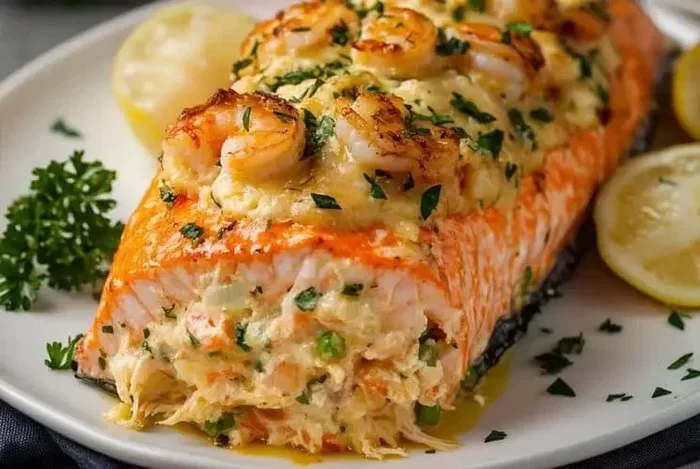
How Long To Cook Stuffed Salmon In The Oven Perfectly
Cooking stuffed salmon in the oven takes about 25 to 35 minutes at 400°F, depending on the fillet thickness and stuffing type. This guide covers exact timing, temperatures, and pro tips to help you bake restaurant-quality stuffed salmon at home with confidence and ease.
There is something truly special about how long to cook stuffed salmon in the oven. It is one of those dishes that looks impressive but feels surprisingly simple. Whether you are cooking for a romantic dinner or a family gathering, stuffed salmon always steals the show.
The beauty of this recipe lies in its flexibility. You can change the stuffing, adjust the seasonings, and make it your own. But the real question most home cooks face is timing. How long does it actually take? And how do you make sure the salmon stays moist and the stuffing cooks through?
This guide answers every question you have about baking stuffed salmon in the oven. We will walk through exact times, temperatures, stuffing ideas, and common mistakes to avoid. By the end, you will feel confident enough to make this dish any night of the week.
Stuffed salmon is more than just a meal. It is an experience. The combination of a perfectly baked fillet and a flavorful filling creates a dish that tastes like it came from a high-end restaurant. The good news is, you do not need years of cooking experience to pull it off.
Let us dive into everything you need to know about making the best oven-baked stuffed salmon at home. From prep to plating, we have you covered.
Key Takeaways
- Standard Cook Time: Most stuffed salmon fillets bake in 25 to 35 minutes at 400°F, reaching an internal temp of 145°F.
- Thickness Matters: Thicker fillets need more time, while thin ones cook faster and can dry out if overbaked.
- Stuffing Type Affects Timing: Heavy stuffings like crab or sausage add cook time, while lighter herb mixtures bake quickly.
- Always Use a Thermometer: The best way to know your salmon is done is by checking the internal temperature.
- Resting Is Key: Let the salmon rest for 5 minutes after baking for juicier, more flavorful results.
- Prep Ahead Saves Time: Stuffing salmon in advance and refrigerating it improves flavor and makes weeknight dinners easy.
📑 Table of Contents
- Why Stuffed Salmon Is Worth Making
- How Long To Cook Stuffed Salmon In The Oven: The Complete Guide
- Best Oven Temperature for Stuffed Salmon
- How to Prep Stuffed Salmon for the Oven
- Signs Your Stuffed Salmon Is Done
- Common Mistakes to Avoid When Baking Stuffed Salmon
- Delicious Stuffing Ideas to Try
- Best Side Dishes to Serve with Stuffed Salmon
- How to Store and Reheat Leftover Stuffed Salmon
- Expert Tips for Perfect Stuffed Salmon Every Time
- Final Thoughts on Cooking Stuffed Salmon
Why Stuffed Salmon Is Worth Making
Before we get into the nitty-gritty of timing and temperature, let us talk about why stuffed salmon deserves a spot in your regular rotation. This dish checks so many boxes for home cooks.
First, it is incredibly versatile. You can pair it with almost any side dish. Second, it looks beautiful on the plate, which makes it perfect for entertaining. Third, salmon is packed with omega-3 fatty acids and protein, making it a healthy choice for the whole family.
Many people think cooking salmon is tricky. But once you understand the basics of oven-baked stuffed salmon, it becomes one of the easiest impressive meals you can make. The stuffing adds moisture and flavor, which actually helps protect the fish from drying out.
The Health Benefits of Salmon
Salmon is one of the most nutrient-dense foods you can eat. It is rich in omega-3 fatty acids, which support heart and brain health. A single serving also provides a healthy dose of B vitamins, potassium, and high-quality protein.
When you stuff salmon with ingredients like spinach, mushrooms, or sun-dried tomatoes, you add even more nutrients. The key is choosing fillings that complement the fish without overwhelming it. Fresh herbs, lemon zest, and garlic are all excellent additions that boost both flavor and nutrition.
How Long To Cook Stuffed Salmon In The Oven: The Complete Guide
Now let us get to the heart of the matter. How long to cook stuffed salmon in the oven depends on several factors. The short answer is usually between 25 and 35 minutes at 400°F. But the full picture is a bit more detailed.
The size of your fillet, the type of stuffing, and even your oven’s accuracy all play a role. Let us break it down so you can plan your cooking time with confidence.
Standard Cooking Time by Fillet Thickness
The thickness of your salmon fillet is the biggest factor in determining cook time. Here is a general guideline to follow:
- Thin fillets (1/2 inch): 15 to 20 minutes at 400°F
- Medium fillets (3/4 inch): 20 to 25 minutes at 400°F
- Thick fillets (1 inch): 25 to 35 minutes at 400°F
- Extra-thick fillets (1.5 inches): 30 to 40 minutes at 400°F
These times assume you are using a standard home oven preheated to 400°F. If your fillet is especially thick, you may need to add a few extra minutes. Always check the internal temperature before serving.
How Stuffing Type Affects Cooking Time
The kind of stuffing you use also matters. Lighter stuffings made from fresh herbs, breadcrumbs, and cheese bake quickly and do not add much time. Heavier fillings with sausage, crab, or shrimp may require a few extra minutes to cook through safely.
Here are some common stuffing types and how they affect your baked stuffed salmon timing:
- Herb and cream cheese stuffing: Adds about 2 to 5 minutes to the base time
- Crab and spinach stuffing: Adds about 5 to 8 minutes
- Sausage and breadcrumb stuffing: Adds about 8 to 12 minutes
- Sun-dried tomato and parmesan: Adds about 3 to 5 minutes
Keep in mind that these are estimates. The best approach is to start checking your salmon a few minutes before the expected finish time. This prevents overcooking and keeps the fish tender and juicy.
Best Oven Temperature for Stuffed Salmon
Temperature is just as important as timing when it comes to how long to cook stuffed salmon in the oven. The right heat ensures the outside does not burn before the inside is done.
Most recipes call for 400°F, and for good reason. This temperature is hot enough to create a beautiful golden crust on the salmon while cooking the stuffing evenly. It also helps the fish retain its moisture.
Why 400°F Works So Well
At 400°F, the salmon cooks quickly enough to stay moist but slowly enough for the stuffing to heat through. Lower temperatures like 350°F work too, but they extend the cooking time and can dry out the fish. Higher temperatures above 425°F risk burning the outside while leaving the center undercooked.
If you are using a convection oven, reduce the temperature by about 25°F. Convection fans circulate hot air more efficiently, so your stuffed salmon oven recipe will cook a bit faster. Check for doneness about 5 minutes earlier than the standard time.
Adjusting for Different Oven Types
Not all ovens heat the same way. Gas ovens tend to have more even heat distribution. Electric ovens can have hot spots, which means you may want to rotate your pan halfway through cooking. If you have a convection setting, use it for more consistent results.
An oven thermometer is a cheap and handy tool. Many home ovens run hotter or cooler than their settings suggest. Knowing your actual oven temperature helps you nail the perfect cooking time for stuffed salmon every single time.
How to Prep Stuffed Salmon for the Oven
Proper prep makes all the difference when you are learning how long to cook stuffed salmon in the oven. Taking a few extra minutes before baking sets you up for success.
Choosing the Right Salmon Fillets
Start with fresh or properly thawed salmon fillets. Look for pieces that are about 1 to 1.5 inches thick. This thickness gives you enough room for stuffing while still cooking evenly. Avoid fillets that are paper-thin, as they will overcook quickly.
Skin-on fillets work best for stuffed salmon. The skin holds the fish together and adds a nice crispy texture after baking. If you prefer skinless fillets, you can still make stuffed salmon, but be extra careful not to overcook it.
Making the Perfect Stuffing
The stuffing is what makes this dish special. You can get as creative as you want. Some classic combinations include:
- Spinach and feta cheese with garlic
- Crab meat with lemon dill sauce
- Sausage and herb breadcrumb mixture
- Sun-dried tomato and parmesan
- Mushroom and garlic cream cheese
Make sure your stuffing is fully prepared before you start assembling. Cold stuffing straight from the fridge will add extra cook time. Room-temperature stuffing blends better with the fish and cooks more evenly.
Assembling the Salmon
To assemble, lay the fillet flat and slice a deep pocket into the thickest part. Stuff the opening generously but do not overfill. Use toothpicks to secure the opening if needed. Place the fillets on a lined baking sheet and drizzle with olive oil or melted butter.
For extra flavor, top the salmon with a light coating of garlic butter or a sprinkle of fresh herbs before baking. This adds a beautiful golden finish and enhances the overall taste.
Signs Your Stuffed Salmon Is Done
Timing is important, but knowing the visual and temperature signs of done salmon is even more critical. Overcooked salmon is dry and flaky in an unpleasant way. Undercooked salmon can be a food safety concern.
Internal Temperature Guide
The USDA recommends cooking fish to an internal temperature of 145°F. For stuffed salmon, you want the stuffing to reach at least 165°F to ensure food safety. Use a digital meat thermometer inserted into the thickest part of the fillet, avoiding the bone.
Here is a quick reference for salmon internal temperature by doneness:
- 120°F: Very rare, translucent center
- 130°F: Medium-rare, slightly translucent
- 140°F: Medium, opaque with slight pink
- 145°F: Well done, fully opaque and flaky
Most people prefer their stuffed salmon at the medium to medium-rare stage, around 130 to 140°F. This keeps the fish moist and tender. Remember that the temperature will rise a few degrees as the salmon rests after coming out of the oven.
Visual Cues to Look For
Beyond temperature, there are visual signs that tell you your baked stuffed salmon is ready. The flesh should be opaque throughout and flake easily with a fork. The stuffing should be bubbly and lightly browned on top. The skin, if present, should be crispy and golden.
If the salmon looks dry or the flesh is falling apart in large chunks, it has been in the oven too long. If the center still looks translucent, give it a few more minutes.
Common Mistakes to Avoid When Baking Stuffed Salmon
Even experienced cooks make mistakes with how long to cook stuffed salmon in the oven. Learning from common errors helps you achieve perfect results every time.
Overfilling the Salmon
It is tempting to pack the stuffing in tightly, but overfilling leads to uneven cooking. The stuffing may stay cold in the center while the outside of the fish dries out. Keep your filling generous but not overflowing. A heaping tablespoon per fillet is usually plenty.
Skipping the Preheat
Never put your salmon into a cold oven. Preheating ensures the cooking starts immediately and evenly. A properly preheated oven at 400°F gives you the best crust and cook time. Skipping this step can add 5 to 10 minutes to your baking time.
Opening the Oven Door Too Often
Every time you open the oven door, heat escapes and the temperature drops. This can throw off your cooking time and lead to unevenly cooked salmon. Trust your timer and only open the door when it is time to check the temperature.
Not Letting the Salmon Rest
Resting is not just for steaks. After baking, let your stuffed salmon sit for 5 minutes before serving. This allows the juices to redistribute throughout the fillet, making every bite moist and flavorful. Cutting into it right away releases those juices onto the plate instead of keeping them in the fish.
Delicious Stuffing Ideas to Try
One of the best things about stuffed salmon is the variety of fillings you can use. Here are some popular options that pair beautifully with baked salmon.
Classic Herb and Cream Cheese
This is the go-to stuffing for a reason. Mix cream cheese with fresh dill, chives, lemon zest, and a pinch of salt. It is creamy, tangy, and complements the rich flavor of salmon perfectly. This lighter stuffing cooks quickly and adds minimal extra time to your baking.
Crab and Spinach
For a more indulgent option, try a crab and spinach filling. Sauté spinach with garlic, mix in lump crab meat, and bind with a touch of mayo and parmesan. This stuffing takes a bit longer to bake through but is absolutely worth the extra time.
Sausage and Mushroom
This hearty option works wonderfully for fall and winter dinners. Cook ground sausage with sliced mushrooms, onions, and herbs. Let it cool slightly before stuffing into the salmon. The savory filling pairs beautifully with the mild fish.
Best Side Dishes to Serve with Stuffed Salmon
The right side dish completes your stuffed salmon dinner. Here are some ideas that pair well with oven-baked stuffed salmon.
- Roasted asparagus: Simple and elegant, roasted asparagus is a classic pairing
- Garlic mashed potatoes: Creamy and comforting, this side soaks up any sauce
- Lemon rice: Light and fluffy, it balances the richness of the salmon
- Steamed green beans: A fresh and healthy option that adds color to the plate
- Crusty bread: Perfect for soaking up the delicious juices on the plate
Keep your sides simple so the stuffed salmon remains the star of the meal. A light salad or roasted vegetables works beautifully without competing with the main dish.
How to Store and Reheat Leftover Stuffed Salmon
If you have leftovers from your baked stuffed salmon, proper storage keeps them tasting great. Let the salmon cool completely before storing. Place it in an airtight container and refrigerate for up to 3 days.
To reheat, use your oven at 325°F for about 10 to 15 minutes. Avoid the microwave, as it tends to dry out the fish quickly. Cover the salmon loosely with foil to trap moisture during reheating.
You can also freeze baked stuffed salmon for up to 3 months. Wrap it tightly in plastic wrap and foil, then thaw overnight in the refrigerator before reheating. The texture may be slightly different after freezing, but the flavor remains delicious.
Expert Tips for Perfect Stuffed Salmon Every Time
Here are some professional tips that elevate your stuffed salmon in the oven from good to great:
- Pat the salmon dry before stuffing. Moisture on the surface prevents the skin from crisping properly.
- Use room-temperature salmon for more even cooking. Take it out of the fridge 20 minutes before baking.
- Butterfly thick fillets to create an even pocket for stuffing. This also reduces cook time.
- Brush with olive oil before baking for a beautiful golden finish and extra moisture.
- Season the stuffing well. Underseasoned stuffing is the most common mistake home cooks make.
- Let the salmon rest after baking. Those extra 5 minutes make a noticeable difference in juiciness.
Following these simple steps ensures your oven-baked stuffed salmon comes out perfectly cooked, moist, and full of flavor every single time.
Final Thoughts on Cooking Stuffed Salmon
Mastering how long to cook stuffed salmon in the oven is easier than most people think. With the right temperature, timing, and a little attention, you can create a restaurant-worthy dish in your own kitchen. The key is understanding that fillet thickness, stuffing type, and oven accuracy all influence your final result.
Start with the basic guidelines in this article and adjust as you gain experience. Soon, you will be able to judge doneness by sight and smell alone. Stuffed salmon is a dish that rewards confidence, and once you nail it, you will want to make it again and again.
Experiment with different stuffings, pair it with your favorite sides, and make it your own signature dish. Whether it is a weeknight dinner or a special occasion centerpiece, baked stuffed salmon never disappoints. So preheat that oven, grab your salmon, and get cooking. Your kitchen is about to smell amazing.
Frequently Asked Questions
Can I cook stuffed salmon at 350°F instead of 400°F?
Yes, you can cook stuffed salmon at 350°F, but it will take longer. Expect to add about 5 to 10 extra minutes to the cooking time. The lower temperature cooks the fish more gently but may result in less crispy skin.
How do I know if the stuffing inside the salmon is cooked through?
The best way to check is by using a meat thermometer. The stuffing should reach at least 165°F for food safety. If the stuffing contains raw ingredients like sausage or seafood, make sure the internal temperature meets safe guidelines before serving.
Can I prepare stuffed salmon ahead of time?
Absolutely. You can stuff the salmon and refrigerate it for up to 24 hours before baking. This actually improves the flavor as the seasonings penetrate the fish. Just add a few extra minutes to the cooking time if the salmon is cold when it goes into the oven.
What is the best type of salmon for stuffing?
Atlantic or king salmon fillets work best because of their thickness and rich flavor. Look for center-cut fillets that are uniform in thickness. Fresh salmon is ideal, but frozen salmon that has been properly thawed works well too.
Should I cover stuffed salmon with foil while baking?
Most recipes do not require foil, as it traps steam and can prevent the skin from crisping. However, if your salmon is cooking too fast on the outside, loosely tenting it with foil for the last 5 to 10 minutes can prevent burning while the center finishes cooking.
Can I use frozen salmon for stuffed salmon?
Yes, but make sure the salmon is fully thawed and patted dry before stuffing. Cooking frozen or partially frozen salmon leads to uneven cooking and can result in a watery texture. Thaw overnight in the refrigerator for the best results.
=== CONCLUSION ===
Cooking stuffed salmon in the oven is one of the most rewarding things you can do in the kitchen. The perfect balance of tender fish and flavorful filling makes every bite worth it. Remember that most fillets need between 25 and 35 minutes at 400°F, but always trust your thermometer over the clock.
With the tips, timing guides, and stuffing ideas from this article, you have everything you need to make perfect stuffed salmon at home. Focus on prep, respect the cooking times, and never skip the resting period. Your efforts will be rewarded with a dish that looks stunning and tastes incredible.
Now that you know how long to cook stuffed salmon in the oven, it is time to put this knowledge into action. Pick your favorite stuffing, preheat your oven, and enjoy the process of creating something truly delicious. Happy cooking!