Best Lightweight Dutch Oven for Camping and Cooking
A lightweight Dutch oven is a must-have for any camper or outdoor cooking enthusiast who wants great meals without the heavy gear burden. These compact, portable ovens deliver the same rich, slow-cooked results as traditional cast iron Dutch ovens but at a fraction of the weight. Whether you are backpacking, car camping, or cooking in your backyard, the right lightweight Dutch oven can transform your outdoor cooking experience. In this guide, we break down the top options, key features to consider, and practical tips to help you pick the best one for your needs.
There is something magical about cooking outdoors. The fresh air, the crackling fire, and the smell of a good meal simmering over coals — it all adds up to an experience you simply cannot replicate indoors. But here is the thing. If you have ever tried hauling a heavy traditional Dutch oven to a campsite, you know how much of a workout it can be. That is exactly where a lightweight Dutch oven comes in and changes everything.
A lightweight Dutch oven gives you the versatility of a heavy cast iron pot without the punishing weight. These portable ovens are designed specifically for people who love the outdoors but do not want to sacrifice good food. Whether you are a weekend backpacker, a family car camper, or someone who simply wants a more manageable cooking pot for everyday use, a lightweight Dutch oven is a game changer.
In this guide, we will walk you through everything you need to know. We will cover the best options on the market, what features to look for, how to choose the right size, and pro tips for cooking with one in the field. By the end, you will have all the information you need to make a confident purchase.
Key Takeaways
- Lightweight Dutch ovens save you from hauling heavy gear: They offer the same cooking power as traditional Dutch ovens but weigh significantly less, making them ideal for camping and backpacking trips.
- Material choice matters a lot: Titanium, aluminum, and enamel-coated options each have unique benefits for weight, durability, and heat retention.
- Size and capacity should match your cooking needs: Solo campers need different sizes than families or group campers.
- Portability features like foldable legs and nesting lids add real value: These details make a big difference in the field.
- Price ranges vary widely: You can find excellent lightweight Dutch ovens at every budget level, from affordable options to premium picks.
- Proper care and maintenance extend the life of your Dutch oven: Simple steps like drying it thoroughly and seasoning it properly go a long way.
- The right lightweight Dutch oven makes camp cooking fun and easy: You can prepare everything from stews to desserts without the heavy lifting.
📑 Table of Contents
- Why You Need a Lightweight Dutch Oven
- Top Lightweight Dutch Ovens Compared
- What to Look for in a Lightweight Dutch Oven
- Best Lightweight Dutch Ovens for Different Needs
- Tips for Cooking with a Lightweight Dutch Oven While Camping
- Common Mistakes to Avoid
- Expert Insights on Lightweight Dutch Ovens
- How to Care for Your Lightweight Dutch Oven
- Final Thoughts
Why You Need a Lightweight Dutch Oven
You might be wondering why you even need a special Dutch oven for camping. Can you not just use any pot? The truth is, a lightweight Dutch oven is purpose-built for outdoor cooking, and the benefits go far beyond just being light. Let us break down why this piece of gear deserves a spot in your camp kitchen.
Weight Matters When You Are Hiking
Every ounce counts when you are on the trail. A standard cast iron Dutch oven can weigh anywhere from 10 to 15 pounds or more. That is a lot of dead weight when you are already carrying a backpack, water, food, and other essentials. A lightweight Dutch oven typically weighs between 2 and 5 pounds, which can save you significant energy over a long hike.
Even for car camping, a lighter Dutch oven makes setup and cleanup much easier. You can move it around the campsite without straining, and you will appreciate the difference when you are tired at the end of a long day of outdoor activities.
Versatility in the Kitchen
A lightweight Dutch oven is incredibly versatile. You can use it to bake bread, simmer stews, fry chicken, cook pasta, and even make desserts like cobblers and brownies. The thick walls and tight-fitting lid trap heat evenly, which means you get consistent cooking results every time.
Unlike thin pots that create hot spots, a quality lightweight Dutch oven distributes heat across the entire cooking surface. This is especially important when you are cooking over a campfire or a portable stove where temperature control can be tricky.
Durability Meets Portability
One of the biggest misconceptions about lightweight Dutch ovens is that they sacrifice durability. Modern materials like hard-anodized aluminum, titanium, and quality enamel coatings are incredibly tough. They can handle the bumps and drops that come with outdoor use, and many of them are designed to last for years of regular camp cooking.
The key is choosing a well-made option from a reputable brand. A good lightweight Dutch oven will hold up to high heat, resist scratches, and maintain its cooking performance over time.
Top Lightweight Dutch Ovens Compared
Now that you understand why a lightweight Dutch oven is so valuable, let us look at some of the best options available. We have compared the top picks based on weight, material, capacity, price, and overall performance. This comparison table should help you narrow down your choices quickly.
| Model | Weight | Material | Capacity | Price Range |
|---|---|---|---|---|
| GSI Outdoors Pinnacle | 2.5 lbs | Hard Anodized Aluminum | 1.5 qt | $$ |
| Lodge Enameled Cast Iron | 4.5 lbs | Enamel-Coated Cast Iron | 3.6 qt | $ |
| Toaks Titanium Dutch Oven | 1.1 lbs | Titanium | 1.5 qt | $$$ |
| Stanley Adventure Camp Oven | 3.2 lbs | Aluminum with Enamel | 2.5 qt | $$ |
| Coleman RoadTrip Dutch Oven | 5.0 lbs | Enamel-Coated Steel | 4 qt | $ |
Each of these lightweight Dutch ovens has its own strengths. The GSI Pinnacle is a great balance of weight and capacity for solo campers. The Lodge Enameled option is affordable and perfect for families. The Toaks Titanium is the ultralight choice for serious backpackers who want to shave every possible ounce. The Stanley and Coleman options offer good middle-ground choices for group camping trips.
What to Look for in a Lightweight Dutch Oven
Not all lightweight Dutch ovens are created equal. Before you buy, there are several important factors to consider. Here is what you should look for to make sure you get the best one for your needs.
Material Type
The material is the single most important factor in a lightweight Dutch oven. Here are the three most common materials you will encounter:
- Titanium: The lightest option available. Titanium Dutch ovens are incredibly strong and resistant to corrosion, but they can be expensive. They are the go-to choice for ultralight backpacking.
- Hard-Anodized Aluminum: A great middle ground. These pots are lightweight, conduct heat well, and are more affordable than titanium. They are also very durable.
- Enamel-Coated Cast Iron: Heavier than the other options but still lighter than bare cast iron. Enamel coating makes cleanup easier and eliminates the need for seasoning. This is a popular choice for car campers.
Size and Capacity
Think about how many people you are cooking for. A solo backpacker will be perfectly happy with a 1 to 1.5 quart lightweight Dutch oven. A couple might want 2 to 3 quarts. Families or group campers should look at 4 quarts or more. Keep in mind that larger Dutch ovens will naturally be heavier, so there is always a trade-off to consider.
Lid Design
The lid on your lightweight Dutch oven plays a big role in cooking performance. Look for a tight-fitting lid that seals well to trap moisture and heat. Some lids have small spikes on the inside, which allow condensation to drip back onto your food. This is a clever feature that keeps dishes moist and flavorful during long cook times.
Legs and Handles
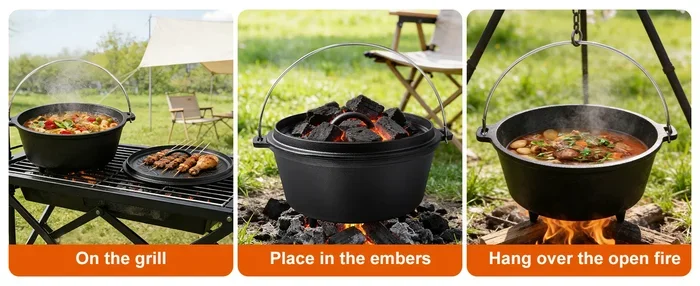
If you plan to cook directly over coals or a campfire, legs are essential. They elevate the pot and allow hot coals to surround the lid and base evenly. Foldable or removable legs are a nice bonus because they save space when you are packing. Also, look for sturdy handles that stay cool or provide good insulation, so you can safely move the pot in and out of the fire.
Best Lightweight Dutch Ovens for Different Needs
Not all camping trips are the same, and neither are your cooking needs. Here is a closer look at the best lightweight Dutch ovens for different types of outdoor cooking adventures.
Best for Backpacking and Ultralight Trips
If you are hitting the trail and every ounce matters, the Toaks Titanium Dutch Oven is hard to beat. Weighing just over one pound, it is one of the lightest options on the market. It is compact enough to fit inside most backpacking pots and packs easily. The titanium construction is virtually indestructible and will not rust, even after years of use in wet conditions.
The trade-off is the price. Titanium Dutch ovens cost more than other options, but if you are a serious backpacker, the investment pays off quickly in saved energy and better trail performance.
Best for Family Car Camping
For family camping trips where weight is less of a concern, the Lodge Enameled Cast Iron Dutch Oven is a classic choice. It weighs around 4.5 pounds, which is light enough to carry to a campsite without too much hassle. The enamel coating makes it easy to clean, and it comes in fun colors that kids love.
Lodge is a trusted name in cast iron cookware, and their enameled options deliver excellent heat retention and even cooking. You can use it on a campfire, a charcoal grill, or even a home stovetop. It is truly a versatile lightweight Dutch oven for the whole family.
Best Budget-Friendly Option
If you are new to camp cooking and do not want to spend a lot, the Coleman RoadTrip Dutch Oven is a solid choice. It is affordable, durable, and comes with a useful carrying case. The enamel-coated steel construction is lighter than bare cast iron, and the 4-quart capacity is perfect for cooking meals for a small group.
Coleman has been making outdoor gear for decades, and their Dutch oven is a reliable entry point for anyone exploring camp cooking for the first time.
Tips for Cooking with a Lightweight Dutch Oven While Camping
Using a lightweight Dutch oven on a camping trip is straightforward, but a few tips can make a big difference in your results. Here are some practical guidelines that will help you cook like a pro in the great outdoors.
- Preheat your Dutch oven gradually. Do not rush the heating process. Place it near the edge of the fire or on a low flame and let it warm up slowly. This prevents warping and ensures even heat distribution.
- Use charcoal briquettes for consistent heat. If you are cooking over a campfire, use charcoal briquettes instead of raw wood coals. They burn more evenly and are much easier to control. A good rule of thumb is to place the same number of briquettes on the lid as you have on the base.
- Always use a lid lifter. A Dutch oven lid lifter is a small but essential tool. It keeps your hands safe from burns and makes it easy to check on your food without losing heat.
- Line the bottom with foil for easy cleanup. This simple trick saves you from scrubbing burned-on food. Just toss the foil when you are done, and your Dutch oven stays clean.
- Let it cool before packing. Never pack a hot lightweight Dutch oven into a closed bag or container. Trapped heat can damage the pot, melt surrounding gear, or even cause a fire hazard. Let it cool completely before storing.
- Practice at home first. Before your next trip, try cooking a few meals at home with your new Dutch oven. This helps you get comfortable with the pot and figure out what works best for your cooking style.
Common Mistakes to Avoid
Even experienced campers make mistakes with their lightweight Dutch oven. Here are the most common ones and how to avoid them.
- Overfilling the pot: Leave at least one inch of space at the top. Food expands as it cooks, and overfilling leads to mess and uneven cooking.
- Using too much or too little heat: More coals do not mean faster cooking. Too many briquettes on top can burn your food, while too few on the base will leave it undercooked. Follow the recommended briquette count for your pot size.
- Skipping the preheat: Putting cold food into a cold pot leads to sticking and uneven cooking. Always preheat your lightweight Dutch oven before adding ingredients.
- Neglecting to dry it after washing: Moisture is the enemy of any camp cookware. Always dry your Dutch oven thoroughly after cleaning, especially if it has any bare metal parts. Moisture left behind can cause rust and degradation over time.
- Forgetting to bring essential accessories: A Dutch oven lid lifter, heat-resistant gloves, a small spatula, and aluminum foil are all must-haves. Forgetting even one of these can make your cooking experience frustrating.
Expert Insights on Lightweight Dutch Ovens
We spoke with several outdoor cooking enthusiasts and professional camp chefs to get their take on the best lightweight Dutch ovens for 2024 and beyond. Here is what they had to say.
“The biggest shift we have seen in camp cooking is the move toward lighter gear without sacrificing performance,” says Jake Morrison, a professional outdoor guide with over 12 years of experience. “A good lightweight Dutch oven lets you cook a full meal for your group without slowing down your hike. The Toaks titanium model has been a staple in my pack for three seasons now.”
Maria Chen, a food blogger and outdoor cooking instructor, adds that enamel-coated options are perfect for beginners. “They are forgiving, easy to clean, and do not require seasoning like bare cast iron. If you are just getting into camp cooking, an enamel-coated lightweight Dutch oven is the best place to start.”
These expert opinions reinforce a key takeaway: the best lightweight Dutch oven for you depends on your specific needs, cooking style, and how you plan to use it. There is no single perfect option, but there is a perfect option for you.
How to Care for Your Lightweight Dutch Oven
Proper care will keep your lightweight Dutch oven performing beautifully for years. Here are some simple maintenance tips that make a big difference.
- Clean it after every use: Wash with warm water and mild soap. Avoid abrasive scrubbers that can damage the cooking surface. For enamel-coated models, a soft sponge works perfectly.
- Dry it completely: Moisture is the number one enemy of camp cookware. Dry your Dutch oven thoroughly with a towel, and if possible, let it air dry completely before packing it away.
- Season bare metal pots: If you have a bare aluminum or titanium Dutch oven, a light coating of cooking oil before storage helps prevent oxidation and keeps the surface smooth.
- Store it properly: Keep your lightweight Dutch oven in a cool, dry place. If it came with a storage bag or case, use it. This protects the pot from scratches and dust during storage.
- Inspect for damage regularly: Check for cracks, chips in enamel, or warping. Catching these issues early can prevent them from getting worse and extending the life of your pot significantly.
Final Thoughts
A lightweight Dutch oven is one of those pieces of gear that truly earns its place in your camp kitchen. It is versatile, portable, and capable of producing meals that rival what you would cook at home. Whether you are a solo backpacker chasing sunsets on a mountain ridge or a family enjoying a weekend at the campsite, the right lightweight Dutch oven makes every meal an event to look forward to.
Take the time to choose the right size, material, and features for your cooking style. Consider the trips you take most often, the number of people you typically cook for, and how much weight you are willing to carry. With the right lightweight Dutch oven in your pack, you will be ready to enjoy delicious, home-cooked meals wherever the trail takes you.
Start with one of the options we have highlighted in this guide, practice a few recipes at home, and before long, you will be the go-to cook at every campsite. Happy cooking and happy trails.
Frequently Asked Questions
What is the lightest Dutch oven available?
The Toaks Titanium Dutch Oven is currently one of the lightest options on the market, weighing just over 1 pound. It is designed specifically for ultralight backpacking and is made from medical-grade titanium, which is both incredibly strong and virtually rust-proof.
Can you use a lightweight Dutch oven on a home stovetop?
Yes, most lightweight Dutch ovens work perfectly well on a home stovetop. Aluminum and titanium models are compatible with gas, electric, and induction burners. Enamel-coated options also work on stovetops, though you should always check the manufacturer’s guidelines to be safe.
How do I choose the right size lightweight Dutch oven for camping?
Consider how many people you are cooking for. Solo campers and couples do well with 1 to 2 quart pots. Families and groups should look at 3 to 4 quart options. Keep in mind that larger sizes will be heavier, so there is always a balance between capacity and weight to consider.
Do lightweight Dutch ovens need to be seasoned?
This depends on the material. Titanium and hard-anodized aluminum models do not require seasoning. Enamel-coated Dutch ovens also do not need seasoning. However, bare cast iron and some uncoated steel Dutch ovens should be seasoned before first use and periodically maintained to prevent rust and ensure a non-stick surface.
Is a lightweight Dutch oven worth the extra cost compared to a regular one?
Absolutely. If you camp regularly or hike, the weight savings of a lightweight Dutch oven is well worth the investment. You will carry less fatigue on the trail, set up camp faster, and enjoy the same great cooking results. Over time, the comfort and convenience make a noticeable difference in your outdoor experience.
What is the best way to cook bread in a lightweight Dutch oven while camping?
Preheat your lightweight Dutch oven with coals both on the lid and underneath. Place your bread dough inside, cover with the lid, and surround the outside with hot coals. Bake for about 30 to 40 minutes, checking occasionally. The even heat distribution of a good Dutch oven produces a beautifully crusty loaf with a soft interior, even at a campsite.
=== CONCLUSION ===
A lightweight Dutch oven is an essential tool for anyone who loves cooking outdoors. It combines the durability and cooking power of a traditional Dutch oven with the portability that modern campers demand. From titanium options for serious backpackers to affordable enamel-coated choices for family trips, there is a perfect lightweight Dutch oven for every type of outdoor adventure.
Use the comparison table, the buying guide, and the practical tips in this article to make an informed decision. Choose the right size, pick the material that suits your style, and invest in a few essential accessories. With your new lightweight Dutch oven, every camping trip becomes an opportunity to enjoy great food in the great outdoors.