How To Make A Filet Mignon In The Oven Step By Step
Making a filet mignon in the oven is simpler than you think. This guide walks you through every step to achieve a restaurant-quality steak at home. You will learn how to select, season, sear, and bake the perfect filet mignon using your oven. Whether you are a beginner or a seasoned cook, this method guarantees tender, juicy results. Follow our tips and you will never order takeout steak again.
There is nothing quite like a perfectly cooked filet mignon. It is tender, juicy, and feels like a luxury meal right in your own kitchen. Many people think cooking this premium cut of beef requires a fancy restaurant or expensive equipment. That could not be further from the truth.
Learning how to make a filet mignon in the oven is one of the most rewarding skills you can pick up. The oven method gives you even cooking and a beautiful crust when paired with a good sear. In this guide, we break down every single step so you can nail it on your very first try.
Whether you are celebrating a special occasion or just craving a great steak, this oven-baked filet mignon method has you covered. We will walk you through selecting the right cut, seasoning it properly, getting that perfect sear, and baking it to your exact liking. By the end, you will feel confident enough to make this dish for guests and family.
Key Takeaways
- Choose the right cut: Look for well-marbled beef tenderloin that is at least 1.5 inches thick for the best oven-baked filet mignon.
- Sear before baking: A hot cast iron skillet creates a flavorful crust that locks in juices and elevates the final dish.
- Use a meat thermometer: Checking the internal temperature is the only reliable way to know your steak doneness without cutting into it.
- Rest the steak: Letting the filet mignon rest for 5-7 minutes after cooking keeps the juices inside the meat.
- Season simply but smartly: A basic blend of salt, pepper, garlic, and fresh herbs is all you need for an amazing filet mignon recipe.
- Oven temperature matters: Baking at 400°F gives you a perfectly cooked center with a beautiful crust.
- Patience pays off: Rushing any step — from seasoning to resting — will cost you flavor and tenderness.
📑 Table of Contents
- Why Oven-Baked Filet Mignon Is Worth Your Time
- Choosing The Perfect Filet Mignon
- How To Prep And Season Your Steak
- The Step-By-Step Oven Method For Filet Mignon
- How To Get The Perfect Sear
- Resting And Serving Your Filet Mignon
- Expert Tips For Consistently Perfect Filet Mignon
- Frequently Asked Questions
- Conclusion
Why Oven-Baked Filet Mignon Is Worth Your Time
The oven method for cooking filet mignon is a favorite among home cooks for good reason. It offers consistent results and gives you full control over the final outcome. Unlike grilling, which depends on unpredictable flare-ups and outdoor conditions, using your oven keeps everything steady and predictable.
When you bake a filet mignon, the even heat surrounds the steak completely. This means the meat cooks from edge to center without hot spots. You also get a wonderful crust when you finish with a quick sear on the stovetop first. The combination of a seared outside and a perfectly pink inside is what makes this dish so special.
Another big advantage is simplicity. You do not need a grill, a smoker, or any fancy tools. A basic oven-safe pan, a hot stove, and your oven are all you need. The entire process takes about 25 to 30 minutes from start to finish. That makes it perfect for a weeknight dinner that feels anything but ordinary.
Oven-Baked vs Pan-Fried Filet Mignon
You might wonder how oven-baked compares to a fully pan-fried approach. Both methods produce excellent results, but they work differently. Pan-frying alone works best for thinner steaks. For a thick filet mignon, the oven helps cook the center evenly without burning the outside.
The oven method also frees up your stovetop for side dishes. You can sear the steak, pop it in the oven, and use that time to whip up a sauce or roast some vegetables. It is a more hands-off approach that gives you flexibility in the kitchen.
Choosing The Perfect Filet Mignon
The foundation of a great filet mignon starts at the butcher counter or meat aisle. Not all beef tenderloin cuts are created equal. Knowing what to look for makes a huge difference in the final result.
First, aim for a thickness of at least 1.5 inches. Thicker cuts hold more juices and are much easier to cook to the right internal temperature. Thin filets overcook quickly, and that is the last thing you want with such a tender and expensive cut of meat.
Look for bright red color with fine marbling throughout the steak. Marbling is the thin white streaks of fat running through the meat. This fat melts during cooking and adds incredible flavor and moisture. Avoid any filets that look gray or have large hard chunks of fat around the edges.
Understanding Beef Tenderloin Grades
When shopping for filet mignon, you will often see different USDA grades on the label. The most common ones are Select, Choice, and Prime. Prime grade has the most marbling and tends to be the most flavorful, but it also comes at a higher price point.
Choice grade is a solid middle ground. It offers good marbling and excellent taste without breaking the bank. Select grade is leaner and more budget-friendly, but it may not have the same rich flavor as the other two. For the best oven-baked filet mignon experience, go with Choice or Prime if your budget allows.
You can also buy the whole beef tenderloin and cut your own filets at home. This gives you more control over the size and shape of each steak. It is also more cost-effective if you cook steak regularly. Just make sure each piece is at least 1.5 inches thick before you start cooking.
How To Prep And Season Your Steak
Proper preparation is the secret behind every great steak. Taking the time to prep your filet mignon correctly sets you up for success. This step is simple but it makes a real difference in flavor and texture.
Start by taking the steak out of the refrigerator about 30 to 45 minutes before cooking. Letting it come closer to room temperature helps it cook more evenly. A cold steak going straight into a hot oven can result in an overcooked outside and a cold center.
While the steak is resting at room temperature, pat it completely dry with paper towels. Dry meat sears much better than wet meat. Moisture on the surface creates steam instead of a crisp crust, and that is something you want to avoid.
The Best Seasoning For Filet Mignon
Seasoning a filet mignon does not have to be complicated. In fact, the best approach is often the simplest one. A generous amount of kosher salt and freshly cracked black pepper forms the perfect base. These two ingredients enhance the natural flavor of the beef without overpowering it.
For extra flavor, add a few minced garlic cloves and a sprig of fresh rosemary or thyme. You can also use a store-bought steak seasoning blend if you prefer. Just check the ingredients and avoid blends with too much sugar, which can burn in the oven.
Here is a simple seasoning approach that works every time:
- Kosher salt: Apply about 1 teaspoon per side at least 40 minutes before cooking for the best results.
- Black pepper: Add freshly cracked pepper right before searing to keep its flavor bold.
- Garlic: Use 2 to 3 minced cloves rubbed directly onto the meat.
- Fresh herbs: Place a sprig of rosemary or thyme on top during the sear for added aroma.
- Butter: A small pat of butter adds richness and helps with the basting process.
Do not be afraid of the salt. Some people worry that too much salt will make the steak taste salty. But the salt draws out moisture initially, then gets reabsorbed into the meat. This process actually tenderizes the filet and deepens the flavor. Trust the process and season generously.
The Step-By-Step Oven Method For Filet Mignon
Now comes the part you have been waiting for. This is the actual process of cooking your filet mignon in the oven. Follow these steps carefully and you will get consistent, delicious results every single time.
Step 1: Preheat Your Oven
Start by preheating your oven to 400°F. This is the sweet spot for baking filet mignon. It is hot enough to cook the steak efficiently but not so hot that it dries out the meat. Let the oven reach the full temperature before you put the steak in.
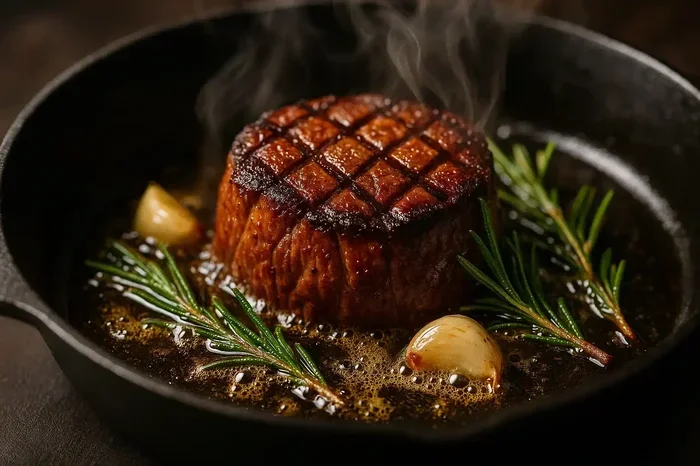
While the oven is heating up, place an oven-safe skillet or cast iron pan on the stovetop. You want the pan to be hot when the steak hits it. A cast iron skillet is ideal because it holds heat incredibly well and gives you an even, beautiful sear.
Step 2: Sear The Steak
Add a high-smoke-point oil like avocado oil or grapeseed oil to the hot pan. Wait until the oil starts to shimmer and almost smoke. This tells you the pan is ready. Carefully place the filet mignon in the pan and let it sear undisturbed for about 2 to 3 minutes per side.
You want a deep golden-brown crust on each side. Do not move the steak around during this time. Let the heat do its work. If you have fresh herbs like rosemary or thyme, toss a sprig into the pan while searing. The sizzling aromatics will infuse the steak with extra flavor.
After searing both sides, add a tablespoon of butter to the pan. Tilt the pan slightly and use a spoon to baste the melting butter over the top of the steak. This adds richness and helps create an even more beautiful finish on the surface.
Step 3: Transfer To The Oven
Once both sides have a nice sear, transfer the entire skillet directly into the preheated oven. This is where the magic of oven-baked filet mignon really shines. The oven gently finishes cooking the steak from the outside in.
Bake the filet mignon for about 8 to 12 minutes depending on the thickness and your desired level of doneness. For a 1.5-inch thick steak, here is a general guide:
- Rare: 8 to 9 minutes (internal temperature of 120°F)
- Medium Rare: 10 to 11 minutes (internal temperature of 130°F)
- Medium: 12 to 14 minutes (internal temperature of 140°F)
- Medium Well: 15 to 16 minutes (internal temperature of 150°F)
These times are approximate. The only way to know for sure is to use a meat thermometer inserted into the thickest part of the steak. This is the single most important tool for cooking the perfect filet mignon in the oven.
Step 4: Check The Internal Temperature
Insert your meat thermometer horizontally into the center of the steak. Avoid touching the bone or the bottom of the pan, as those spots give false readings. The temperature will rise a few more degrees after you remove the steak from the oven due to carryover cooking.
For a perfect medium-rare filet mignon, pull the steak out when it reads about 5 degrees below your target temperature. That means pulling it at 125°F for a final medium-rare of 130°F. Carryover cooking is a natural process that every steak goes through, and understanding it is key to nailing your steak every time.
How To Get The Perfect Sear
The sear is what gives your filet mignon that stunning crust and deep, savory flavor. Getting it right requires a few simple techniques that make all the difference. Let us break down exactly how to achieve a restaurant-quality sear at home.
First and foremost, make sure your pan is ripping hot. A cold pan will not give you a good sear. Heat the cast iron skillet over medium-high heat for about 2 to 3 minutes before adding any oil. You can test the heat by flicking a few drops of water onto the surface. If they sizzle and evaporate immediately, the pan is ready.
Use a very small amount of oil. Too much oil creates splatter and prevents proper browning. Just enough to lightly coat the bottom of the pan is all you need. Avocado oil works great because it has a high smoke point and a neutral flavor.
Place the steak in the pan and resist the urge to touch it. Let it sit for a full 2 to 3 minutes. You will see the color change from gray to a rich brown. When it releases naturally from the pan, it is ready to flip. If it sticks, it is not ready yet. Give it another minute and try again.
Do not overcrowd the pan if you are cooking more than one steak. Give each piece plenty of space so the steam can escape. Steam is the enemy of a good sear. If you have a small pan, cook the filets one at a time.
Common Mistakes That Ruin Your Sear
There are a few mistakes that even experienced cooks make when searing steak. Avoiding these pitfalls will dramatically improve your results.
- Wet meat: Never put a wet steak in a hot pan. Always pat it completely dry before searing.
- Cold pan: A lukewarm pan will steam the meat instead of searing it. Always preheat the pan thoroughly.
- Too much oil: A thin layer is enough. Excess oil can cause splatter and prevent browning.
- Moving the steak too much: Let the steak sit undisturbed until it naturally releases from the pan.
- Low heat: Use medium-high to high heat. Low heat will not create the Maillard reaction needed for a good crust.
Resting And Serving Your Filet Mignon
This is the step most people skip, and it is the one that makes the biggest difference. Resting your filet mignon after cooking is absolutely essential. When you take the steak out of the oven, the juices inside are under a lot of pressure. Cutting into it right away releases all those juices onto the cutting board instead of keeping them inside the meat.
Place the seared and baked filet mignon on a warm cutting board or plate. Tent it loosely with aluminum foil and let it rest for 5 to 7 minutes. This gives the juices time to redistribute evenly throughout the steak. When you finally cut into it, every bite will be moist, tender, and full of flavor.
After resting, slice the filet against the grain for maximum tenderness. The grain is the direction of the muscle fibers in the meat. Cutting across them shortens the fibers and makes each bite easier to chew. Serve your oven-baked filet mignon immediately for the best taste and texture.
Best Sides To Serve With Filet Mignon
A great filet mignon deserves equally great sides. Here are some classic pairings that complement the rich, buttery flavor of the steak:
- Crispy roasted potatoes: Seasoned with rosemary, garlic, and olive oil for a simple yet delicious side.
- Garlic butter mushrooms: Sautéed in butter with fresh thyme and a splash of white wine.
- Grilled asparagus: Lightly charred with a squeeze of lemon juice and a sprinkle of parmesan.
- Creamy mashed potatoes: Rich and smooth, the perfect comfort food companion to any steak.
- Simple green salad: Arugula with a light vinaigrette cuts through the richness of the meat beautifully.
Making A Pan Sauce From The Leftover Juices
Do not throw away the juices left in the skillet after cooking your filet mignon. They are packed with flavor and make an incredible pan sauce in just a few minutes.
Place the skillet back on the stovetop over medium heat. Add a splash of beef broth or red wine and scrape up all the browned bits from the bottom of the pan. These bits, called the fond, are pure flavor. Let the liquid reduce by about half, then stir in a knob of cold butter and swirl until it melts and becomes glossy.
Pour the sauce over your sliced filet mignon right before serving. It adds a restaurant-quality finishing touch that will impress anyone at the table. This simple trick takes your home-cooked steak to the next level with almost no extra effort.
Expert Tips For Consistently Perfect Filet Mignon
Cooking a great filet mignon is part science and part art. A few expert-level tips can help you elevate your results from good to outstanding every time you cook this dish.
Buy from a trusted butcher. A good butcher can guide you toward the best cuts and even custom-cut your filets to your preferred thickness. Building a relationship with your local butcher is one of the best investments a home cook can make.
Invest in a good meat thermometer. This is the single most important tool for cooking steak to perfection. Digital instant-read thermometers are affordable and give you accurate readings in seconds. Once you start using one, you will never guess about doneness again.
Experiment with different seasoning blends. While salt and pepper work beautifully, you can also try smoked paprika, onion powder, or a touch of cayenne for a subtle kick. Just keep it simple and let the quality of the beef shine through.
Try the reverse sear method for extra-thick cuts. This involves baking the steak in the oven at a low temperature first, then finishing with a hot sear on the stovetop. It produces incredibly even cooking from edge to center and is worth trying for filets that are 2 inches thick or more.
Keep a cooking log. Write down the times, temperatures, and results each time you cook. Over time, you will learn exactly how your oven and pan work together. This personal data helps you fine-tune the process and get better results with every attempt.
Frequently Asked Questions
Can I Cook Filet Mignon In The Oven Without Searing It First?
Yes, you can skip the sear and bake the filet mignon directly in the oven. However, you will miss out on the flavorful crust that a sear creates. The Maillard reaction that happens during searing adds depth and complexity to the flavor that is hard to replicate with just oven baking alone. For the best results, always sear first and then bake.
What Is The Best Oven Temperature For Cooking Filet Mignon?
400°F is the ideal oven temperature for filet mignon. It cooks the steak efficiently while keeping the inside moist and juicy. Some recipes use lower temperatures for slower cooking, but 400°F strikes the perfect balance between cooking time and quality results for most steak thicknesses.
How Do I Know When My Filet Mignon Is Done?
The most reliable way to check doneness is by using a meat thermometer. Insert it into the thickest part of the steak and compare the reading to your target temperature. Rare is 120°F, medium-rare is 130°F, medium is 140°F, and medium-well is 150°F. Remember that the temperature will rise a few degrees during resting.
Can I Use A Regular Baking Sheet Instead Of A Skillet?
You can, but a skillet or cast iron pan gives much better results. A skillet holds heat better and allows you to sear the steak before baking it. A regular baking sheet does not provide the same searing capability and may result in a less flavorful crust. If you only have a baking sheet, broil the steak for a few minutes at the end to get some browning.
How Long Should I Let The Steak Rest After Cooking?
Let your filet mignon rest for 5 to 7 minutes after cooking. This resting period allows the juices to redistribute throughout the meat. If you cut into it too early, the juices will run out and the steak will be less flavorful and moist. Tenting it loosely with foil helps keep it warm during this time.
Is Filet Mignon The Same As Beef Tenderloin?
Filet mignon and beef tenderloin are related but not exactly the same. Beef tenderloin is the whole cut of meat, and filet mignon refers to the individual steaks cut from the narrower end of the tenderloin. When you buy a filet mignon, you are getting a portion of the beef tenderloin, which is known as one of the most tender cuts of beef available.
Conclusion
Learning how to make a filet mignon in the oven is a skill that will serve you well for the rest of your life. It is simpler than most people think, and the results are consistently impressive. From selecting the right cut at the store to seasoning it properly, searing it to perfection, and baking it to your exact liking, every step matters.
The beauty of this oven-baked filet mignon method is that it gives you complete control. You decide the thickness, the seasoning, the level of doneness, and the sides that go with it. No restaurant can customize your steak exactly the way you want it, but your kitchen can.
Start with the basic method outlined in this guide and build from there. Try different seasoning combinations, experiment with cooking times, and get comfortable using a meat thermometer. Each time you cook, you will learn a little more and get a little better. Before long, making a perfect filet mignon will feel second nature to you.
So go ahead and give it a try. Pick up a beautiful cut of beef tenderloin, fire up your oven, and enjoy one of the most satisfying meals you can make at home. A perfectly cooked filet mignon is not just dinner. It is an experience worth savoring.