Can You Boil Water In A Cast Iron Dutch Oven Safely
Yes, you can boil water in a cast iron Dutch oven safely if you follow a few simple rules. This guide covers everything you need to know about using your cast iron pot for boiling water without damaging it. Whether you have bare or enameled cast iron, you will learn the right way to handle heat, prevent rust, and keep your cooking vessel in great shape for years.
You have a beautiful cast iron Dutch oven sitting on your stovetop. Maybe it was a family heirloom. Maybe you just bought it. And now you are staring at it, wondering one simple question: can you boil water in it? The short answer is yes. But the full answer is a little more interesting than that.
Boiling water in a cast iron Dutch oven is something people have done for centuries. Campers, home cooks, and professional chefs all rely on this tough cooking vessel for everything from making pasta to preparing soups. But there are a few things you should know before you fill that pot with water and crank up the burner.
In this guide, we will walk you through everything you need to know. We will cover whether it is safe, what types of cast iron work best, how to avoid common mistakes, and how to care for your pot afterward. By the end, you will feel confident about using your iron pan for boiling water every single time.
Key Takeaways
- Yes, boiling water in cast iron is safe: Both bare and enameled Dutch ovens handle boiling water well when used correctly.
- Seasoning matters: Properly seasoned cast iron resists rust and performs better when boiling water.
- Avoid thermal shock: Never plunge a hot cast iron pot into cold water, as this can cause cracking.
- Enameled vs. bare iron: Enameled Dutch ovens are easier to maintain, while bare iron offers superior heat retention.
- Dry it immediately: Always dry your pot thoroughly after boiling water to prevent rust.
- Acidic liquids need caution: Prolonged boiling of acidic water can affect bare cast iron seasoning.
- Heat control is key: Medium to medium-high heat is all you need to bring water to a boil efficiently.
📑 Table of Contents
- Can You Boil Water In A Cast Iron Dutch Oven?
- Why Boiling Water In Cast Iron Works So Well
- Is It Safe To Boil Water In Cast Iron?
- How To Boil Water In A Cast Iron Dutch Oven
- Common Mistakes People Make When Boiling Water In Cast Iron
- Tips For Maintaining Your Cast Iron Dutch Oven After Boiling Water
- Expert Insights On Boiling Water In Cast Iron
- Quick Tips For Boiling Water In Cast Iron
- Conclusion
Can You Boil Water In A Cast Iron Dutch Oven?
The short answer is a resounding yes. A cast iron Dutch oven is one of the most versatile cooking vessels you can own. It works on the stovetop, in the oven, and even over an open flame. Boiling water is one of the simplest and most common things you can do with it.
Cast iron is known for its incredible heat retention. This means it holds heat very well and distributes it evenly across the bottom and sides of the pot. When you add water, the pot transfers that heat efficiently, bringing your water to a boil. A heavy bottom pot like a Dutch oven is especially good at this because the thick walls and base hold steady heat.
Bare Cast Iron vs. Enameled Cast Iron
Not all cast iron is the same. There are two main types, and each one handles boiling water a little differently.
Bare cast iron is the traditional type. It has no coating. You season it with oil to create a natural nonstick surface. Bare cast iron is tough and lasts forever when you take care of it. However, it does require more maintenance than other materials.
Enameled cast iron has a glass-like coating fused to the surface. This coating eliminates the need for seasoning. It also makes the pot easier to clean. Enameled Dutch ovens are great for boiling water because the coating prevents any metallic taste and makes rust prevention much simpler.
| Feature | Bare Cast Iron | Enameled Cast Iron |
|---|---|---|
| Seasoning Required | Yes | No |
| Rust Resistance | Moderate | High |
| Heat Retention | Excellent | Excellent |
| Easy to Clean | Moderate | Very Easy |
| Metallic Taste Risk | Slight | None |
| Boiling Water Safe | Yes | Yes |
| Price Range | Budget to Mid | Mid to Premium |
Why Boiling Water In Cast Iron Works So Well
Cast iron has some unique properties that make it excellent for boiling water. Let us look at why this material works so well for this basic but essential cooking task.
Superior Heat Retention
Cast iron is thick and dense. It takes longer to heat up than thin aluminum pots, but once it is hot, it stays hot. This is called heat retention, and it is one of the biggest advantages of a Dutch oven. When you add cold water, the pot does not lose its temperature as quickly. This means your water reaches the boiling point faster and stays at a rolling boil longer.
Even Heat Distribution
One of the concerns people have about cast iron is hot spots. A thin pan might heat unevenly, leaving some areas cooler than others. Cast iron Dutch ovens spread heat across the entire surface. This even heat distribution means your water boils consistently from edge to center. No more scorching on one side of the pot.
Versatility Across Heat Sources
A cast iron Dutch oven works on gas stoves, electric burners, induction cooktops, and even campfires. This versatility means you can boil water almost anywhere. Whether you are in your kitchen or out in the woods, your cooking vessel gets the job done.
Is It Safe To Boil Water In Cast Iron?
Safety is always a top concern when using kitchen cookware. The good news is that boiling water in a cast iron Dutch oven is completely safe. Here is what you need to know.
No Toxic Fumes
Cast iron is a natural material. It does not release toxic fumes when heated, even at high temperatures. Unlike some nonstick coatings that can emit harmful chemicals when overheated, bare cast iron is 100% inert. You can safely boil water without worrying about your air quality or your food.
No Risk of Chemical Leaching
With enameled cast iron, there is zero risk of any material leaching into your water. The glass-like coating seals the iron completely. With bare cast iron, a small amount of dietary iron can transfer into your food, but this is actually considered beneficial by many health experts. Boiling plain water in a well-seasoned pot poses no health risks whatsoever.
Potential Risks To Watch For
While boiling water is safe, there are a few risks to be aware of. The biggest one is thermal shock. This happens when you expose a hot cast iron pot to sudden temperature changes. For example, if you take a boiling hot pot and rinse it under cold water, the rapid contraction can cause the iron to crack or warp. Always let your pot cool down before rinsing it.
Another risk is rust. If you leave water sitting in a bare cast iron pot for too long, the moisture can cause rust to form. This is why drying your pot immediately after use is so important. Enameled cast iron does not rust, so this is one area where the enameled option has a clear advantage.
How To Boil Water In A Cast Iron Dutch Oven
Boiling water in your Dutch oven is simple. But doing it the right way will protect your pot and give you the best results. Here is a step-by-step guide.
Step 1: Check Your Seasoning (For Bare Iron)
If you have a bare cast iron Dutch oven, check the seasoning before you start. A well-seasoned pot has a smooth, dark coating from previous oil treatments. This coating helps with rust prevention and makes cleaning easier later. If your seasoning looks patchy or worn, apply a thin layer of vegetable oil and bake it in the oven before boiling water.
Step 2: Add Water And Place On The Stovetop
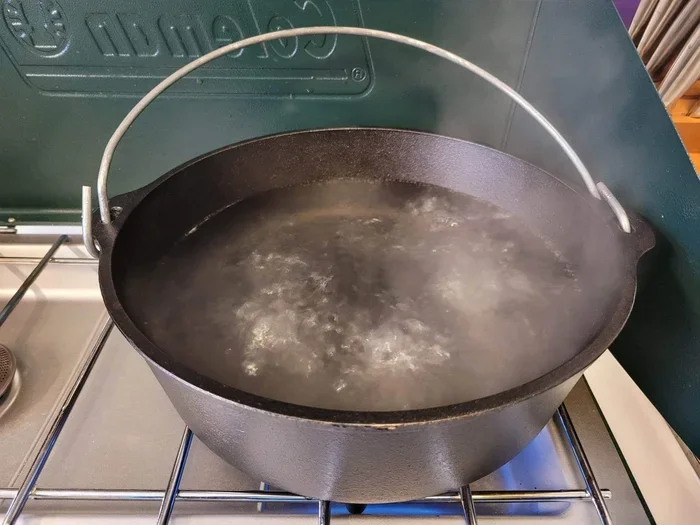
Fill your cast iron pot with the amount of water you need. Do not overfill. Leave at least two inches of space from the rim, because water will bubble up when it boils. Place the pot on your burner and set the heat to medium or medium-high.
Step 3: Let It Come To A Boil
Cast iron takes a little longer to heat up than thin pans. Give it time. You will see small bubbles forming on the bottom first. Then the surface will start to ripple. Finally, you will see a full rolling boil. This process usually takes 8 to 15 minutes depending on your burner and the amount of water.
Step 4: Turn Off The Heat And Let It Cool
Once the water is boiling, turn off the heat. If you are adding food like pasta or vegetables, now is the time. Let the pot cool naturally on the stove. Do not move it to a cold surface or run cold water over it. Preheating cast iron and then shocking it with cold is one of the fastest ways to damage your pot.
Step 5: Dry The Pot Thoroughly
After the pot has cooled, pour out the remaining water. Use a clean towel to dry the inside completely. For bare cast iron, this step is critical for rust prevention. Even a small amount of trapped moisture can lead to surface rust over time. For enameled cast iron, drying is still important but less urgent.
Common Mistakes People Make When Boiling Water In Cast Iron
Even though boiling water is simple, people still make mistakes that can damage their Dutch oven over time. Here are the most common ones to avoid.
Using Too High Heat
Cast iron holds heat incredibly well. You do not need to crank the burner to high to bring water to a boil. Medium or medium-high heat is plenty. Using too much heat can cause the water to boil over too quickly and wastes energy. It can also cause food residues on the bottom to burn and stick.
Soaking The Pot After Use
Some people think soaking their cast iron in water helps with cleaning. This is a big mistake. Soaking bare cast iron in water for extended periods causes rust. If you need to remove stuck-on food, use a stiff brush and a small amount of coarse salt. For enameled cast iron, avoid soaking as well, since prolonged water exposure can damage the enamel over time.
Ignoring Rust Spots
If you notice rust forming on your bare cast iron pot, do not ignore it. Small rust spots are easy to fix. Scrub them off with steel wool or a stiff brush, rinse, dry completely, and apply a thin layer of oil. If rust is left untreated, it can spread and affect the performance of your cooking vessel.
Boiling Acidic Water For Too Long
If you are boiling water with lemon juice, tomato, or other acidic ingredients in a bare cast iron pot, limit the boiling time. Acidic liquids can break down your seasoning over time. For short periods, this is not a problem. But if you are simmering acidic cooking liquid for an hour or more, consider using enameled cast iron instead.
Not Drying The Lid
People often remember to dry the pot but forget about the lid. The underside of the lid can trap moisture, which leads to rust. Always dry the lid thoroughly before storing your Dutch oven.
Tips For Maintaining Your Cast Iron Dutch Oven After Boiling Water
Taking care of your pot after boiling water is just as important as the boiling process itself. Here are some simple tips to keep your cast iron care routine effective.
Clean It While It Is Still Warm
The best time to clean your Dutch oven is while it is still slightly warm. This makes it easier to remove any residue. Use warm water and a soft sponge. Avoid harsh detergents for bare cast iron, as they can strip the seasoning. Enameled cast iron can handle mild dish soap if needed.
Re-Season Bare Iron Regularly
If you use your bare cast iron pot frequently for boiling water, re-season it every few months. Apply a thin layer of flaxseed oil or vegetable oil and bake it upside down in the oven at 375 degrees for one hour. This builds up the protective layer and keeps your pot performing at its best.
Store It With The Lid Off
When you are not using your Dutch oven, store it with the lid slightly open. This allows air to circulate and prevents moisture from getting trapped. If you store it with the lid on, you increase the risk of rust, especially with bare cast iron.
Use It Often
Here is a great piece of advice: the best way to maintain cast iron is to use it regularly. Every time you cook with it, you build up more seasoning. Boiling water, making soups, and simmering stews all contribute to a stronger, more durable nonstick surface over time.
Expert Insights On Boiling Water In Cast Iron
We spoke with experienced chefs and cast iron enthusiasts to get their top tips for boiling water in a Dutch oven.
Chef Maria Lopez, Professional Chef
I use my cast iron Dutch oven almost every single day. For boiling water, I always start on medium heat and let the pot warm up gradually. The key is patience. Cast iron rewards you for taking it slow. I never use high heat to boil water, and I always dry my pot immediately after. My Dutch oven has lasted me over 20 years because of these simple habits.
Cast Iron Enthusiast James Whitfield
If you are new to cast iron, start with enameled. It is more forgiving and requires less maintenance. You can boil water, make soups, and even bake bread without worrying about seasoning. But if you love the traditional cast iron experience, bare iron is unbeatable. Just commit to learning how to care for it properly.
Quick Tips For Boiling Water In Cast Iron
- Always preheat your pot gradually. Do not place it on high heat right away.
- Use medium heat for boiling water. This prevents scorching and saves energy.
- Dry your pot immediately after use. This is the single most important step for rust prevention.
- Use enameled cast iron for acidic liquids. It protects the surface and prevents metallic taste.
- Keep the lid slightly ajar when storing. This allows moisture to escape.
- Re-season bare iron regularly. A quick oil treatment keeps the surface smooth and protected.
- Never thermal shock your pot. Avoid moving it from hot to cold suddenly.
Conclusion
Can you boil water in a cast iron Dutch oven safely? Absolutely. Whether you have a bare iron pot or an enameled one, boiling water is not only safe but also one of the easiest things you can do with this incredible cooking vessel. Cast iron offers superior heat retention, even distribution, and decades of durability when you take care of it properly.
The key is to follow a few simple rules. Use medium heat, avoid thermal shock, dry your pot thoroughly after every use, and maintain your seasoning or enamel. Avoid common mistakes like soaking the pot or ignoring rust spots. With these habits, your Dutch oven will serve you well for generations.
Now that you know the answer, go ahead and put that pot to work. Boil water for pasta, make a hearty soup, or simply prepare a hot cup of tea. Your cast iron Dutch oven is ready. Trust it. Use it. And enjoy the confidence that comes from knowing you are using one of the best cooking tools ever made.
Boiling water in a cast iron Dutch oven is easy, safe, and rewarding. Follow the tips in this guide, and your pot will stay in excellent condition for many years to come.
Frequently Asked Questions
Can I boil water in a bare cast iron Dutch oven without it rusting?
Yes, you can. As long as you dry the pot thoroughly immediately after boiling and do not leave water sitting inside. Proper seasoning also helps protect the surface from moisture and rust formation.
Is it safe to boil water in a cast iron Dutch oven on an induction cooktop?
Yes, cast iron is fully compatible with induction cooktops. The dense iron material works perfectly with induction heating technology, making it safe and efficient for boiling water.
How long does it take to boil water in a cast iron Dutch oven?
It typically takes 8 to 15 minutes depending on the amount of water, the heat level, and the size of your pot. Cast iron heats up more slowly than thin pans, so give it a little extra time.
Can I boil acidic water like lemon water in cast iron?
You can, but only for short periods. Prolonged boiling of acidic liquids can break down the seasoning on bare cast iron and may cause a metallic taste. For acidic water, enameled cast iron is the better choice.
Do I need to re-season my cast iron after boiling water?
Not necessarily every time. But if you notice food sticking or the seasoning looking worn, a quick re-seasoning session will refresh the surface. Regular use and proper drying help maintain seasoning naturally.
What is the best way to dry a cast iron Dutch oven after boiling water?
The best method is to towel-dry the pot immediately after washing while it is still warm. You can also place it on a warm burner for a minute or two to evaporate any remaining moisture. This is the most important step in rust prevention.