Quick And Easy Foil Packets You Can Make In The Oven
Foil packets in the oven are one of the simplest and most delicious ways to cook a full meal with almost no cleanup. You can create foil packet dinner ideas with chicken, fish, beef, or vegetables in minutes. This guide walks you through everything from foil packet recipes to oven foil packets that turn out perfectly every time. Whether you are a beginner or a busy home cook, aluminum foil cooking makes weeknight dinners a breeze.
There is something magical about foil packets in the oven. You throw your favorite ingredients onto a sheet of aluminum foil, fold it up, and wait for a restaurant-quality meal to appear. No stirring. No mess. No stress.
If you have been looking for easy oven recipes that save time and taste amazing, foil packets are the answer. They are perfect for weeknight dinners, camping trips, and even meal prep on Sundays. This guide covers everything you need to know to make foil packet dinner ideas that your whole family will love.
We will go through the basics step by step. You will learn about the best ingredients, the right foil packet temperature, and how to avoid common mistakes. By the end, you will feel confident enough to create your own foil packet recipes from scratch.
Key Takeaways
- Foil packets are incredibly easy: You only need foil, your favorite ingredients, and an oven.
- They require minimal cleanup: Everything cooks inside the packet, so there is almost no scrubbing.
- You can customize any recipe: Use chicken, fish, beef, shrimp, or vegetables based on what you have.
- Cooking times are fast: Most oven foil packets are ready in 20 to 30 minutes.
- They lock in flavor and moisture: The sealed packet steams and bakes your food at the same time.
- Meal prep becomes simpler: You can prep foil packets ahead of time and bake them when needed.
- They work for any diet: Foil packet recipes easily adapt to keto, paleo, gluten-free, and low-carb diets.
📑 Table of Contents
- What Are Foil Packets And Why Are They So Great?
- Essential Ingredients For Making Foil Packets
- Step-By-Step Guide To Making Foil Packets In The Oven
- Best Foil Packet Recipes For The Oven
- Tips And Tricks For Perfect Foil Packets Every Time
- Common Mistakes To Avoid When Making Foil Packets
- Quick Tips For Better Foil Packets
- Conclusion
What Are Foil Packets And Why Are They So Great?
Foil packets are meals sealed inside aluminum foil and baked in the oven. The foil traps steam and heat, which cooks the food evenly and keeps it juicy. Think of it like a self-contained cooking pouch.
The beauty of aluminum foil cooking is how simple it is. You do not need any special equipment. A sheet of foil, your ingredients, and an oven are all you need. This makes foil packets one of the most accessible one-pan meals you can prepare.
Why Choose Foil Packets Over Other Cooking Methods?
There are many reasons people fall in love with oven foil packets. Here are the biggest benefits:
- Almost no cleanup: The food cooks inside the foil, so your pan stays clean.
- Fast cooking times: Most meals are done in 20 to 30 minutes.
- Flavor retention: The sealed packet locks in juices and seasonings.
- Versatility: You can cook meat, fish, vegetables, or combine them all.
- Easy portion control: Each packet is an individual serving.
- Minimal prep work: Chop, season, fold, and bake.
Foil packet recipes also work beautifully for meal prep. You can assemble several packets on Sunday, store them in the fridge, and bake them throughout the week. This makes healthy eating much more convenient for busy schedules.
Essential Ingredients For Making Foil Packets
The great thing about foil packet dinner ideas is that you can use almost anything. However, some ingredients work better than others. Let us break down the essentials.
Proteins That Work Best In Foil Packets
Almost any protein cooks beautifully inside a foil packet. Here are the top choices:
- Chicken breast or thighs: These are the most popular options. They cook through evenly and absorb flavors well.
- Fish fillets: Salmon, tilapia, and cod are excellent choices. They stay moist inside the packet.
- Shrimp: Shrimp cooks very fast and pairs well with butter, garlic, and lemon.
- Beef strips or steak: Thin cuts work best for quick cooking.
- Pork chops: They stay tender and juicy when cooked in foil.
Best Vegetables For Foil Packets
Vegetables are where foil packets really shine. They steam inside the packet and become tender and flavorful. Here are the best options:
- Potatoes: Cut into small cubes so they cook through evenly.
- Bell peppers: They add sweetness and vibrant color.
- Broccoli and cauliflower: These hold their shape well during baking.
- Zucchini and squash: They cook quickly and absorb seasonings nicely.
- Carrots and onions: A classic combination that adds natural sweetness.
- Green beans: They stay crisp-tender when not overcooked.
Seasonings And Sauces To Elevate Your Packets
The right foil packet seasoning makes all the difference. Here are some ideas to try:
- Garlic butter: Melted butter with minced garlic and a pinch of salt.
- Lemon herb: Fresh lemon juice, olive oil, rosemary, and thyme.
- Southwest style: Cumin, chili powder, paprika, and a squeeze of lime.
- Asian-inspired: Soy sauce, sesame oil, ginger, and a touch of honey.
- Mediterranean: Olive oil, oregano, basil, and sun-dried tomatoes.
Adding a small splash of liquid inside the packet helps create steam. A few tablespoons of broth, wine, or citrus juice works wonders for foil packet cooking.
Step-By-Step Guide To Making Foil Packets In The Oven
Making oven foil packets is straightforward once you know the process. Follow these steps for perfect results every time.
Step 1: Gather Your Ingredients And Preheat The Oven
Start by choosing your protein, vegetables, and seasonings. Preheat your oven to the recommended foil packet temperature. Most recipes work well at 400 to 425 degrees Fahrenheit. This high heat helps the packet steam while also browning the edges slightly.
Step 2: Cut And Prepare Your Ingredients
Wash and chop your vegetables into similar-sized pieces. This ensures they cook at the same rate. Cut your protein into uniform portions so nothing is undercooked or overcooked.
Pat everything dry with a paper towel. This helps the seasonings stick better and prevents excess moisture from making the packet soggy.
Step 3: Season Everything Generously
Place your ingredients on a large sheet of aluminum foil. Add your foil packet seasoning and any liquids you are using. Toss everything gently with your hands or a spoon to distribute the flavors evenly.
Do not be shy with salt, pepper, and herbs. The foil traps all the flavors inside, so every bite will be delicious.
Step 4: Seal The Packet Properly
This is the most important step. Fold the foil in half lengthwise, then fold the edges together to create a sealed pouch. Make sure there are no gaps or openings. You want the steam to stay trapped inside.
A good trick is to double-fold the top edge for a secure seal. This prevents any liquid from leaking out during cooking.
Step 5: Bake And Check For Doneness
Place the sealed packet on a baking sheet. Bake for the recommended time based on your protein. Most foil packet recipes take between 20 and 35 minutes.
Use a meat thermometer to check that the internal temperature is safe. Chicken should reach 165 degrees Fahrenheit, and beef should reach 145 degrees for medium-rare. Be careful when opening the packet. Steam will be very hot, so use tongs or oven mitts.
Best Foil Packet Recipes For The Oven
Now that you know the basics, let us explore some foil packet recipes you can try right away. Each one is simple, delicious, and perfect for busy weeknights.
Chicken And Vegetable Foil Packets
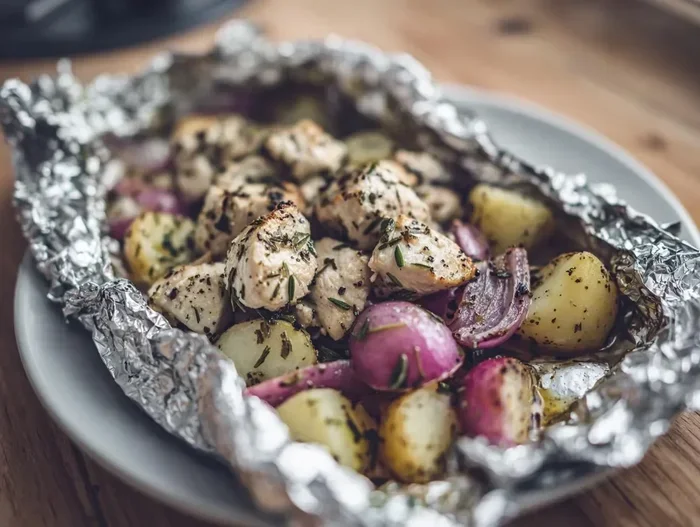
This is a classic foil packet dinner that everyone loves. You will need chicken thighs, baby potatoes, broccoli, bell peppers, garlic, olive oil, and Italian seasoning. Toss everything together on the foil, seal it up, and bake at 400 degrees for 25 to 30 minutes.
The result is tender chicken and perfectly steamed vegetables with all the flavors melded together. This recipe is naturally gluten-free and easily adapted to low-carb diets by swapping potatoes for zucchini.
Salmon Foil Packets With Lemon And Dill
Salmon is one of the healthiest proteins you can eat, and it cooks beautifully in foil. Place a salmon fillet on the foil, add thin lemon slices, fresh dill, a drizzle of olive oil, and a pinch of salt and pepper. Bake at 400 degrees for 15 to 20 minutes.
The steam inside the packet keeps the salmon incredibly moist. This is a quick weeknight dinner that feels elegant and special.
Beef And Potato Foil Packets
For a heartier meal, try beef and potato packets. Use thinly sliced beef sirloin, cubed potatoes, onions, and a savory sauce made from beef broth, Worcestershire sauce, and garlic. Seal the packet and bake at 425 degrees for 30 to 35 minutes.
This recipe is perfect for meal prep because it reheats well and makes great leftovers. The potatoes soak up all the beefy juices and become incredibly flavorful.
Shrimp Foil Packets With Garlic Butter
Shrimp cooks in just minutes, making these packets a fast and impressive meal. Place peeled shrimp on the foil with butter, minced garlic, lemon juice, and a sprinkle of paprika. Bake at 400 degrees for only 10 to 12 minutes.
Serve these over rice or with crusty bread to soak up the garlic butter sauce. This is one of the most popular foil packet recipes for summer dinners.
Tips And Tricks For Perfect Foil Packets Every Time
Once you master the basics, these tips will take your oven foil packets to the next level.
Use Heavy-Duty Foil For Best Results
Regular foil can tear easily, especially with wet ingredients. Heavy-duty foil is stronger and holds up better during cooking. It also retains heat more effectively, which helps cook your food more evenly.
Do Not Overfill The Packet
It can be tempting to pack everything in tightly, but overfilling leads to messy leaks. Leave at least two inches of foil on all sides so you can fold the packet securely. A good rule of thumb is to keep the filling to about one cup per serving.
Add Aromatics For Extra Flavor
Fresh herbs, garlic cloves, and citrus zest add incredible depth to foil packet cooking. Toss a few sprigs of rosemary or thyme inside the packet before sealing. The steam carries these aromatics directly into the food.
Layer Ingredients Correctly
Place denser vegetables like potatoes and carrots on the bottom of the packet, closer to the heat source. Put lighter vegetables and proteins on top. This ensures everything cooks at the same rate.
Let The Packet Rest Before Opening
After baking, let the packet sit for 3 to 5 minutes before opening. This allows the juices to redistribute throughout the food. When you finally open it, the flavors will be more concentrated and delicious.
Experiment With Different Sauces And Marinades
Do not be afraid to get creative. Try different foil packet seasoning combinations to keep meals exciting. A simple teriyaki glaze or a spicy buffalo sauce can completely transform a basic packet.
Common Mistakes To Avoid When Making Foil Packets
Even though foil packets in the oven are simple, there are a few mistakes that can ruin your results. Here is what to watch out for.
Opening the Packet Too Early
Resist the urge to peek inside while the packet is cooking. Every time you open the foil, you release the steam that is doing the work. This can lead to dry, undercooked food. Trust the process and let the packet do its job.
Using the Wrong Temperature
Too low a temperature means your food steams for too long and becomes mushy. Too high a temperature can burn the edges before the inside cooks through. Stick to the 400 to 425 degree range for the best results.
Adding Too Much Liquid
A little liquid creates helpful steam, but too much turns your packet into a soup. Use no more than two to three tablespoons of broth or sauce per packet. The vegetables and protein will release their own juices as they cook.
Skipping the Resting Time
Just like a grilled steak, a foil packet benefits from resting after it comes out of the oven. Cutting into it immediately lets all the steam escape. Give it a few minutes, and you will notice a big difference in flavor and texture.
Not Using Fresh Ingredients
While frozen vegetables can work in a pinch, fresh ingredients make a noticeable difference in taste and texture. Fresh herbs, seasonal vegetables, and quality proteins take your foil packet recipes from good to great.
Forgetting To Label Meal Prep Packets
If you are prepping foil packet meals ahead of time, always label each packet with the contents and the date. This saves confusion later and helps you keep track of freshness. Use a marker directly on the foil or attach a small label.
Quick Tips For Better Foil Packets
- Use a meat thermometer: This is the only way to be sure your protein is cooked safely.
- Add a drizzle of honey or maple syrup: A little sweetness balances savory flavors beautifully.
- Try different foil shapes: You can make rectangular packets for individual servings or larger oval packets for sharing.
- Cook on a baking sheet: This catches any drips and makes cleanup even easier.
- Pair with rice or bread: Serve your foil packet dinner with a simple side for a complete meal.
Conclusion
Foil packets in the oven are truly one of the best cooking methods for busy people who still want to eat well. They are fast, easy, customizable, and require almost no cleanup. Whether you are cooking chicken, fish, beef, shrimp, or a mix of vegetables, aluminum foil cooking delivers consistent, flavorful results every single time.
Start with the basic steps in this guide, and soon you will be creating your own foil packet recipes without even thinking about it. Experiment with different foil packet seasoning combinations, try new proteins and vegetables, and make these one-pan meals a regular part of your weekly routine.
The beauty of oven foil packets is that they work for any skill level. Beginners can follow simple recipes, while experienced cooks can get creative with complex flavor profiles. No matter where you are on your cooking journey, foil packets will serve you well. So grab a sheet of foil, gather your favorite ingredients, and get cooking tonight.
Frequently Asked Questions
What temperature should I cook foil packets in the oven?
Most foil packets in the oven work best at 400 to 425 degrees Fahrenheit. This temperature is high enough to create steam inside the packet while also browning the edges of your food. Always check your specific recipe for the exact foil packet temperature recommended.
How long do foil packets take to cook in the oven?
Cooking times vary depending on the protein and vegetables you use. Chicken packets usually take 25 to 30 minutes, while shrimp packets can be done in just 10 to 12 minutes. Fish fillets typically need 15 to 20 minutes. Use a meat thermometer to ensure your food is cooked to a safe internal temperature.
Can I use regular aluminum foil instead of heavy-duty foil?
Yes, you can use regular foil, but heavy-duty foil is recommended for foil packet cooking. Regular foil tears more easily, especially when sealed with wet ingredients. Heavy-duty foil provides a stronger seal and retains heat better, which leads to more even cooking results.
Can I prepare foil packets ahead of time?
Absolutely. Foil packet meal prep is one of the best things about this cooking method. You can assemble packets the night before, store them in the refrigerator, and bake them when you are ready to eat. Just make sure to add a few extra minutes to the cooking time if the packets go straight from the fridge into the oven.
What is the best way to open a foil packet safely?
Always open the packet away from your face to avoid steam burns. Use tongs or oven mitts to handle the hot packet. Let it rest for 3 to 5 minutes after removing it from the oven before opening. This allows the juices to settle and makes the food easier to handle.
Can I make foil packets on a grill instead of in the oven?
Yes! Grilled foil packets are just as delicious as oven-baked ones. Place the sealed packet directly on the grill grate over medium heat. Cooking times are similar to oven use, but you may need to check for doneness a few minutes early since grills can have hot spots. This makes foil packets a perfect option for summer barbecues and outdoor cooking.