How To Clean Baked On Food In Oven With Baking Soda
Baking soda is the safest and most affordable way to clean baked on food in oven surfaces. This guide walks you through a simple paste method that dissolves tough grease and carbon buildup without harsh chemicals. You will learn preparation steps, application techniques, and prevention tips to keep your oven spotless.
Nobody loves opening their oven to find a layer of burnt, crusty food staring back at them. baked on food in oven is one of the most common kitchen problems homeowners face. The good news is that you do not need expensive chemical sprays or expensive professional cleaners to fix it.
Baking soda is a natural, non-toxic powerhouse that dissolves grease and loosens burnt residue with ease. In this guide, you will learn exactly how to use baking soda to restore your oven to sparkling condition. We will cover every step from preparation to prevention. By the end, you will have a clean oven and the confidence to tackle this chore yourself.
Whether you bake casseroles every weekend or roast vegetables once a week, oven cleaning is something every home cook needs to handle. The method we share here uses simple household items and takes about 30 to 60 minutes of active cleaning time. Let us get started.
Key Takeaways
- Baking soda works as a gentle abrasive: It breaks down baked on food in oven surfaces without scratching or releasing toxic fumes.
- The paste method is the most effective: Mixing baking soda with water creates a powerful cleaner that softens even crusty residue.
- Steam helps loosen stubborn stains: Using water and heat before applying baking soda makes the cleaning process much faster.
- Prevention saves time: Regular light cleaning and oven liners reduce the need for deep cleaning sessions.
- Avoid harsh chemical cleaners: Many commercial oven cleaners contain harmful fumes that are unnecessary when baking soda works so well.
- Rack and door cleaning need special attention: These areas collect the most baked on grease and need separate treatment.
📑 Table of Contents
- Why Baked On Food Gets Stuck In Your Oven
- Why Baking Soda Is The Best Cleaner For Oven Stains
- Step-By-Step Guide To Cleaning Baked On Food In Oven
- Comparison: Baking Soda Vs Other Oven Cleaning Methods
- Quick Tips For Preventing Future Messes
- Common Mistakes To Avoid When Cleaning Your Oven
- Expert Insights On Oven Maintenance
- Conclusion
Why Baked On Food Gets Stuck In Your Oven
Understanding why food sticks to oven surfaces helps you clean it better and prevent it from happening again. When food heats up, its sugars and proteins undergo a chemical reaction called the Maillard reaction. This is what gives roasted food its delicious brown color. But it also creates a hard, stubborn crust that bonds to metal and glass.
The Science Behind Burnt Food Residue
When fats and oils reach high temperatures, they break down and polymerize. This means they turn into a hard, plastic-like coating on your oven walls. The higher the heat, the harder the residue becomes. This is why food left at 400°F or above is much tougher to clean than food that spilled at lower temperatures.
Several factors make baked on food in oven worse over time:
- Repeated spills: Each new layer bonds to the old one, building up thick crusts.
- High-temperature cooking: Broiling and self-cleaning cycles bake residue into a rock-like state.
- Sugar-rich foods: Pies, sauces, and casseroles caramelize and harden quickly.
- Ignoring small spills: A small drip today becomes a hardened crust tomorrow.
The longer you let food sit in the oven, the harder it gets to remove. That is why regular maintenance matters so much. Even if you do a deep clean every few months, wiping up spills right after cooking makes a huge difference.
Why Baking Soda Is The Best Cleaner For Oven Stains
Baking soda (sodium bicarbonate) is a mild alkali that naturally breaks down grease and grime. It is safe, affordable, and found in almost every kitchen pantry. Unlike harsh chemical cleaners, baking soda does not release toxic fumes inside your oven.
How Baking Soda Works On Grease
Baking soda reacts with acidic substances like vinegar to create a fizzing action that lifts dirt from surfaces. On its own, baking soda acts as a gentle abrasive. It scrubs away residue without scratching the enamel or glass inside your oven.
Here is why baking soda beats commercial oven cleaners:
- Non-toxic: Safe for homes with children and pets.
- No fumes: You do not need to open windows or wear gloves.
- Affordable: A box costs less than $2 and lasts for many cleanings.
- Versatile: It works on oven walls, racks, trays, and glass doors.
- Eco-friendly: It is a natural mineral that does not harm the environment.
Many people who switch to natural oven cleaning with baking soda never go back to chemical sprays. The results are just as good, and the process is far more pleasant.
Step-By-Step Guide To Cleaning Baked On Food In Oven
Follow these steps carefully for the best results. This method works for both standard ovens and convection ovens. You will need baking soda, water, white vinegar, a spray bottle, and a soft cloth or sponge.
Step 1: Remove The Oven Racks
Take out all oven racks, trays, and any removable parts. This gives you full access to the interior walls and door. You will clean the racks separately, so set them aside in a sink or bathtub.
While you are at it, check if anything is left inside the oven. Remove any oven-safe cookware or baking sheets. This step might seem simple, but it makes the rest of the process much smoother.
Step 2: Make The Baking Soda Paste
In a small bowl, mix about half a cup of baking soda with just enough water to form a thick paste. The consistency should be similar to toothpaste. Not too runny, not too thick.
Tips for the perfect paste:
- Start with a 3-to-1 ratio of baking soda to water.
- Add more water slowly if the paste is too thick.
- Add more baking soda if it feels too runny.
- For extra cleaning power, add a few drops of dish soap.
This paste is the star of the whole process. It will do the heavy lifting for you.
Step 3: Apply The Paste To All Interior Surfaces
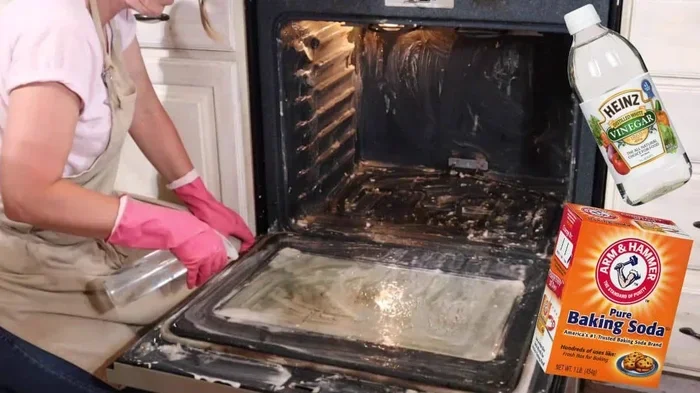
Using your fingers or a spatula, spread the baking soda paste generously over the inside of the oven. Focus on areas with the most baked on food in oven buildup. Avoid touching the heating elements directly with the paste.
Make sure to cover these key areas:
- The back wall of the oven
- The floor of the oven
- The oven door interior (both sides of the glass)
- The corners and edges where grease accumulates
- The area around the oven light
Let the paste sit for at least 12 hours or overnight. This gives it time to penetrate and soften the hardened grease and food residue.
Step 4: Use Steam To Loosen Stubborn Stains
For really tough spots, add steam to the process. Fill a small oven-safe dish with water and place it on the lower rack. Heat the oven to 250°F for about 10 minutes. The steam will help soften the baked-on crust, making it easier to wipe away.
After steaming, turn off the oven and let it cool slightly. The warm, moist environment works wonders on stubborn oven stains that have been building up for weeks.
Step 5: Scrub And Wipe Away The Paste
Put on a pair of rubber gloves and grab a damp sponge or soft cloth. Start scrubbing the oven interior in circular motions. The baking soda will act as a mild abrasive, lifting the loosened grime away from the surface.
For hard-to-reach areas like corners and crevices, use an old toothbrush or a small detailing brush. Work through the paste section by section until all the grime lifts away.
Quick Tips for scrubbing:
- Use gentle pressure. You do not need to scrub hard.
- Reapply paste to areas that still have heavy buildup.
- Rinse your sponge frequently to avoid spreading grease around.
- For glass oven doors, use a separate cloth to avoid scratching.
Step 6: Use Vinegar To Finish The Job
Fill a spray bottle with white vinegar and spritz it over the remaining baking soda residue. The vinegar will react with the baking soda, creating a gentle fizz that helps lift any remaining dirt. Wipe everything clean with a damp cloth.
This final step ensures that no baking soda residue is left behind. Your oven interior should now feel smooth and look completely clean.
Step 7: Clean The Oven Racks Separately
Soak the oven racks in a bathtub or large sink filled with hot water and a quarter cup of baking soda. Let them soak for at least one hour. After soaking, scrub them with a non-abrasive pad to remove any remaining baked-on food.
For heavily soiled racks, you can also apply the baking soda paste directly to the racks before soaking. This extra step breaks down thick grease buildup much faster.
Comparison: Baking Soda Vs Other Oven Cleaning Methods
There are several ways to clean an oven. Here is how baking soda compares to other popular methods:
| Method | Effectiveness | Safety | Cost | Time Required |
|---|---|---|---|---|
| Baking Soda Paste | Excellent for moderate buildup | Non-toxic and safe | Very low | 12-24 hours (mostly passive) |
| Commercial Oven Cleaner Spray | Very strong on heavy buildup | Toxic fumes, requires ventilation | Moderate to high | 1-2 hours |
| Steam Cleaning Only | Good for light residue | Safe | Very low | 30 minutes |
| Lemon and Water Steam | Good for light to moderate buildup | Safe and natural | Low | 1-2 hours |
| Self-Cleaning Oven Cycle | Excellent for all buildup | High heat, risk of fumes | No added cost | 2-4 hours |
Baking soda offers the best balance of safety, cost, and effectiveness for most home cooks. It is especially ideal if you cook frequently and need a reliable cleaning method you can use regularly.
Quick Tips For Preventing Future Messes
Cleaning is easier when you prevent heavy buildup in the first place. These simple habits will keep your oven cleaner for longer:
- Use oven liners: Place a reusable silicone or aluminum liner on the bottom rack to catch drips and spills.
- Cover dishes with foil: When roasting or baking, cover pans with aluminum foil to prevent splatter.
- Clean spills immediately: Wait until the oven cools slightly after cooking, then wipe up any spills right away.
- Place a baking sheet below: When cooking messy foods like pizza or roasted vegetables, put a sheet pan on the rack below to catch drips.
- Do a light wipe-down monthly: Spend 10 minutes each month wiping the interior with a damp cloth and a bit of baking soda.
These habits are especially important if you use your oven often for roasting, broiling, or baking. If you regularly cook foods that tend to splatter, like how to cook stuffed rouladen in the oven or other casserole-style dishes, oven liners become your best friend.
Common Mistakes To Avoid When Cleaning Your Oven
Even with the right cleaner, some mistakes can damage your oven or make the job harder. Here is what to watch out for:
- Using steel wool or abrasive pads: These can scratch enamel and glass surfaces, making future cleaning even harder.
- Skipping the overnight soak: Rushing the process by not letting the baking soda paste sit long enough leaves residue behind.
- Using too much water: Excess water can damage oven heating elements or cause rust on metal parts.
- Ignoring the oven door seal: Grease builds up on the rubber seal around the door, which affects oven temperature and efficiency.
- Using vinegar on its own: Vinegar alone does not cut grease well. It works best when combined with baking soda for the fizzing reaction.
- Not cleaning the racks: Dirty racks transfer grease back onto the oven floor every time you cook.
Avoiding these mistakes will make your oven cleaning routine faster and more effective every time.
Expert Insights On Oven Maintenance
Professional chefs and oven manufacturers agree that regular, gentle cleaning beats occasional deep scrubbing. The key is consistency. A few minutes of attention after each use prevents the need for intense cleaning sessions.
Many experts also recommend keeping your oven at the right temperature. If you are cooking at very high heat regularly, such as when learning how to cook cauliflower steaks in the oven at 450°F or higher, expect more buildup on the oven floor. Plan for a quick wipe-down after these sessions.
For those who use specialized oven setups, like a homemade how to make a tandoori oven, the cleaning approach may vary slightly. High-heat cooking in clay or insulated ovens creates unique residue patterns. In these cases, a more frequent cleaning schedule is recommended.
One final piece of advice from oven experts: always check your oven manual before using any cleaning method. Some manufacturers have specific guidelines about what cleaning agents are safe for their particular oven models.
Conclusion
How to clean baked on food in oven does not have to be a dreaded chore. With baking soda, a little patience, and the right technique, you can restore your oven to like-new condition using safe, natural methods. The paste method is gentle, effective, and costs almost nothing.
Remember to clean up spills right after cooking, use oven liners for messy recipes, and do a light monthly wipe-down. These habits will keep your oven looking great and working efficiently for years to come.
Start with the baking soda method the next time you notice buildup in your oven. You will be amazed at how well it works. A clean oven not only looks better but also cooks food more evenly and safely. Give it a try, and your kitchen will thank you.
For more oven care tips and cooking guides, explore our other articles on oven techniques and maintenance. Happy cleaning!
Frequently Asked Questions
Can I use baking soda and vinegar together to clean baked on food in oven?
Yes, combining baking soda and vinegar creates a fizzing reaction that helps lift stubborn grime. Apply the baking soda paste first, let it sit overnight, then spray vinegar over it before wiping clean. This combination works great on moderate oven buildup.
How long should I let baking soda paste sit in my oven?
Let the baking soda paste sit for at least 12 hours or overnight. The longer it sits, the more it softens baked on food in oven surfaces. For lighter buildup, 4 to 6 hours may be enough.
Is baking soda safe for all oven types including self-cleaning models?
Baking soda is safe for most oven types including standard, convection, and self-cleaning models. However, always check your oven manual first. Avoid getting baking soda on the heating elements in self-cleaning ovens, as it may affect the cycle.
What if the baked on food in oven will not come off with baking soda?
For extremely stubborn stains, try adding steam to the process. Heat the oven to 250°F with a dish of water inside for 10 minutes before applying the baking soda paste. You can also repeat the paste application a second time for particularly tough crusty buildup.
How often should I clean my oven with baking soda?
For best results, do a light baking soda wipe-down once a month. A deeper cleaning with the full paste method every 3 to 6 months is usually enough for regular home cooks. Heavy users may need to clean more frequently.
Can I use baking soda on the glass door of my oven?
Absolutely. Baking soda is gentle enough to use on oven door glass without scratching. Apply the paste, let it sit, then scrub gently with a soft cloth. For extra shine, finish with a vinegar spray and a clean wipe-down.