How To Remove Glass From Oven Door With These Tips
Removing glass from an oven door is a manageable DIY task when you follow the right steps. This guide walks you through everything from safety prep to actually pulling out the broken or old glass. You will learn which tools to use, how to identify inner and outer panels, and how to replace the glass with confidence. Whether your oven door glass is cracked, shattered, or just worn out, these tips will save you time and money.
Have you ever opened your oven door only to find a web of cracks running across the glass? Or maybe the glass has shattered completely, leaving you unsure what to do next. Learning how to remove glass from oven door is a skill that every home cook should have in their toolkit. It might seem intimidating at first, but with the right guidance, it is surprisingly straightforward. This guide breaks down the entire process into easy, followable steps that anyone can handle.
A broken oven door glass is more than just an eyesore. It affects your oven’s efficiency, lets heat escape, and can even become a safety hazard. Removing the glass safely ensures you can replace it quickly and get back to cooking without worry. Whether you are dealing with a cracked pane, a shattered outer panel, or just an old glass that needs swapping out, this article has you covered. Let us walk through everything you need to know.
Key Takeaways
- Safety First: Always disconnect power and wear protective gloves before removing oven door glass.
- Right Tools Matter: Using the correct screwdrivers, pliers, and masking tape makes the job smoother and safer.
- Know Your Glass: Understanding the difference between inner and outer oven door glass panels helps you target the right replacement.
- Step-by-Step Process: Following a clear removal sequence prevents damage to the door frame and hinges.
- Replacement Is Easy: Swapping in a new glass panel takes minutes once the old one is out.
- Avoid Common Mistakes: Skipping safety gear or forcing clips can lead to injury or further damage.
📑 Table of Contents
- Why Does Oven Door Glass Break?
- Tools and Materials You Will Need
- How To Remove Glass From Oven Door Step by Step
- Inner Glass vs Outer Glass Panel
- How To Replace the Oven Door Glass
- Safety Tips and Common Mistakes to Avoid
- How To Find the Right Replacement Glass
- How To Maintain Your New Oven Door Glass
- When to Call a Professional
- Conclusion
Why Does Oven Door Glass Break?
Before you grab your tools, it helps to understand why oven door glass breaks in the first place. Knowing the cause can help you prevent future damage and choose the right replacement glass.
Thermal Shock and Temperature Changes
Oven door glass goes through a lot of stress. Every time you preheat your oven or switch to broil mode, the temperature changes rapidly. This sudden shift is called thermal shock. Over time, it creates tiny stress fractures in the glass. Eventually, those fractures grow into visible cracks. Self-cleaning oven glass is especially vulnerable because the extreme heat during the cleaning cycle puts extra strain on the panels.
Age and General Wear
Nothing lasts forever, and oven door glass is no exception. Most oven door glass panels last between 5 and 10 years with normal use. But constant exposure to high heat, grease, and steam slowly weakens the glass. If your oven is older, the glass may simply be due for a replacement. Oven door glass replacement is a normal part of appliance maintenance that many people overlook.
Impact Damage from Cooking
Let us be honest. Kitchens get busy. Pots get placed on oven doors. Heavy dishes bump against the glass during loading. These small impacts add up. A hard knock can crack even a healthy pane of tempered glass oven door material. If you have ever slammed a baking tray against the door, that could be the final straw.
Quick Tips
- Never place heavy objects on or against your oven door.
- Avoid slamming the oven door shut. Close it gently to reduce stress on the glass.
- Let your oven cool down naturally rather than running cold water on a hot door.
Tools and Materials You Will Need
Gathering your tools before you start makes the whole process faster and safer. You do not need anything fancy, but having the right items on hand is essential.
Essential Removal Tools
Here is a simple list of what you will need to remove glass from oven door:
- Phillips and flat-head screwdrivers for removing screws and clips
- Needle-nose pliers for gripping small clips and pins
- Masking tape to cover broken glass shards
- Thick work gloves to protect your hands from sharp edges
- Safety goggles to shield your eyes from glass fragments
- Soft cloth or cardboard to lay over broken glass pieces
- Vacuum cleaner with a narrow nozzle for cleaning up tiny shards
- Replacement glass panel sized to your oven model
Choosing the Right Replacement Glass
Not all oven glass is the same. Most oven doors use tempered glass or ceramic glass for ovens. Tempered glass is heat-treated to withstand high temperatures without shattering into dangerous pieces. Ceramic glass (also called pyrocerm) handles extreme heat even better. Check your oven manual or look up your model number online to find the exact glass size and type you need. Oven glass repair parts are widely available online and at appliance stores.
Expert Insight
Always double-check the dimensions of your replacement glass before ordering. Even a millimeter of difference can prevent the new panel from fitting properly. Keep your oven model number handy when shopping for oven door glass replacement parts.
How To Remove Glass From Oven Door Step by Step
This is the core section of the guide. Follow each step carefully, and you will have the old glass out safely in no time.
Step 1: Disconnect Power and Let the Oven Cool
Safety comes first. Before you touch anything, turn off the oven at the circuit breaker. If your oven is gas-powered, shut off the gas supply valve. Wait at least one hour for the oven to cool completely. Removing glass from oven door while the appliance is still warm increases the risk of burns and can cause the glass to crack further. Use this waiting time to gather your tools and lay out your workspace.
Step 2: Remove the Oven Door
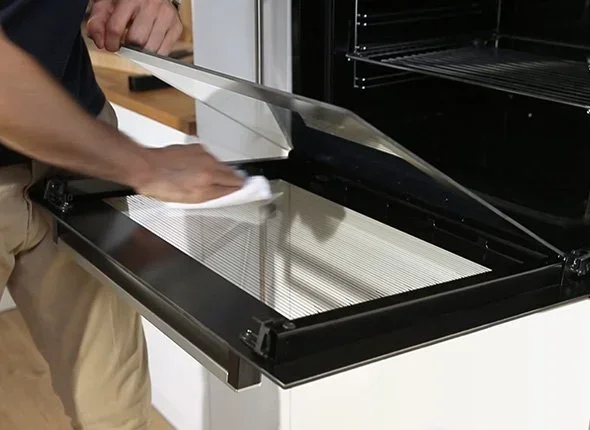
Most oven doors can be lifted off their hinges. Open the door fully and look for a small release latch or tab near the hinge area. Squeeze or lift the latch while gently pulling the door upward. Some models have a two-step release mechanism, so check your manual if you are unsure. Once the door is free, lay it flat on a stable surface like a table covered with a soft blanket.
Step 3: Cover and Protect the Broken Glass
If the glass is already broken or cracked, this step is critical. Put on your thick gloves and safety goggles. Place strips of masking tape over the broken glass pieces. This prevents shards from flying when you work. You can also lay a layer of cardboard or a soft cloth over the glass surface for extra protection. Use your vacuum cleaner to pick up any loose glass fragments from the door frame.
Step 4: Remove the Outer Glass Panel
Most oven doors have two glass panels with an air gap between them. Start with the outer panel first. Look for screws or clips holding the outer frame in place. Use your screwdriver or needle-nose pliers to remove them. Keep track of every screw in a small bowl or labeled container. Once all fasteners are out, gently lift the outer glass panel away from the frame. If it is stuck, a gentle wiggle should free it. Never force it, or you risk cracking the inner panel too.
Step 5: Remove the Inner Glass Panel
With the outer panel out, you can now see the inner glass panel. This one is usually held in place by a metal frame with spring clips or retaining pins. Use your pliers to carefully release each clip. Some clips push in from the side, while others need to be twisted counterclockwise. Once all clips are free, lift the inner glass straight out of the frame. Place it on a soft surface immediately to prevent it from rolling or breaking further.
Common Mistakes to Avoid
- Skipping the masking tape: This is the number one mistake people make. Broken glass without tape protection can scatter and cause cuts.
- Forcing stuck clips: If a clip will not budge, do not use excessive force. Check if there is a hidden screw or latch you missed.
- Mixing up inner and outer panels: The two panels are different sizes and thicknesses. Mixing them up will result in a poor fit.
Inner Glass vs Outer Glass Panel
Understanding the difference between the inner and outer glass panels in your oven door helps you troubleshoot problems and choose the right replacement part.
Identifying Which Glass Needs Replacement
Sometimes only one panel is damaged, and sometimes both are. Here is how to tell which one needs attention:
- Cracks on the outside surface usually mean the outer panel is compromised.
- Heat escaping from the oven or fogging between the two panels suggests a broken seal on the outer glass.
- Glass shards inside the oven typically come from the inner panel, which faces the cooking cavity.
- Visible cracks when the door is closed could involve either panel, so inspect both carefully.
Key Differences Between the Two Panels
The outer panel is thicker and designed to insulate. It handles the highest surface temperatures on the door. The inner panel is thinner and faces the oven cavity directly. Both are made of heat-resistant materials, but they serve different purposes. Double pane oven glass setups rely on the air gap between the two panels for insulation. If the outer panel breaks, the insulation suffers even if the inner panel looks fine.
| Feature | Outer Glass Panel | Inner Glass Panel |
|---|---|---|
| Thickness | Thicker (usually 5-6mm) | Thinner (usually 3-4mm) |
| Heat Exposure | High (external surface) | Very high (oven cavity) |
| Insulation Role | Primary insulator | Secondary barrier |
| Replacement Frequency | Less frequent | More frequent due to direct heat |
| Common Damage | Cracks from impact, seal failure | Shattering from thermal shock |
How To Replace the Oven Door Glass
Once the old glass is out, installing the new panel is quick and satisfying. Here is how to do it right.
Installing the New Glass Panel
Take your new oven door glass out of its packaging. Inspect it for any chips or cracks before installation. Place the new glass into the frame, aligning it with the clip holes or screw points. If your door uses spring clips, press each clip firmly until it clicks into place. For screw-mounted frames, replace the screws and tighten them gently. Do not overtighten, as this can crack the new glass or warp the frame.
Reassembling the Door
If you replaced both panels, install the inner glass first, then the outer glass. Make sure each panel sits flush within its frame. Once both panels are secure, reattach the door to the oven by reversing the removal steps. Align the hinges, lower the door onto them, and listen for the release latch to click into place. Open and close the door a few times to make sure it moves smoothly and sits evenly.
Expert Insight
After replacing your oven door glass, run the oven at a low temperature (around 200°F) for 15 minutes. This helps the new glass settle and confirms there are no air leaks. Check the edges for any gaps where heat might escape.
Safety Tips and Common Mistakes to Avoid
Removing and replacing oven door glass involves working with sharp edges and high-heat components. Staying safe should always be your top priority.
Safety Precautions During Removal
- Always wear thick gloves and safety goggles. Glass shards are sharp and can cause serious injuries.
- Work on a stable, flat surface. Lay the oven door on a table with a soft cloth underneath to prevent scratches and provide a secure workspace.
- Keep children and pets away from the work area. Broken glass pieces can be tiny and easy to step on.
- Dispose of broken glass properly. Wrap shards in several layers of newspaper or cardboard before placing them in a sturdy trash container.
- Do not use bare hands to pick up glass. Even small fragments can cause deep cuts. Use pliers or a damp cloth instead.
Common Mistakes That Cause Further Damage
Even well-intentioned DIYers can run into trouble. Here are the most common mistakes people make when they try to remove glass from oven door:
- Removing the door while the glass is still hot. This can cause the glass to crack further and increases burn risk.
- Using the wrong screwdriver size. Stripped screws make reassembly difficult and can damage the frame.
- Not reading the oven manual. Different oven models have different door mechanisms. The manual gives you model-specific instructions.
- Forcing a stuck glass panel. If the glass does not come out easily, check for hidden clips or screws before applying more force.
- Buying the wrong replacement glass size. Measure twice and order once. A glass panel that is even slightly too small will not seal properly.
How To Find the Right Replacement Glass
Finding the correct replacement glass does not have to be a headache. Here is a simple guide to getting the right part for your oven.
Check Your Oven Model Number
Every oven has a model number, usually found on a sticker inside the door frame or on the back of the unit. Write this number down or take a photo of it. Use this number when searching for replacement parts online. Most manufacturers and appliance parts websites let you search by model number to find the exact oven door glass that fits your unit.
Measure the Glass Panel
If you cannot find the model number, measure the glass directly. Use a ruler or tape measure to get the length and width in millimeters. Also measure the thickness of the glass. Note any notches or holes in the frame. Take these measurements with you when shopping for replacement glass. Ceramic glass for ovens and tempered glass panels are available in standard sizes, but custom sizes are also available from specialty retailers.
Where to Buy Replacement Glass
You have several options for purchasing replacement oven glass:
- Manufacturer websites offer OEM (original equipment manufacturer) parts that match exactly.
- Appliance parts retailers like RepairClinic or PartSelect carry a wide range of oven glass panels.
- Amazon and eBay often have competitive prices, but make sure to verify compatibility with your model.
- Local appliance stores let you see and compare the glass in person before buying.
Quick Tips
- Keep your old glass panel until the new one arrives. This helps you confirm the size and shape match.
- Buy a spare glass panel if your oven is more than 5 years old. It saves time and money if another pane breaks later.
- Check the return policy before purchasing. Some retailers allow returns on unused glass panels within 30 days.
How To Maintain Your New Oven Door Glass
Once your new glass is installed, a little maintenance goes a long way in extending its lifespan.
Regular Cleaning Habits
Grease and food splatter build up on oven door glass over time. Use a mild oven-safe cleaner and a soft cloth to wipe the glass after each deep clean. Avoid abrasive scrubbers or harsh chemical cleaners that can scratch or weaken the glass surface. For stubborn grease spots, a paste of baking soda and water works wonders without damaging the glass.
Preventing Future Damage
Small habits can make a big difference. Avoid using your oven door as a resting spot for pots, pans, or baking sheets. Close the door gently instead of letting it slam shut. If you use the self-cleaning cycle frequently, be aware that the extreme heat can shorten the glass lifespan. Consider wiping down the interior after each use to reduce grease buildup that can contribute to oven glass repair needs down the road.
Expert Insight
A little prevention goes a long way. Wiping down your oven door glass after heavy cooking sessions prevents grease from eating into the glass seal over time. This simple habit can add years to the life of both your inner and outer glass panels.
When to Call a Professional
Most people can handle how to remove glass from oven door on their own with this guide. But there are situations where calling a professional makes sense. If the oven door frame itself is warped or damaged, a new glass panel will not fix the problem. If you are uncomfortable working with broken glass, there is no shame in hiring an appliance repair technician. Also, if your oven is still under warranty, DIY repairs might void the coverage. Always check your warranty terms before starting any repair work.
Conclusion
Removing and replacing oven door glass is a practical skill that saves you money and gets your oven back in working order fast. From understanding why glass breaks to following the step-by-step removal process, this guide gives you everything you need to tackle the job with confidence. Remember to prioritize safety, use the right tools, and take your time with each step. Whether you are replacing a cracked outer panel or a shattered inner glass, the process is the same: disconnect power, remove the door, take out the broken glass, and install the new panel.
With the tips and insights in this article, you are now equipped to handle oven door glass replacement like a pro. Do not let a broken oven door glass keep you from cooking your favorite meals. Follow these steps, stay safe, and enjoy the satisfaction of fixing it yourself.
Frequently Asked Questions
Can I remove oven door glass without removing the entire door?
In most cases, you will need to remove the oven door first to access the glass panels safely. Some models allow you to access the inner glass through the back of the door while it is still attached, but removing the door gives you better access and control. Check your oven manual for model-specific instructions.
What type of glass is used in oven doors?
Most oven doors use tempered glass or ceramic glass (pyrocerm). Tempered glass is heat-treated for strength and safety, while ceramic glass handles extreme temperatures better. Both types are designed to withstand high oven temperatures without shattering easily. Always match the replacement glass to your specific oven model.
How long does it take to remove glass from an oven door?
The entire process typically takes 20 to 45 minutes, depending on your oven model and how broken the glass is. Simple removal of an intact cracked panel may take just 15 minutes, while replacing shattered glass on both panels can take closer to an hour. Having all your tools ready beforehand speeds things up significantly.
Is it safe to use the oven with a cracked glass door?
Using an oven with a cracked glass door is not recommended. The crack can spread during cooking, the glass can shatter completely, and the oven loses heat efficiency through the damaged seal. A cracked outer panel also means the insulation is compromised. Replace the glass as soon as possible for safety and performance.
How much does oven door glass replacement cost?
The cost of oven door glass replacement ranges from $30 to $100 for the glass panel itself. Professional installation adds $50 to $150 in labor costs. If you are comfortable doing it yourself, replacing the glass is a very affordable repair. Always compare the cost of replacement against the price of a new oven before deciding.
Can I replace just the outer glass panel and leave the inner one?
Yes, you can replace just the outer glass panel if only it is damaged. The inner and outer panels are separate and can be replaced independently. Just make sure you buy the correct size and type of glass for the specific panel you are replacing. Mixing up inner and outer panels will result in a poor fit.