How To Wash A Cast Iron Dutch Oven Without Damaging It
Washing a cast iron dutch oven the right way keeps it seasoned, rust-free, and cooking-ready for decades. You should always hand wash with warm water and a gentle brush, then dry it completely and apply a thin layer of oil. Never use a dishwasher, harsh soap, or let it soak — these habits strip the seasoning and invite rust.
A cast iron dutch oven is one of the most versatile and durable kitchen tools you can own. It sears meat beautifully, bakes bread to perfection, and simmers stews with even heat. But here is the thing most people get wrong — how to wash a cast iron dutch oven properly. Many owners either toss it in the dishwasher or scrub it with harsh chemicals, and both habits cause serious damage over time.
The good news is that cleaning cast iron does not have to be complicated. With the right approach, you can keep your dutch oven in excellent condition for decades — even passing it down to the next generation. This guide walks you through every step, from basic washing to restoring a neglected pan. You will also learn about common mistakes, the difference between bare and enamel cast iron, and the best long-term care practices.
Whether you are a beginner or a seasoned cook, this article gives you everything you need to maintain your cast iron cookware the way it deserves. Let us get into it.
Key Takeaways
- Always hand wash: Dishwashers destroy cast iron seasoning and cause rust.
- Use warm water and a stiff brush: This removes food residue without damaging the surface.
- Dry it immediately: Standing water is the number one cause of cast iron rust.
- Re-oil after every wash: A thin layer of cooking oil maintains the nonstick surface.
- Never soak cast iron: Prolonged water exposure leads to warping and corrosion.
- Enamel dutch ovens need different care: They can handle mild soap, but still avoid thermal shock.
- Restore neglected pans with the vinegar method: A simple soak can bring back lost seasoning.
📑 Table of Contents
- Why Proper Cleaning Matters for Your Cast Iron Dutch Oven
- Step-by-Step Guide To Wash A Cast Iron Dutch Oven
- Common Mistakes People Make When Cleaning Cast Iron
- Enamel vs. Bare Cast Iron: Different Cleaning Rules
- How To Restore a Neglected Cast Iron Dutch Oven
- Best Practices for Long-Term Cast Iron Care
- Key Takeaways
- Conclusion
Why Proper Cleaning Matters for Your Cast Iron Dutch Oven
Cast iron is not like other cookware. It is porous, meaning it absorbs oils and fats over time. This is exactly what creates the cast iron seasoning — a natural nonstick layer built up through cooking and careful maintenance. When you clean it incorrectly, you strip away this hard-earned layer and expose the bare metal underneath.
The Unique Nature of Cast Iron
Unlike stainless steel or nonstick pans, a bare cast iron dutch oven has no factory coating. The seasoning you build is entirely your own — created by polymerized oils that bond to the surface during cooking. This makes the pan virtually nonstick and gives it that beautiful dark finish.
When you wash it the wrong way, you remove this polymerized layer. The result is a dull, sticky, and rust-prone surface. Over time, repeated improper cleaning can ruin a perfectly good dutch oven. That is why understanding cast iron care is so important.
What Happens When You Clean It Wrong
Improper cleaning leads to several problems. The most common issues include:
- Loss of seasoning: Harsh detergents and abrasive scrubbing strip the polymerized oil layer.
- Rust formation: Water left on the surface causes oxidation and pitting.
- Sticky residue: Without proper seasoning, food starts to cling and burn more easily.
- Uneven cooking: A damaged surface heats inconsistently, leading to hot spots.
- Bad odors: Residue trapped in damaged seasoning can cause off-flavors in future meals.
All of these problems are preventable with the right dutch oven cleaning tips. Let us look at the proper method next.
Step-by-Step Guide To Wash A Cast Iron Dutch Oven
Washing your cast iron dutch oven is simple once you know the correct process. Follow these steps every time you finish cooking, and your pan will stay in top shape for years.
Step 1: Let It Cool Down First
Never plunge a hot cast iron pan into cold water. This causes thermal shock, which can warp the pan or even crack it. Instead, let the dutch oven cool down to a warm, comfortable temperature before you start cleaning. Wait about 10 to 15 minutes after cooking, then move on to the next step.
A good rule of thumb is that you should be able to touch the outside of the pot without burning yourself. Once it reaches that point, it is safe to begin washing.
Step 2: Remove Stuck-On Food
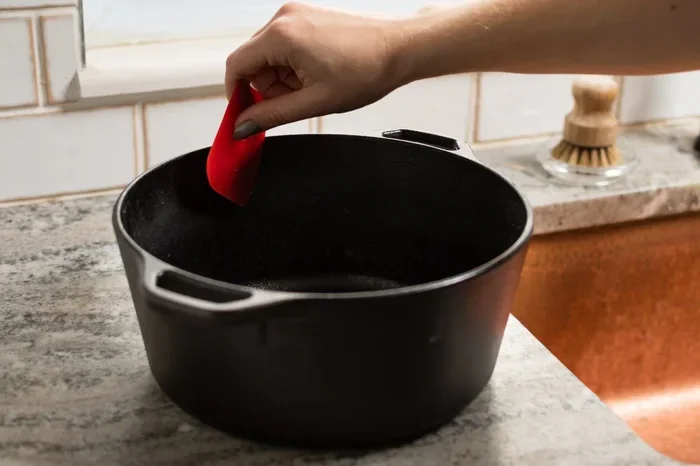
For any food that is stuck or charred, use a wooden scraper or a stiff nylon brush. Cast iron is tough, and you do not need to soak or scrub aggressively. A few firm scrapes usually lift most residue right off.
If the stuck food is stubborn, add a small amount of coarse salt and scrub gently. The salt acts as a natural abrasive without damaging the seasoning. Wipe the salt and loosened food away with a paper towel or a clean cloth.
Step 3: Wash With Warm Water
Now, rinse the dutch oven under warm running water. Use a soft sponge or a brush with natural bristles to gently clean the interior. Hand wash cast iron only — never use a dishwasher. The high heat and harsh detergent inside a dishwasher will destroy your seasoning in a single cycle.
Some people worry about using soap. The truth is, a small amount of mild dish soap is perfectly fine for modern cast iron. The old myth that soap ruins cast iron came from lye-based soaps of the past. Today’s gentle dish soaps are safe for occasional use.
Step 4: Dry It Completely
This step is critical. After washing, dry the dutch oven immediately with a clean towel. Then place it on a stove burner over low heat for two to three minutes. This ensures every trace of moisture evaporates from the surface.
Water is the enemy of cast iron. Even a small amount left on the surface can lead to rust within hours. Make sure the entire pot — including the lid, rim, and exterior — is completely dry before moving on.
Step 5: Re-Season After Cleaning
Once the pan is dry, apply a very thin layer of cooking oil to the interior surface. Use a paper towel or a clean cloth to spread the oil evenly. You want almost no oil visible — just a whisper-thin coating.
Popular options include flaxseed oil, grapeseed oil, vegetable oil, and Crisco shortening. Place the dutch oven upside down in an oven preheated to 450°F for about one hour. This bakes the oil into the surface, creating a fresh layer of cast iron seasoning. Let it cool in the oven before storing.
Common Mistakes People Make When Cleaning Cast Iron
Even well-meaning cooks can damage their cast iron through bad habits. Here are the most common mistakes and how to avoid them.
Using a Dishwasher
This is the single worst thing you can do to a cast iron dutch oven. Dishwashers use high-pressure water jets, extreme heat, and harsh detergent that strip seasoning and accelerate rust. If you have been putting your cast iron in the dishwasher, stop immediately. It may take several rounds of re-seasoning to fix the damage, but your pan can recover.
Using Harsh Detergents Regularly
While a tiny bit of mild soap is okay, heavy-duty degreasers and abrasive cleaners should be avoided. These products dissolve the polymerized oils that make up your seasoning. Stick to gentle soap only when needed, and rely on salt scrubbing for everyday cleaning.
Soaking It in Water
Never soak a cast iron dutch oven, even for a few hours. Prolonged water exposure causes the iron to oxidize, leading to rust spots that are difficult to remove. If you need to loosen food, use warm water and a brush — not a long soak.
Storing It While Damp
Always make sure your dutch oven is bone dry before putting it away. Store it with the lid slightly ajar to allow air circulation. If you stack pans inside each other, place a paper towel between them to absorb any residual moisture.
Enamel vs. Bare Cast Iron: Different Cleaning Rules
Not all dutch ovens are created equal. Enamel-coated cast iron and bare cast iron require different cleaning approaches. Understanding the difference helps you care for each type properly.
Cleaning Enamel Dutch Ovens
An enamel coated dutch oven has a glass-like coating fused to the iron surface. This means you can use mild soap, a soft sponge, and even soak it briefly without worrying about rust or seasoning loss. However, enamel can chip if you drop it or use metal utensils, so always use wooden or silicone tools.
Enamel dutch ovens should also avoid sudden temperature changes. Do not plunge a hot enamel pot into cold water, as this can cause the coating to crack or craze. Let it cool naturally before washing.
Cleaning Bare Cast Iron Dutch Ovens
Bare cast iron requires the careful method described earlier in this article. No dishwasher, no long soaks, and no harsh chemicals. The goal is to preserve and build the seasoning layer that provides the natural nonstick surface.
If you are unsure which type you own, check the interior surface. Bare cast iron feels slightly rough and dark, while enameled cast iron has a smooth, glossy, often white or colored interior.
| Feature | Bare Cast Iron | Enameled Cast Iron |
|---|---|---|
| Dishwasher Safe | No | No (not recommended) |
| Mild Soap | Occasional use OK | Yes, safe to use |
| Soaking | Never | Brief soak OK |
| Re-Seasoning Needed | Yes, after every wash | No |
| Rust Risk | High if not dried | Low |
| Stainless Steel Scrubbers | Avoid | Safe to use |
How To Restore a Neglected Cast Iron Dutch Oven
If your dutch oven has been through years of neglect, do not throw it away. Cast iron is nearly indestructible, and even a rusty, flaking pan can be saved. The restoration process removes all the old, damaged seasoning and starts fresh.
The Vinegar Method
Fill the dutch oven with equal parts white vinegar and water. Make sure the solution covers the rusted areas completely. Let it soak for anywhere from 30 minutes to 8 hours, depending on the severity of the rust. Check periodically — once the rust has softened, pour out the solution and scrub the interior with a stiff brush.
After rinsing thoroughly with clean water, dry the pan immediately and completely. Then re-season it from scratch using the oven-bake method described earlier. You may need to repeat the seasoning process two or three times to build a solid, durable layer.
Using a Self-Cleaning Oven
For extremely damaged pans, you can place the dutch oven in a self-cleaning oven cycle. The extreme heat burns off all old seasoning and residue. After the cycle, let the pan cool, then wash it with warm water and a brush. Dry it completely and apply a fresh layer of oil before baking it at 450°F for one hour.
This method works well for badly neglected pans, but be aware that it can produce a lot of smoke. Run your kitchen ventilation and keep windows open during the process.
Best Practices for Long-Term Cast Iron Care
Keeping your cast iron dutch oven in great shape comes down to a few consistent habits. Follow these practices, and your pan will last a lifetime.
Cook With Fat Regularly
Every time you cook with oil or fat, you are adding to the seasoning. High-fat foods like bacon, roasted meats, and sautéed vegetables naturally build up the polymerized layer. Cooking regularly is one of the easiest forms of cast iron maintenance.
Store It Properly
Store your dutch oven in a dry place with good airflow. If space is tight and you must stack pans, place a cloth or paper towel between each piece to prevent scratches and moisture buildup. Avoid sealing the pan in an airtight container while it is still even slightly damp.
Re-Season When Needed
Even with proper care, seasoning can wear thin over time. Signs that you need to re-season include food sticking, a dull or grayish appearance, or visible rust spots. A full re-seasoning session takes about an hour and makes a dramatic difference in performance.
Use the Right Cooking Tools
Protect your seasoning by using wooden spoons, silicone spatulas, or nylon tools instead of metal. Metal utensils can scratch and gouge the seasoning surface, creating spots where food sticks and rust can develop.
Handle Acidic Foods with Care
Tomato-based sauces, citrus, and vinegar can strip seasoning if cooked for extended periods. It is fine to use your dutch oven for these foods, but avoid long simmering times. After cooking acidic foods, wash and re-oil the pan promptly to maintain the protective layer.
Quick Tips for Daily Care
- Wipe the interior with a paper towel after cooking if it is only lightly used.
- For quick washes, warm water and a brush are often enough — no soap needed.
- Always dry the dutch oven over low heat on the stove after washing.
- Apply a thin layer of oil before storing, even if you just washed it with water.
- Never leave a wet dutch oven sitting on the counter or in a sink.
Key Takeaways
- Hand wash only: The dishwasher is the fastest way to destroy your cast iron seasoning.
- Dry immediately and completely: Standing water causes rust and long-term damage.
- Re-oil after every wash: A thin layer of cooking oil protects and builds the nonstick surface.
- Avoid soaking: Even short soaks can lead to rust on bare cast iron.
- Enamel needs different care: It is more forgiving but still requires gentle handling.
- Restoration is possible: Even neglected, rusty pans can be brought back to life with vinegar and re-seasoning.
- Consistency beats intensity: A quick, proper cleaning after every use beats a deep restoration session once a year.
Conclusion
Learning how to wash a cast iron dutch oven properly is one of the simplest ways to protect your investment. A well-maintained dutch oven can last for generations, cooking better with every use as the seasoning builds up. The process is not difficult — it just requires a few consistent habits.
Always hand wash with warm water, dry the pan thoroughly, and apply a thin layer of oil before storing. Avoid the dishwasher at all costs, and never let your dutch oven sit wet or damp. If you follow these steps every time you cook, your cast iron will stay in excellent condition for decades.
Take a few minutes today to check your dutch oven. If it needs a little extra care, now is the perfect time to re-season it. Your future self — and every meal you cook in that pan — will thank you. Start treating your cast iron cookware with the respect it deserves, and you will enjoy better cooking results every single day.
Frequently Asked Questions
Can I use soap to wash a cast iron dutch oven?
Yes, a small amount of mild dish soap is perfectly safe for cast iron. The old belief that soap destroys seasoning came from harsh lye-based cleaners of the past. Modern dish soaps are gentle enough for occasional use, but avoid heavy degreasers or antibacterial soaps that can strip the seasoning.
How often should I re-season my cast iron dutch oven?
It depends on how often you use it. For regular cooks, re-seasoning once a month is usually sufficient. If you notice food sticking, a dull appearance, or rust spots, it is time for a re-seasoning session. Baking the pan at 450°F for one hour with a thin oil coating restores the nonstick surface effectively.
Can I use steel wool on a cast iron dutch oven?
Avoid steel wool on bare cast iron, as it scratches and removes seasoning. Use a stiff nylon brush, a wooden scraper, or coarse salt for stuck-on food. If you are restoring a heavily rusted pan, fine steel wool can be used temporarily during the restoration process, followed by thorough rinsing, drying, and re-seasoning.
Why does my cast iron dutch oven rust even after washing?
Rust forms when moisture is left on the iron surface. This usually happens when the pan is not dried thoroughly or is stored while damp. Always dry your dutch oven completely with a towel and then heat it on the stove for a few minutes to evaporate any remaining water before storing.
Is it okay to cook acidic foods in a cast iron dutch oven?
Yes, but limit the cooking time. Tomato sauces, citrus, and vinegar-based dishes can strip the seasoning if simmered for hours. Short cooking sessions are fine, but after preparing acidic foods, wash the pan promptly, dry it completely, and apply a fresh layer of oil to protect the surface.
Can I wash my enameled dutch oven in the dishwasher?
Most manufacturers recommend hand washing enameled dutch ovens even though they are more forgiving than bare cast iron. Dishwasher detergent and high heat can dull the enamel finish over time and may damage the rim or exterior. Hand washing with warm water and mild soap keeps the enamel looking new for longer.