How Long To Cook Asparagus In Foil In Oven Perfectly
Cooking asparagus in foil in the oven is one of the simplest and most delicious ways to prepare this healthy vegetable. You will learn the exact timing, temperature settings, and seasoning tricks that guarantee perfectly cooked asparagus every single time. Whether you prefer thin spears or thick stalks, this guide has you covered with step-by-step instructions and expert tips.
There is something magical about how long to cook asparagus in foil in oven. It is one of those kitchen tasks that feels fancy but is actually incredibly simple. You wrap a few spears in foil, toss them in the oven, and within minutes you have a restaurant-quality side dish on your plate.
If you have ever overcooked asparagus and ended up with mushy, sad green sticks, you are not alone. This happens to the best of us. The good news is that the foil method solves almost every problem. It traps steam, locks in flavor, and gives you foolproof results. In this guide, we will walk through everything you need to know about oven-baked asparagus in foil. By the end, you will never go back to boiling again.
Whether you are a beginner cook or someone looking for a quick and healthy side, this article covers it all. We will talk about timing, temperatures, seasoning ideas, and the little mistakes that can trip you up. Let us get started.
Key Takeaways
- Standard Timing: Most asparagus cooks in foil at 400°F in about 12 to 20 minutes, depending on spear thickness.
- Temperature Matters: Higher heat (425°F) gives you crispier results, while lower heat (375°F) keeps things more tender.
- Foil Locks In Moisture: The foil packet method steams the asparagus, keeping it juicy and preventing it from drying out.
- Seasoning Is Easy: Olive oil, garlic, salt, and parmesan are classic choices that pair beautifully with asparagus.
- Thickness Changes Everything: Thin asparagus cooks faster than thick spears, so adjust your timing accordingly.
- Avoid Common Mistakes: Overcrowding the foil, using too much oil, or skipping the preheating step can ruin your results.
📑 Table of Contents
- The Basics: How Long To Cook Asparagus In Foil In Oven
- Best Temperature To Cook Asparagus In Foil
- Step-by-Step Guide To Foil-Baked Asparagus
- Seasoning And Flavor Ideas For Asparagus In Foil
- Common Mistakes To Avoid When Cooking Asparagus In Foil
- How To Tell When Asparagus Is Done In The Oven
- Expert Tips For The Perfect Foil-Baked Asparagus Every Time
- Benefits Of Cooking Asparagus In Foil
- Conclusion
The Basics: How Long To Cook Asparagus In Foil In Oven
The short answer is that most asparagus cooks in foil at 400°F for about 12 to 20 minutes. But the real answer depends on a few things. The thickness of your spears, how tender you like them, and the exact temperature of your oven all play a role. Let us break this down so you can nail it every time.
Why Foil Works So Well For Asparagus
Using aluminum foil for roasted asparagus is a game-changer. The foil creates a little steam pocket around the spears. This steam gently cooks the asparagus from all sides. The result is tender, evenly cooked stalks with a slight bite. Without foil, asparagus can dry out quickly in a hot oven, especially the thin tips.
The foil also keeps all the flavor locked in. When you drizzle olive oil and add garlic or seasoning, the foil traps those aromas. Everything steams together, and the asparagus comes out bursting with flavor. This is why so many home cooks swear by the foil packet cooking method for vegetables.
Quick Reference: Timing By Spear Thickness
- Thin asparagus (pencil-sized): 10 to 12 minutes at 400°F
- Medium asparagus (about 1/2 inch thick): 12 to 15 minutes at 400°F
- Thick asparagus (over 1/2 inch): 15 to 20 minutes at 400°F
- Extra-thick jumbo spears: 20 to 25 minutes at 400°F
These times are a great starting point. But always check your asparagus before serving. You want it tender but not mushy. A simple poke test works wonders here.
Best Temperature To Cook Asparagus In Foil
Temperature is the second most important factor after timing. Getting it right makes a huge difference in texture and flavor. Let us look at the best temperature ranges and what each one does for your oven-baked asparagus in foil.
400°F: The Sweet Spot For Most Recipes
Most recipes call for 400°F, and for good reason. At this temperature, the asparagus cooks evenly and gets slightly caramelized on the outside. The inside stays soft and tender. This is the ideal balance for most people. If you are unsure what temperature to use, just go with 400°F. You really cannot go wrong.
At 400°F, the baking time is short enough that you do not have to worry about the asparagus turning brown or burnt. The foil protects the spears while the dry heat of the oven does its work. This is the go-to temperature for caramelized asparagus in foil.
375°F: For More Tender Results
If you prefer your asparagus very soft and tender, try 375°F. The lower temperature means a longer cook time, usually around 18 to 25 minutes. The asparagus steams more gently and stays very moist. This works well for thin spears or if you are feeding a crowd and need to keep the foil packets warm.
425°F: For Crispy, Roasted Texture
Want a little more crunch? Crank the oven up to 425°F. The higher heat browns the asparagus faster and gives it a slightly crispy edge. The cook time drops to about 10 to 14 minutes. Just keep a close eye on it, because thin spears can go from perfect to overcooked in just a couple of minutes at this temperature.
Temperature Comparison Table
- 375°F: Tender and soft, 18 to 25 minutes
- 400°F: Balanced texture, 12 to 20 minutes
- 425°F: Crispy and caramelized, 10 to 14 minutes
Step-by-Step Guide To Foil-Baked Asparagus
Now that you know the timing and temperature, let us walk through the actual process. This step-by-step guide will show you exactly how to prepare asparagus in foil from start to finish. It is easier than you think.
Step 1: Prep Your Asparagus
Start by rinsing your asparagus under cool water. Pat it dry with a paper towel. Then take each spear and snap off the woody bottom end. You will feel it naturally break where the tough part ends. Discard those ends or save them for a smoothie or soup stock.
Next, lay the spears out on a clean surface. Try to group them by thickness. Thin and thick spears cook at different rates, so keeping them together helps everything cook evenly.
Step 2: Season The Asparagus
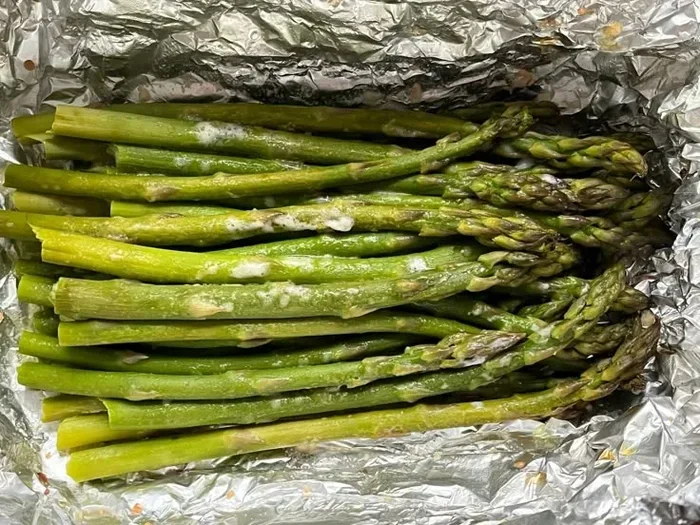
Place the asparagus on a sheet of aluminum foil. Drizzle with olive oil and sprinkle with salt and pepper. Toss gently with your hands to coat every spear evenly. Now is the time to add any extra flavors. Minced garlic, lemon zest, or a sprinkle of red pepper flakes all work beautifully.
Keep the seasoning light. Too much oil will make the asparagus soggy. A light coating is all you need. The foil will trap the flavors as they cook.
Step 3: Wrap The Foil Packet
Fold the foil over the asparagus and crimp the edges tightly to seal the packet. Make sure there are no gaps. The steam needs to stay inside to cook the asparagus properly. You can fold the foil several times to create a secure seal.
Pro tip: Leave a little air inside the packet. This small pocket of air helps circulate steam and cooks the asparagus more evenly. Do not press the foil flat against the vegetables.
Step 4: Place In The Oven
Put the foil packet directly on a baking sheet. Place it on the middle rack of your preheated oven. Cooking on the middle rack ensures even heat distribution around the packet. If you are cooking multiple packets, give them some space so the hot air can flow freely.
Step 5: Check And Serve
Set a timer for the recommended time based on your spear thickness. When the timer goes off, carefully open the packet and check the asparagus. It should be bright green and tender when you press it with a fork. If it needs more time, re-seal the foil and give it another 2 to 3 minutes.
Serve immediately for the best taste and texture. Foil-baked asparagus is best enjoyed warm right out of the oven.
Seasoning And Flavor Ideas For Asparagus In Foil
One of the best things about oven-roasted asparagus in foil is how easy it is to customize. You can change the flavors to match any meal or mood. Here are some of our favorite combinations.
Classic Garlic And Parmesan
This is the go-to combination for a reason. Toss your asparagus with olive oil, minced garlic, salt, and a generous handful of grated parmesan. The parmesan gets slightly crispy in the foil and adds a nutty, savory flavor. This is a perfect asparagus side dish for roasted chicken or steak.
Lemon And Herb
For a lighter, fresher taste, try lemon zest, fresh dill, and a squeeze of lemon juice after cooking. This combination works beautifully with fish or pasta. The lemon brightens up the earthy flavor of the asparagus and makes it feel really special.
Spicy Sriracha Honey
If you like a little heat, drizzle a bit of sriracha and honey over the asparagus before sealing the foil. The sweetness of the honey balances the spice perfectly. This is a crowd-pleaser at parties and potlucks.
Balsamic And Mushrooms
Add sliced mushrooms to the foil packet along with the asparagus. Drizzle with balsamic vinegar and a touch of butter. The mushrooms soak up all the flavors and create a rich, deep taste. This combo is incredible alongside grilled salmon.
Common Mistakes To Avoid When Cooking Asparagus In Foil
Even though this recipe is simple, there are a few mistakes that can ruin your results. Let us talk about what to watch out for so you always get it right.
Mistake 1: Overcrowding The Foil
Do not cram too many spears into one foil packet. The asparagus needs room for the steam to circulate. When spears are stacked on top of each other, they steam unevenly and end up soggy. Use two foil packets if you need to cook a large batch.
Mistake 2: Using Too Much Oil
A little olive oil goes a long way. Too much oil makes the asparagus greasy and prevents it from getting that nice slight char. Use just enough to lightly coat the spears. About one teaspoon per pound of asparagus is plenty.
Mistake 3: Skipping The Oven Preheat
Always preheat your oven before putting the asparagus in. Putting cold asparagus into a cold oven throws off the cooking time and leads to uneven results. Give your oven at least 10 to 15 minutes to reach the right temperature before the asparagus goes in.
Mistake 4: Not Adjusting For Thickness
Thick spears and thin spears need different amounts of time. If you mix them together without adjusting, one group will be overcooked while the other is still too firm. Separate your asparagus by thickness or cut thick spears in half for more even cooking.
Mistake 5: Opening The Foil Too Often
Every time you open the foil, you release the steam that is doing the cooking. Resist the urge to peek too much. Check the asparagus only once or twice during cooking. Trust the process and let the foil do its job.
How To Tell When Asparagus Is Done In The Oven
Knowing when your oven-roasted vegetables are ready is a skill that gets easier with practice. Asparagus is actually very forgiving, and there are clear signs that tell you it is done.
The easiest way to check is to poke a spear with a fork. If the fork slides in smoothly with just a little resistance, the asparagus is perfectly done. It should be tender but still have a slight firmness. If the fork meets no resistance at all, the asparagus is overcooked.
Look at the color too. Perfectly cooked roasted asparagus is bright green all over. If it has turned olive green or brown, it has been in the oven too long. You want vibrant color, which also means better flavor and more nutrients.
Another sign is the smell. When asparagus is done, it gives off a slightly sweet, earthy aroma. If it smells burnt or bitter, it has been cooking too long. Trust your senses along with the timer.
The Cold Water Shock Trick
If you like your asparagus with a little more crunch, try the ice bath method. Once the asparagus is done, immediately transfer the spears to a bowl of ice water for 30 seconds. This stops the cooking process and keeps the color bright. Pat them dry before serving.
This trick is especially useful if you are meal prepping. You can cook the asparagus ahead of time, shock it in cold water, and store it in the fridge. It stays crisp for up to three days and makes a great grab-and-go snack.
Expert Tips For The Perfect Foil-Baked Asparagus Every Time
We asked a few experienced home cooks and chefs for their top tips on making the best asparagus in foil in oven. Here is what they had to say.
Tip 1: Buy Thick Spears For Foil Cooking
Thick asparagus holds up better in foil than thin spears. The thicker stalks are more forgiving and less likely to overcook. If you can only find thin asparagus, reduce your cooking time by a few minutes and keep a close eye on them.
Tip 2: Add A Splash Of Water To The Foil
Adding a tablespoon of water or broth to the foil packet before sealing creates extra steam. This helps cook the asparagus gently from the inside out. It is a small trick that makes a big difference in tenderness.
Tip 3: Use Parchment Paper As A Liner
Some people like to line the inside of the foil with parchment paper. This prevents any metallic taste from the aluminum and makes cleanup easier. It is a small step that adds a nice touch.
Tip 4: Let The Asparagus Rest After Cooking
Just like meat, asparagus benefits from a short rest after cooking. Let the foil packet sit for 2 to 3 minutes before opening. This allows the heat to distribute evenly and the flavors to settle. You will notice a difference in taste and texture.
Tip 5: Pair With Dipping Sauces
Warm asparagus with a dipping sauce is one of the easiest appetizers you can make. Try hollandaise, aioli, or a simple yogurt-based dip. The foil packet method keeps the asparagus warm for serving, so you can bring the whole packet to the table.
Benefits Of Cooking Asparagus In Foil
Beyond just convenience, there are real benefits to using the foil method for asparagus side dish recipes. Let us quickly go over why this technique is worth your time.
- Easy cleanup: The foil catches all the oil and seasoning. You just throw it away when you are done.
- Even cooking: The steam trapped in the foil cooks every spear consistently.
- Flavor retention: All the juices and seasonings stay inside the packet.
- Versatility: You can add almost any flavor combination and it will work.
- Hands-off cooking: Once the asparagus is in the oven, you can focus on the rest of your meal.
These benefits make the foil method ideal for weeknight dinners, holiday meals, and everything in between. It is one of those techniques that once you try it, you will use it all the time.
Conclusion
Cooking asparagus in foil in oven is one of the easiest and most rewarding things you can do in the kitchen. With the right temperature, timing, and seasoning, you can turn a simple vegetable into something truly delicious. The foil method takes all the guesswork out of the process and delivers consistent, wonderful results every single time.
Remember the key points: aim for 12 to 20 minutes at 400°F, adjust for spear thickness, and do not be afraid to experiment with flavors. The roasted asparagus in foil is incredibly forgiving, so even if you are a total beginner, you will get great results.
Now that you have all the information you need, it is time to put it into practice. Grab some fresh asparagus, a sheet of foil, and your favorite seasonings. Give this method a try and see how easy and satisfying it can be. Your taste buds will thank you.
Frequently Asked Questions
Can I cook asparagus in foil at 350°F?
Yes, you can cook asparagus at 350°F, but it will take longer, usually around 20 to 25 minutes. The lower temperature gives you a more gentle cook and very tender results. Just keep an eye on the spears and check for doneness with a fork.
Do I need to preheat the oven for foil-baked asparagus?
Yes, always preheat your oven before adding the asparagus. A preheated oven ensures the asparagus starts cooking immediately and evenly. Skipping this step can lead to unevenly cooked spears and longer overall cooking times.
Can I add other vegetables to the foil packet with asparagus?
Absolutely. Asparagus pairs well with zucchini, bell peppers, mushrooms, and cherry tomatoes in a foil packet. Just keep in mind that different vegetables have different cooking times. Cut denser vegetables into smaller pieces so they cook at the same rate as the asparagus.
How do I store leftover foil-baked asparagus?
Let the asparagus cool completely, then store it in an airtight container in the refrigerator. It will keep for up to three days. Reheat gently in the oven or microwave before serving. The texture may change slightly after reheating but the flavor remains great.
Is foil-baked asparagus healthy?
Yes, foil-baked asparagus is a very healthy cooking method. Asparagus is naturally low in calories and rich in vitamins A, C, and K. Using foil helps retain nutrients better than boiling because the vegetables cook in their own juices. Just watch your oil and salt intake for the healthiest results.
Can I use parchment paper instead of foil?
Yes, parchment paper works as a great alternative to foil. It provides similar steam-trapping benefits without any risk of a metallic taste. Parchment paper is also easier to dispose of and more environmentally friendly. Use the same wrapping and cooking technique as you would with foil.