Whats The Best Way To Cook Bacon In The Oven Perfectly
Learning what’s the best way to cook bacon in the oven changes your breakfast game forever. Oven-baked bacon is hands-off, mess-free, and produces perfectly crispy edges without any flipping. Whether you love thick-cut or thin-sliced strips, this method works beautifully every single time. You’ll save time, reduce splatter, and enjoy evenly cooked bacon with minimal effort. This guide walks you through every step, from prep to cleanup, so you can master oven-baked bacon like a pro.
Key Takeaways
- Oven baking is the easiest and most consistent method for cooking bacon evenly without constant monitoring.
- A wire rack on a baking sheet is the secret tool for achieving crispy, non-greasy bacon every time.
- 400°F is the ideal oven temperature for perfectly cooked bacon in 15 to 20 minutes.
- Line your pan with parchment paper to make cleanup a breeze and prevent sticking.
- Thick-cut and thin-cut bacon both work in the oven but may need slightly different cooking times.
- Draining bacon grease properly keeps your kitchen mess-free and your bacon crispy.
📑 Table of Contents
- Why Oven-Baked Bacon Beats Every Other Cooking Method
- What You Need to Get Started
- Step-by-Step Guide to Perfect Oven Bacon
- Temperature and Timing Tips for the Best Results
- How to Get Perfectly Crispy Bacon Every Single Time
- Cleanup and Storage Made Easy
- Common Mistakes to Avoid When Baking Bacon
- Expert Insights on Oven-Baked Bacon
- Key Takeaways
- Conclusion
Why Oven-Baked Bacon Beats Every Other Cooking Method
If you love bacon but hate the mess, you are not alone. Frying bacon on the stovetop creates splatter everywhere. The grease pops and spatters across your burner, your counter, and sometimes even your shirt. It is messy, stressful, and hard to get consistent results.
Oven-baked bacon solves all of those problems. You lay your strips on a pan, pop it in the oven, and walk away. No flipping. No watching. No greasy cleanup. The oven surrounds every strip with even heat, so your bacon cooks uniformly from edge to edge.
Many home cooks have switched to this method after years of stovetop cooking. The difference in texture and convenience is huge. Once you try what’s the best way to cook bacon in the oven, you will never go back to the stovetop.
Let us break down exactly why this method works so well and how you can do it at home.
Even Cooking Without Any Effort
When you cook bacon in a skillet, the strips near the edges cook faster than the ones in the middle. You have to rotate them, flip them, and monitor the heat constantly. With oven-baked bacon, every strip gets the same amount of heat. The hot air circulates around the entire pan, cooking each piece evenly.
This means no more half-burnt, half-raw strips. Every piece comes out the same. That is a huge win for busy mornings when you are cooking for a family or a crowd.
Less Mess and Less Stress
Stovetop bacon splatter is real. It is one of the top kitchen complaints people have. Grease pops onto the stovetop, the backsplash, and sometimes the floor. Cleanup takes forever, and you always worry about burning yourself.
Oven-baked bacon eliminates almost all of that splatter. The grease drips away from the bacon as it cooks. You end up with a much cleaner kitchen and a much calmer cooking experience. It is one of the simplest easy bacon recipes you will ever try.
Perfect for Large Batches
Need to cook bacon for a brunch or a holiday breakfast? Frying multiple strips in a skillet is a nightmare. You have to work in small batches, and the skillet gets crowded. Oven-baked bacon lets you cook a full sheet pan at once. You can feed a whole family without breaking a sweat.
What You Need to Get Started
One of the best things about oven-baked crispy bacon is how little equipment you need. You probably already have everything in your kitchen right now.
Essential Tools
Here is what you need to make bacon in the oven:
- A rimmed baking sheet – This catches all the grease and prevents spills in your oven. A sheet pan with a lip is essential.
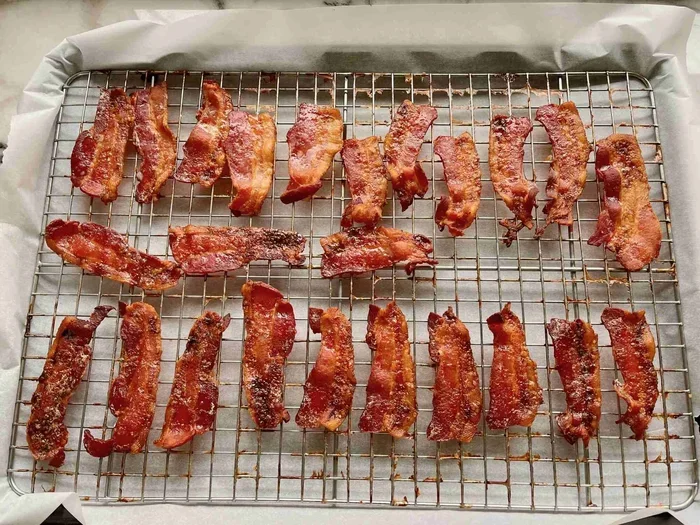
- A wire cooling rack – This is the secret weapon. Placing bacon on a rack over the baking sheet lets grease drip away completely. Your bacon gets crispier and less greasy.
- Parchment paper or a silicone mat – This prevents sticking and makes cleanup super easy.
- Tongs – For flipping or removing hot bacon strips safely.
- Paper towels – For draining excess grease after cooking.
The Best Bacon to Use
You can use almost any type of bacon for this method. Thick-cut bacon takes a bit longer but gives you a chewier, meatier result. Thin-cut bacon cooks faster and gets extra crispy. Applewood-smoked bacon adds a wonderful flavor. Hickory-smoked bacon is another popular choice for bacon oven recipes.
Here is a quick comparison of popular bacon types for oven baking:
- Thin-cut bacon: Cooks in about 12 to 15 minutes at 400°F. Gets very crispy. Great for sandwiches and salads.
- Thick-cut bacon: Cooks in about 18 to 25 minutes at 400°F. Chewier texture. Perfect for burgers and breakfast platters.
- Thin-sliced center-cut: Cooks in about 14 to 17 minutes. Less fat than regular thin-cut. A good middle-ground option.
- Turkey bacon: Cooks in about 12 to 15 minutes. Lower fat content. Needs close watching to avoid drying out.
No matter which type you choose, the oven method works for all of them. The key is adjusting your timing based on thickness and desired crispness.
Step-by-Step Guide to Perfect Oven Bacon
Now let us get into the actual process. What’s the best way to cook bacon in the oven? Here is the exact method that delivers consistent, delicious results every time.
Step 1: Preheat Your Oven
Start by preheating your oven to 400°F (200°C). This is the sweet spot for most bacon recipes. The high heat renders the fat quickly while crisping up the meat. Some people prefer a lower temperature of 375°F for a slower, more controlled cook. Both work well, but 400°F is the most popular choice for oven-baked bacon.
Step 2: Prep Your Baking Sheet
Line your rimmed baking sheet with parchment paper. This simple step prevents sticking and makes cleanup a breeze. If you are using a wire rack, place it on top of the lined baking sheet. The grease will drip through the rack and collect on the pan below.
Step 3: Arrange the Bacon Strips
Lay your bacon strips flat on the rack or directly on the parchment paper. Make sure the strips do not overlap. Overlapping strips will steam instead of crisp, and you will end up with uneven cooking. Leave a small gap between each strip so the hot air flows freely around every piece.
Step 4: Place in the Oven
Put the baking sheet on the middle oven rack. This position allows heat to circulate evenly around the bacon. Set your timer for 15 minutes if you are using thin-cut bacon or 20 minutes for thick-cut.
Step 5: Check and Remove
After 15 minutes, open the oven and check the bacon. Look for golden-brown color and crispy edges. If it is not crispy enough for your taste, give it another 2 to 3 minutes. Watch it closely during the last few minutes because bacon can go from perfectly done to burnt very quickly.
Step 6: Drain and Serve
Remove the baking sheet from the oven. Use tongs to transfer the bacon strips to a plate lined with paper towels. The paper towels absorb excess grease and keep your bacon crispy. Let it cool for a minute or two before serving.
Temperature and Timing Tips for the Best Results
Getting the temperature and timing right is the difference between good bacon and amazing bacon. Here are some tips to help you nail it every time.
Why 400°F Works So Well
400°F is the gold standard for oven-baked bacon. At this temperature, the fat renders quickly and evenly. The bacon gets crispy without burning. The edges turn golden brown while the center stays slightly chewy. This balance is what makes perfectly cooked bacon so satisfying.
If you lower the temperature to 350°F, the cook time increases significantly. The bacon may come out more uniformly cooked but less crispy. If you raise it to 425°F, the bacon cooks faster but there is a higher risk of burning the edges before the fat fully renders.
Timing Guide for Different Bacon Types
Here is a general timing guide you can follow:
- Thin-cut bacon at 400°F: 12 to 15 minutes
- Thick-cut bacon at 400°F: 18 to 25 minutes
- Turkey bacon at 400°F: 12 to 15 minutes
- Thin-cut bacon at 375°F: 15 to 18 minutes
- Thick-cut bacon at 375°F: 22 to 28 minutes
These times are starting points. Every oven is slightly different, so always check your bacon a few minutes before the suggested time. Visual cues matter more than the clock. Look for a deep golden-brown color and bubbling fat.
The Cold Oven Method
Some cooks swear by the cold oven method. You place the bacon in a cold oven and then set the temperature to 400°F. The bacon slowly heats up as the oven warms, which can render the fat more evenly. This method takes about 25 to 30 minutes total and can produce very even results. It is worth trying if you want to experiment with your bacon baking technique.
How to Get Perfectly Crispy Bacon Every Single Time
Crispy bacon is the goal for most people. Here are some pro tips that will help you achieve that perfect crunch every time you make oven-baked crispy bacon.
Use a Wire Rack
This is the single biggest upgrade you can make. A wire rack elevates the bacon above the baking sheet. The grease drips through and away from the meat. The result is bacon that is crispy on all sides, not just the bottom. Without a rack, the bacon sits in its own grease and can get soggy on the underside.
Do Not Overcrowd the Pan
Give each strip room to breathe. When bacon strips are too close together, they steam instead of roast. You lose that crispy texture and end up with limp, flabby bacon. For a standard half-sheet pan, you can usually fit about 8 to 12 strips comfortably.
Pat the Bacon Dry Before Cooking
This is a tip many people overlook. If your bacon is wet or damp from the package, pat it dry with paper towels before placing it on the pan. Moisture creates steam, and steam prevents crisping. Dry bacon goes straight to crispy.
Let It Cool on Paper Towels
After removing the bacon from the oven, transfer it to a plate lined with paper towels. The towels absorb surface grease and help the bacon maintain its crunch. If you leave it on a plate or cutting board, the trapped steam will soften it up quickly.
Quick Tips for the Best Oven-Baked Bacon
Here are some extra tips that make a big difference:
- Rotate the pan halfway through cooking for even browning, especially if your oven has hot spots.
- Save the bacon grease in a jar. It is liquid gold for cooking potatoes, eggs, and vegetables.
- Add a little brown sugar or a sprinkle of black pepper before baking for a flavor boost.
- Use a baking mat if you do not have parchment paper. It works just as well for preventing sticking.
- Cook bacon on a weekday morning for a quick and easy breakfast that takes almost no hands-on time.
Cleanup and Storage Made Easy
One of the best things about bacon in the oven is how easy cleanup is. When you line your pan with parchment paper, you just pull it out and toss it. No scrubbing baked-on grease off a skillet. The wire rack also wipes clean easily with a paper towel.
How to Store Leftover Bacon
If you have leftover crispy bacon, you can store it in an airtight container in the refrigerator for up to 5 days. Reheat it in the oven at 350°F for 3 to 5 minutes to bring back the crunch. Microwaving works in a pinch but can make the bacon slightly chewy.
Freezing Cooked Bacon
You can also freeze cooked bacon. Lay the strips flat on a baking sheet, freeze them for an hour, and then transfer them to a freezer bag. Frozen cooked bacon keeps for up to 3 months. Reheat in the oven or microwave whenever you want a quick bacon fix.
Disposing of Bacon Grease Properly
Never pour bacon grease down the drain. It will solidify and clog your pipes. Instead, let the grease cool, pour it into a heat-safe jar or can, and throw it in the trash once it solidifies. Better yet, save it for cooking. Bacon grease adds incredible flavor to scrambled eggs, roasted vegetables, and cornbread.
Common Mistakes to Avoid When Baking Bacon
Even though oven-baked bacon is simple, there are a few mistakes that can ruin your results. Here is what to watch out for:
- Overcrowding the pan: This is the most common mistake. Too many strips touching each other leads to steaming and uneven cooking.
- Skipping the parchment paper: Without it, bacon can stick to the pan and tear apart when you try to remove it.
- Not watching the last few minutes: Bacon goes from perfectly crispy to burnt in seconds during the final minutes of cooking.
- Using a pan without a rim: Grease will overflow and make a mess in your oven. Always use a rimmed baking sheet.
- Cooking at too low a temperature: Low and slow sounds nice, but it can result in flabby, undercooked bacon. Stick to 400°F for best results.
Expert Insights on Oven-Baked Bacon
Professional chefs and food experts agree that oven-baked bacon is the superior method for home cooking. The even heat distribution of an oven eliminates the hot spots and uneven cooking that plague stovetop methods. Baking bacon also gives you more control over the final texture. Want crispy? Cook a few minutes longer. Want chewy? Pull it out a little earlier.
Many breakfast restaurants actually use oven-baked methods for their bacon because it is scalable and consistent. You can apply the same restaurant-quality technique at home with just a baking sheet and a wire rack. It is one of the simplest upgrades you can make to your breakfast routine.
The rendered bacon fat is also a bonus. Instead of throwing it away, you can use it to cook other breakfast items. Fry eggs in bacon grease for an incredible flavor boost. Toss roasted potatoes with a spoonful of warm bacon fat. The possibilities are endless.
Key Takeaways
- Oven baking is the easiest and most consistent method for cooking bacon evenly without constant monitoring.
- A wire rack on a baking sheet is the secret tool for achieving crispy, non-greasy bacon every time.
- 400°F is the ideal oven temperature for perfectly cooked bacon in 15 to 20 minutes.
- Line your pan with parchment paper to make cleanup a breeze and prevent sticking.
- Thick-cut and thin-cut bacon both work in the oven but may need slightly different cooking times.
- Draining bacon grease properly keeps your kitchen mess-free and your bacon crispy.
Conclusion
What’s the best way to cook bacon in the oven? The answer is clear: oven-baked bacon is the easiest, cleanest, and most consistent method available. It requires almost no hands-on time, produces perfectly crispy results, and makes cleanup a breeze.
Whether you prefer thin-cut or thick-cut, regular bacon or turkey bacon, the oven method delivers every time. All you need is a baking sheet, a wire rack, parchment paper, and about 15 to 20 minutes of your time. That is it.
Once you try this method, you will wonder why you ever bothered with the stovetop. The even cooking, the minimal mess, and the incredible texture make oven-baked bacon the clear winner. Give it a try this weekend and see the difference for yourself. Your mornings will never be the same.
So go ahead. Preheat that oven. Line that pan. Lay out those strips. In less than 20 minutes, you will have a batch of perfectly crispy, delicious bacon in the oven that will make every breakfast feel like a special treat.
Frequently Asked Questions
Can I use aluminum foil instead of parchment paper for oven-baked bacon?
Yes, you can use aluminum foil as a liner, but parchment paper works better for preventing sticking. Foil can cause the bacon to cling in spots, especially where grease pools. If you use foil, lightly grease it with a thin layer of cooking spray for easier cleanup.
How long does it take to cook bacon in the oven at 400°F?
Thin-cut bacon typically takes 12 to 15 minutes at 400°F, while thick-cut bacon needs 18 to 25 minutes. The exact time depends on how crispy you like your bacon. Start checking at the 12-minute mark and pull it out when it reaches your preferred color and texture.
Do I need to flip bacon when cooking it in the oven?
No, you do not need to flip bacon when baking it in the oven. The hot air circulates around the strips evenly, cooking both sides at the same time. This is one of the biggest advantages of the oven method over stovetop cooking.
Is it better to use a wire rack or place bacon directly on the baking sheet?
A wire rack is definitely better for crispy bacon. It allows grease to drip away from the meat, resulting in a crunchier texture. Placing bacon directly on the baking sheet works too, but the strips will sit in their own grease and may come out slightly less crispy on the bottom.
Can I cook bacon on a sheet pan without parchment paper or a rack?
You can, but cleanup will be harder and the bacon may stick. Parchment paper or a silicone baking mat prevents sticking and makes the entire process much easier. If you do not have either, lightly grease the sheet pan with a small amount of cooking oil before adding the bacon.
What is the best way to store leftover oven-baked bacon?
Store leftover bacon in an airtight container in the refrigerator for up to 5 days. You can also freeze cooked bacon for up to 3 months. Reheat in the oven at 350°F for 3 to 5 minutes to restore the crispy texture. Avoid storing bacon in the grease, as it can make the strips soggy over time.